Some weeks the enquiries come in steadily. Other weeks the pipeline goes quiet, sales starts asking harder questions, and every marketing decision feels more urgent than it should.
That pattern usually isn't a traffic problem alone. It's a business systems problem. If lead flow depends on referrals, one campaign, or one person pushing constantly, growth stays fragile. You can't hire confidently, forecast sensibly, or invest in delivery when new business arrives in bursts.
Leads generation services matter when they fix that instability. Done well, they don't just produce names in a spreadsheet. They create a repeatable route from market attention to qualified sales conversations, with clear ownership, tracking, and follow-up.
Founders often buy tactics when they need a lead engine. That's why results disappoint. A few ads get switched on, a landing page goes live, and everyone waits for revenue. But if targeting is off, handoff is slow, and nobody agrees what a good lead looks like, spend leaks quickly.
In most SMEs, inconsistent lead flow creates knock-on problems everywhere else. Sales reacts instead of planning. Marketing chases activity instead of outcomes. Leadership delays recruitment, holds back investment, or pushes for short-term fixes that don't compound.
Cost isn't only missed leads. It's operational hesitation.
A lead pipeline should give the business room to make better decisions. When you know where opportunities are coming from, which campaigns produce qualified demand, and how quickly sales is responding, you stop guessing. You start managing growth.
Many founders assume poor lead flow means they need more traffic or a bigger budget. Sometimes they do. Often, the issue sits between teams.
A Lead Forensics UK B2B finding reported that 42% of growing businesses say sales and marketing misalignment causes a 25% drop-off in valuable leads. That matters because it explains why some firms can spend more and still not improve pipeline quality.
If marketing counts form fills and sales dismisses them, the business doesn't have a lead generation problem in isolation. It has a qualification and handoff problem.
Practical rule: If sales says leads are poor and marketing says volume is fine, don't add budget first. Fix definitions, routing, and follow-up.
Consistent lead generation supports more than top-of-funnel activity. It affects:
This is why leads generation services should be judged as a commercial function, not a creative exercise. The right partner builds the conditions for repeatable revenue. The wrong one gives you dashboards full of activity and very little confidence.
Most businesses don't need another vague promise about visibility, reach, or awareness. They need a system that turns interest into commercially viable opportunities.
That's what leads generation services should be.
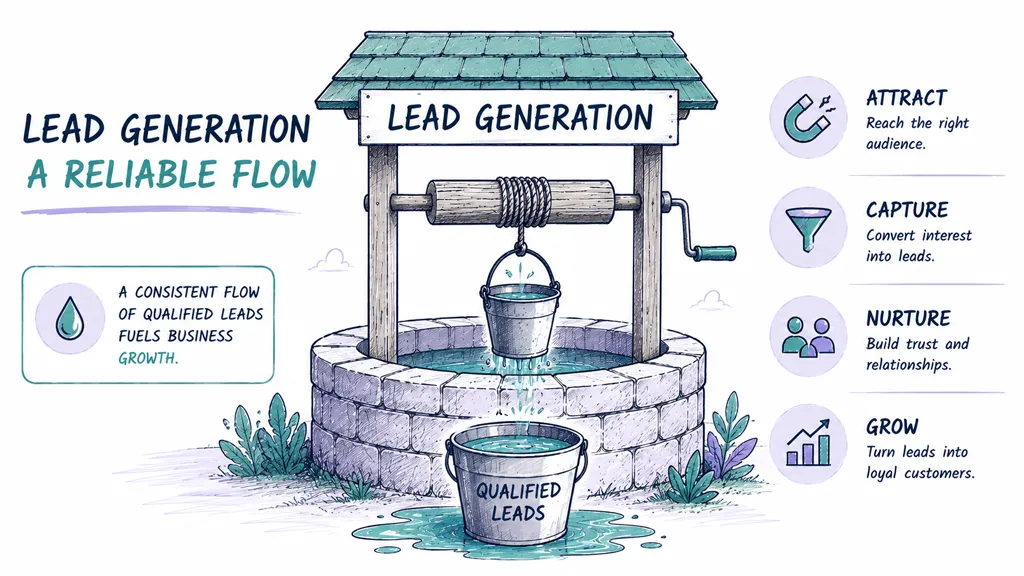
Lead generation isn't merely:
A proper lead generation service combines strategy, targeting, offer positioning, conversion design, tracking, qualification, and follow-up logic. If one of those is missing, performance usually stalls.
A useful way to look at it is this. The strategist is the architect. They design how the lead engine should work, based on your market, margins, sales cycle, and internal capacity. The channel specialists, media buyers, designers, developers, and CRM team are the builders.
Without the blueprint, the build becomes expensive guesswork.
That distinction matters because many providers sell execution without enough strategic thinking. They can launch campaigns, but they can't tell you whether paid search, LinkedIn, SEO, or outbound is the right starting point for your sales model. They also can't explain how a lead should move from first click to booked meeting to closed revenue.
For a more foundational look at the mechanics, this guide on what lead generation means in marketing is a useful companion.
Good leads generation services don't promise more leads in isolation. They build a more reliable way to attract, qualify, and progress the right buyers.
At a practical level, you should expect:
Clear market focus
Who you're targeting, why they should respond, and which channels match their buying behaviour.
A conversion pathway
Landing pages, forms, calls to action, and messaging built to create genuine response.
Qualification criteria
Rules for deciding what goes to sales and what stays in nurture.
Tracking and accountability
Visibility on lead source, quality, and commercial impact.
That's the difference between a lead system and a collection of tactics.
There isn't one best service type for every business. The right option depends on urgency, deal value, market awareness, internal sales capability, and how quickly you need pipeline.
Some channels create demand fast. Others build equity over time. Most growing firms need a mix, but they shouldn't start with everything at once.
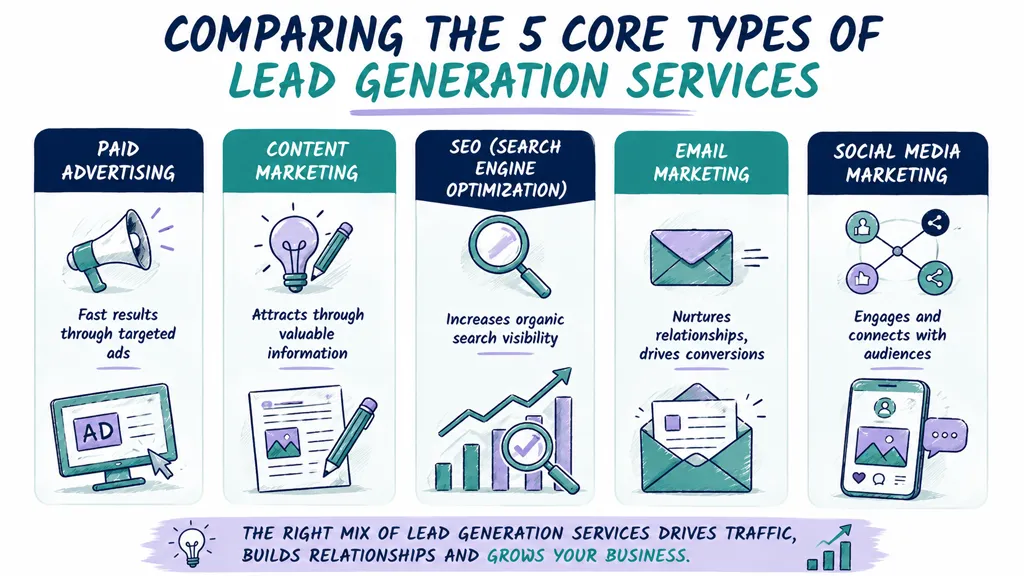
Paid advertising is usually the fastest route to lead flow when the offer is clear and targeting is sharp. It includes Google Ads, LinkedIn Ads, remarketing, and other paid placements designed to capture demand or generate it.
For B2B in the UK, LinkedIn is often far stronger than founders expect. LinkedIn delivers a 2.8x higher marketing-to-sales qualified lead conversion rate at 28% compared with organic search at 10%, and granular targeting can reduce cost per lead by up to 35%.
That doesn't mean LinkedIn is always the answer. It does mean that if you sell to defined professional audiences, strong targeting can outperform broader channels.
Best fit:
Main trade-off:
A short explainer can help if you're weighing channels:
Inbound marketing brings buyers to you through helpful content, strong positioning, clear offers, and conversion journeys that capture intent. It's broader than content alone. It includes landing pages, lead magnets, email nurture, remarketing, and CRM workflows.
This suits firms that want to build a more durable acquisition asset rather than rely only on direct outreach or paid traffic. It usually takes longer to mature, but it often improves lead quality because prospects arrive with more context.
Best fit:
Main trade-off:
Outbound means you identify target accounts and reach out directly through email, phone, LinkedIn, or a coordinated account-based approach. This can work well when your market is narrow, your offer solves a specific commercial problem, and your sales team can handle conversations well.
Outbound can create traction before SEO or inbound has had time to build. It can also test messaging quickly.
But there are obvious risks. Poor data, generic messaging, and weak compliance practice can damage brand perception fast. For UK firms, especially in regulated sectors, this is not an area to approach casually.
If your outbound message could be sent to anyone, it will usually convert like it was meant for no one.
Content marketing supports lead generation by building trust before a prospect speaks to sales. That might mean insight articles, guides, comparison pages, webinars, or sector-specific resources.
It works best when content is tied to a commercial journey. Publishing for the sake of publishing rarely helps. The content needs to answer buying questions, handle objections, and create a reason to take the next step.
Strong content often lifts performance in other channels too. Paid campaigns convert better when the market already sees evidence of expertise.
Best fit:
SEO is the long-game engine. It helps your business appear when prospects are actively looking for solutions, suppliers, or expertise. Unlike paid ads, you don't pay per click, but the work needed to rank and convert is substantial.
For some firms, SEO is the right foundation. For others, it's too slow to be the only acquisition strategy in the near term. That's why commercial context matters. If you need opportunities this quarter, SEO alone usually isn't enough. If you want sustainable search visibility over time, it's one of the strongest assets you can build.
| Service Type | Best For | Typical Speed to Results | Common Pricing Model |
|---|---|---|---|
| Paid Advertising | Fast pipeline, targeted acquisition | Fast | Monthly retainer or media management fee |
| Inbound Marketing | Building a compounding lead system | Medium | Monthly retainer or project plus retainer |
| Outbound Prospecting | Narrow ICPs and direct account targeting | Medium | Retainer, pay-per-meeting, or hybrid |
| Content Marketing | Trust-building and lead nurture | Medium to long | Monthly retainer or project fee |
| SEO | Sustainable organic lead acquisition | Long | Monthly retainer or project fee |
A good lead generation partner should bring order to what often feels messy internally. You should know what happens first, what gets built, how performance is judged, and what decisions are made when campaigns don't work as planned.
If the process feels vague at the start, it usually stays vague later.
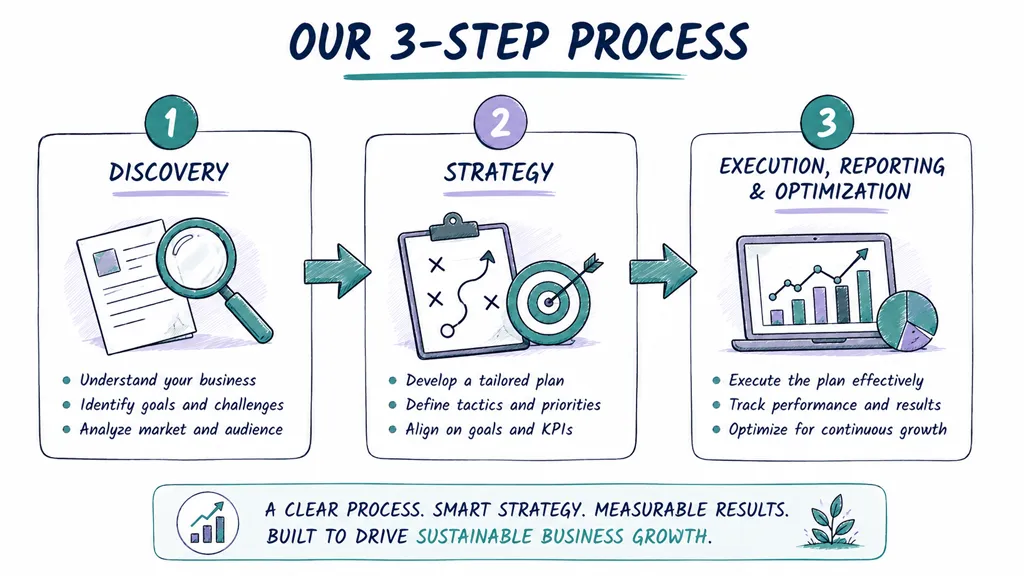
A serious engagement starts at this stage. Before channels are chosen, the partner should understand:
This stage should also surface the uncomfortable truths. Sometimes the issue isn't lead volume. It's a weak offer, poor response times, or no agreed qualification criteria.
A founder should expect challenge here, not just agreement.
Once strategy is clear, the work moves into campaign design. This includes audience structure, messaging, landing pages, forms, CRM setup, tracking, and the logic for what happens after someone converts.
The better partners think beyond the form submission. They ask what should happen next and how quality will be judged.
That matters because firms using CRM-integrated lead scoring perform better when qualification is built into the system. According to Salesforce's lead generation guide, UK B2B firms that integrate lead scoring models into their CRM see 20-30% higher SQL conversion rates and reduce the average sales cycle by up to 25%.
In practice, that means a proper build often includes:
Commercial check: If every lead goes to sales regardless of fit, the system isn't qualified. It's just noisy.
Launch isn't the finish line. It's the first live test of the assumptions made in discovery and build.
A capable partner monitors which messages attract response, which audiences convert, which landing pages create friction, and where lead quality drops. Sometimes the first adjustment is creative. Sometimes it's the offer. Sometimes it's the definition of a qualified lead.
You should expect active optimisation, not passive reporting.
Useful signs of maturity include:
Reporting should tell you what to do next. If it only tells you what happened, it isn't enough.
A strong reporting rhythm connects channel performance to sales outcomes. It shows where qualified opportunities come from, what they cost, what sales accepted, and whether scaling makes financial sense.
That gives founders a better way to decide:
The best lead generation partnerships become simpler over time. Definitions improve, waste falls, and the route from enquiry to revenue gets easier to manage.
Most businesses don't struggle because there are too few providers. They struggle because too many providers sound credible in a pitch.
Choosing well starts with a simple question. Do you need a senior operator who will shape strategy and stay close to execution, or do you need an agency structure with wider delivery capacity?
A consultant is often the better fit when the business needs clarity, senior judgement, and direct accountability. You usually work with the person diagnosing the problem and making the recommendations. That's valuable when budgets are tighter, the offer needs refining, or leadership wants strategic input rather than just execution.
An agency can make sense when the programme already has momentum and needs broader production support across channels, creative, development, and reporting. The risk is that the person who sold the work disappears once the contract starts.
Neither model is automatically better. The question is whether the delivery model matches the complexity of your business and the level of senior involvement you need.
A useful benchmark is this. If your lead generation approach is currently unclear, start closer to senior expertise. Scale delivery later.
For businesses comparing options in the capital, this overview of a lead generation agency in London can help frame what local buyers should look for.
Don't ask only how many leads they can generate. Ask how they think.
Use questions like these:
How do you define a qualified lead for a business like ours?
If they can't answer without speaking in generalities, they probably haven't thought thoroughly enough.
What needs to be true internally for your work to succeed?
Strong partners will mention follow-up speed, CRM discipline, and feedback loops.
Which channel would you test first, and why?
You want reasoning tied to buying behaviour, not whichever service they prefer to sell.
How will you report performance in commercial terms?
Clicks and impressions aren't enough.
What would make you advise against a campaign?
This is one of the best filters. Good operators will tell you when the offer, funnel, or sales process isn't ready.
In professional services, lead generation can create compliance risk if the provider doesn't understand the rules around consent, outreach, and data handling.
That isn't a minor detail. It's part of lead quality.
The ICO reported over 1,200 data protection complaints in marketing sectors in 2025, making GDPR and PECR capability a serious evaluation point for UK firms.
If you're in legal, finance, accounting, healthcare, or any other regulated service category, ask direct questions about:
A partner who treats compliance as a footnote can make your marketing problem a legal problem.
You'll generally come across three structures:
| Pricing Model | Best Use | Watch Out For |
|---|---|---|
| Monthly retainer | Ongoing campaign management | Vague deliverables |
| Project fee | Setup, audits, or launch work | No optimisation after build |
| Performance or hybrid | Appointment-led programmes | Incentives tied to volume over quality |
The cheapest model often becomes the most expensive if lead quality is poor. That's why pricing should be judged against likely commercial value, not headline cost alone.
The right partner should be able to explain:
If they can't, keep looking.
The quickest way to waste money on lead generation is to judge performance by surface metrics. Clicks can rise while pipeline quality falls. Impressions can look healthy while sales sees nothing worth calling.
Business leaders need a tighter scorecard.
Clicks, reach, and form fills have their place, but they don't tell you enough on their own. The metrics that matter are the ones closest to revenue.
Focus on:
At board level, the question is straightforward. Did the investment create profitable revenue?
A practical way to assess that is:
ROI = (Revenue generated from acquired customers minus marketing spend) divided by marketing spend
That formula is simple on purpose. It forces the conversation back to commercial output.
You should also ask:
Two campaigns can generate the same number of leads and produce very different business outcomes. One may create relevant conversations with decision-makers. The other may fill the CRM with low-intent contacts.
That's why cost per lead by itself can mislead. A cheaper lead that never progresses is often more expensive than a higher-cost lead that moves cleanly through sales.
Key takeaway: The right question isn't "How many leads did we get?" It's "How many of those leads turned into opportunities worth pursuing?"
For teams that need a clearer way to structure these conversations internally, this guide on digital marketing for lead generation gives a practical view of how to connect spend to business results.
A better pipeline doesn't come from collecting random tactics. It comes from building a system that matches your market, your sales process, and your commercial goals.
That system usually starts with a few hard decisions. Which channel deserves priority. What qualifies as a real opportunity. Who owns follow-up. Whether you need a senior consultant's direct involvement or a larger delivery team.
The businesses that get the best return from leads generation services tend to do three things well:
If your current lead flow is inconsistent, the answer usually isn't more noise. It's better structure, sharper targeting, and stronger accountability.
A useful next step is a direct strategic review of your current acquisition model, where the leaks are, and which channel mix makes the most sense for your business now.
It depends on the service model, channel mix, and scope. Most providers work on a monthly retainer, a project fee, or a performance-based structure. The right question isn't only price. It's what level of strategy, execution, reporting, and optimisation you're getting for that fee.
Paid campaigns can generate data and enquiries faster than SEO or broader inbound activity. SEO and content-led approaches usually take longer, but they can become stronger long-term assets. Outbound often sits in the middle, depending on data quality, messaging, and sales readiness.
A lead is someone who has shown interest or shared their details. A qualified lead is someone who fits the target profile and shows enough intent to justify sales time. That distinction matters because raw volume can look healthy while actual pipeline stays weak.
Software helps with CRM, enrichment, automation, tracking, and outreach management. It doesn't replace judgement. If you're reviewing tools as part of your stack, this list of the best software for lead generation is a useful starting point. But most SMEs still need someone to decide strategy, manage trade-offs, and keep channel execution commercially aligned.
Usually not. One channel may lead, but most strong lead generation programmes combine acquisition, qualification, and nurture. The right mix depends on your offer, sales cycle, and budget discipline.
If you want a practical conversation about what would improve pipeline quality in your business, speak with Gilkes Media. Jason Gilkes works directly with founders and leadership teams to build lead generation systems that are commercially sound, measurable, and realistic to run. It's a straightforward consultation focused on where your current approach is leaking, what should change first, and how to build a more predictable route to revenue.
