For generations, UK manufacturing thrived on relationships, trade shows, and word-of-mouth. But today’s buying journey is completely different. It begins with deep online research long before your sales team ever gets a call.
That is why having a smart digital marketing for manufacturers strategy is not just a 'nice-to-have'. It is essential for building a predictable sales pipeline.
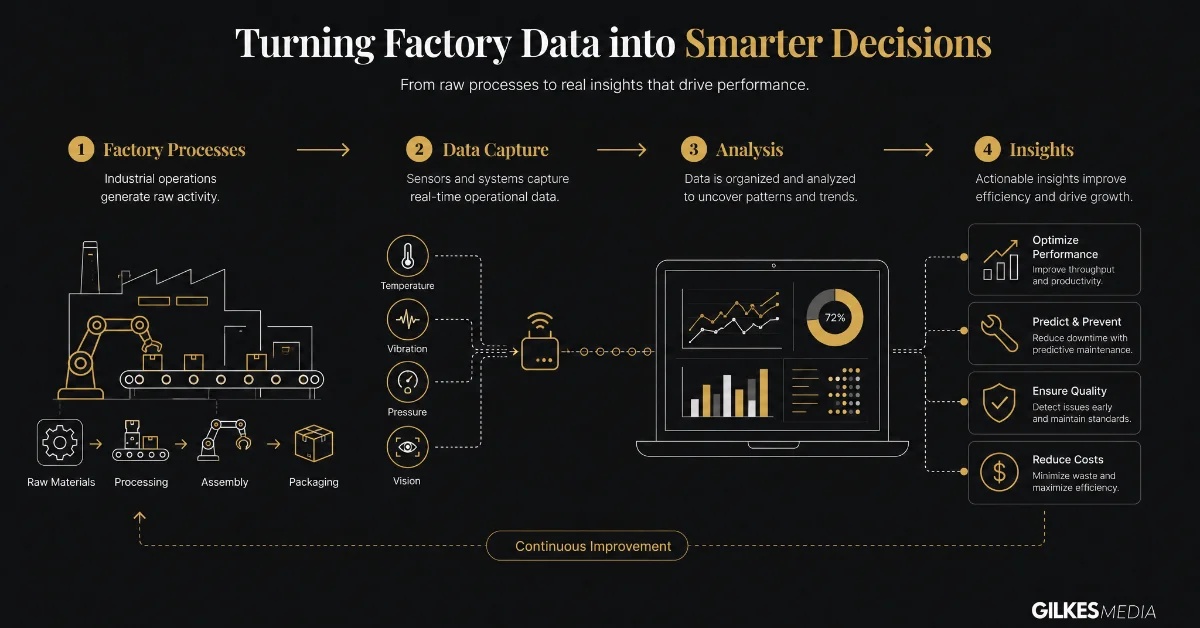
The single biggest reason to invest in digital is the radical shift in buyer behaviour. Engineers, procurement managers, and operations directors now expect to find detailed specifications, application notes, and performance data online.
If your business is invisible during this critical research phase, you are not even in the running. You effectively exclude yourself from their shortlist from day one.
This is not just a small trend; it is a fundamental reshaping of the B2B world. The UK's digital marketing market reached approximately £15.4 billion in 2024 and is forecast to climb to over £37 billion by 2033. This is a clear signal of how business is now conducted, and manufacturers must adapt to stay competitive.
Your prospects are not waiting for a phone call or a leaflet at a trade show. They are actively searching for solutions to their operational challenges, on their own terms and on their own schedule. This self-directed journey means your digital presence must act as your most effective salesperson, 24/7.
A strong digital footprint allows you to:
At Gilkes Media, we focus on connecting digital activity directly to commercial outcomes. The goal is not just to ‘be online’. It is to build a system that predictably generates leads, shortens long sales cycles, and establishes your authority in a crowded market.
To understand why this is a commercial necessity, it is worth exploring what a modern B2B demand generation strategy involves. It is a shift away from just advertising and towards creating sustained, long-term demand for your services.
This guide focuses on practical application, not theory. We will connect digital actions to the outcomes that matter: building a predictable pipeline, making your sales team more efficient, and driving sustainable growth. By developing a focused plan, you can turn your digital presence from a cost centre into a strategic growth engine. You can read more about this in our guide on the development of marketing strategies.
Your website should be your hardest-working sales tool, not just a digital brochure. Too many manufacturers treat their site like a static catalogue, completely missing its potential to be a 24/7 lead generation engine.
The goal is to move from a passive online presence to an active system that attracts and converts high-value customers. That journey starts with clear messaging that speaks the language of technical buyers and simple navigation that makes complex product ranges easy to explore.
Even a world-class website is useless if your ideal customers cannot find it. This is where a commercially-focused Search Engine Optimisation (SEO) strategy becomes non-negotiable.
For manufacturers, SEO is not about chasing vanity keywords or accumulating irrelevant traffic. It is a precision exercise. The aim is to capture the attention of engineers, procurement managers, and operations directors at the exact moment they are searching for a technical solution.
Good SEO in this sector forgets broad, generic terms and focuses on the specific language your buyers use daily. It is about appearing at the top of Google for search queries that signal clear commercial intent. This means your digital marketing plan must prioritise relevance over raw volume.
A well-executed SEO strategy makes you the answer to a prospect's most urgent technical questions. It positions your business not just as another supplier, but as an indispensable expert resource.
The foundation of a successful SEO campaign is knowing what your prospects are actually typing into Google. Generic keyword tools often miss the mark, failing to capture the nuances of industrial and technical searches. A more strategic approach involves:
By focusing on these high-intent keyword groups, you attract traffic that is far more likely to convert into a qualified lead. This is about quality, not quantity.
Once you know what your audience is searching for, the next step is to align your website’s content and structure to meet their needs. This comes down to a few core, sustainable tactics that deliver value for years to come.
1. Create a Technical Resource Hub
Build a section on your website dedicated to genuinely useful technical content. This is not about fluffy blog posts; it is about providing real value. Think about:
This kind of content builds authority, earns trust, and naturally attracts links from other respected industry websites.
2. Optimise Product and Service Pages
Every product page should be a comprehensive sales tool. Go beyond basic descriptions. Include detailed specifications, downloadable CAD files or data sheets, performance data, and high-quality images or videos. For a deeper dive, read our guide on on-page SEO best practices to ensure every page is structured for maximum search visibility.
3. Build High-Quality Industry Backlinks
Backlinks, which are links from other websites pointing to yours, are a massive trust signal to Google. Forget spammy, low-quality tactics. Focus on earning links from:
This methodical approach to SEO will transform your website from a cost centre into a strategic asset that consistently attracts highly qualified organic traffic, laying the groundwork for a predictable and scalable lead generation system.
Once your website is optimised to capture leads, the next step is driving the right kind of traffic to it. A common and costly mistake is spreading your budget thinly across every available channel. This guarantees wasted resources. For manufacturers, a focused, strategic approach is essential.
The key is to be present where your buyers, whether they are engineers, specifiers, or procurement managers, actually spend their time. It is not about being everywhere; it is about being in the right places consistently. This means understanding what each channel does best and how it aligns with your commercial goals.
For most UK manufacturing firms, the conversation centres on four core channels: Paid Search (PPC), Search Engine Optimisation (SEO), LinkedIn, and targeted Email Marketing. Each plays a distinct role in the buyer's journey.
Before we explore each one, here is a quick overview of how these channels compare.
| Channel | Primary Purpose | Best For Reaching | Key Metric |
|---|---|---|---|
| Paid Search (PPC) | Immediate, high-intent lead generation | Buyers actively searching for a solution | Cost Per Lead (CPL) |
| SEO | Long-term authority and trust-building | Engineers and researchers looking for technical info | Organic keyword rankings, qualified traffic |
| Strategic relationship and brand building | Specific job titles, companies, and industries | Engagement Rate, Follower Growth | |
| Email Marketing | Nurturing leads and driving repeat business | Existing prospects, past customers, and leads | Open Rate, Click-Through Rate (CTR) |
This table provides a high-level view, but the real power comes from understanding the why behind each channel. Let's break them down.
Paid search, or Pay-Per-Click (PPC), is the fastest way to get your business in front of buyers who are actively looking for a solution right now. When an engineer searches for a specific part number or a procurement manager types in "UK-based CNC machining service," your ad can appear at the top of Google.
This channel is perfect for:
The advantage of PPC is its speed and control. You set the budget, you pick the keywords, and you can start generating leads within days. As a paid ads specialist, this is often where we at Gilkes Media start, because it delivers quick, measurable wins for our clients.
While PPC delivers immediate results, a strong organic presence through SEO is the foundation for sustainable, long-term growth. It builds trust and credibility in a way paid ads cannot. When your website ranks organically for a complex technical query, you are not just a supplier; you are an industry authority.
SEO is a long-term investment that compounds over time, delivering "free" traffic long after the initial work is completed. This decision tree shows how to align your SEO efforts with your main commercial goal.
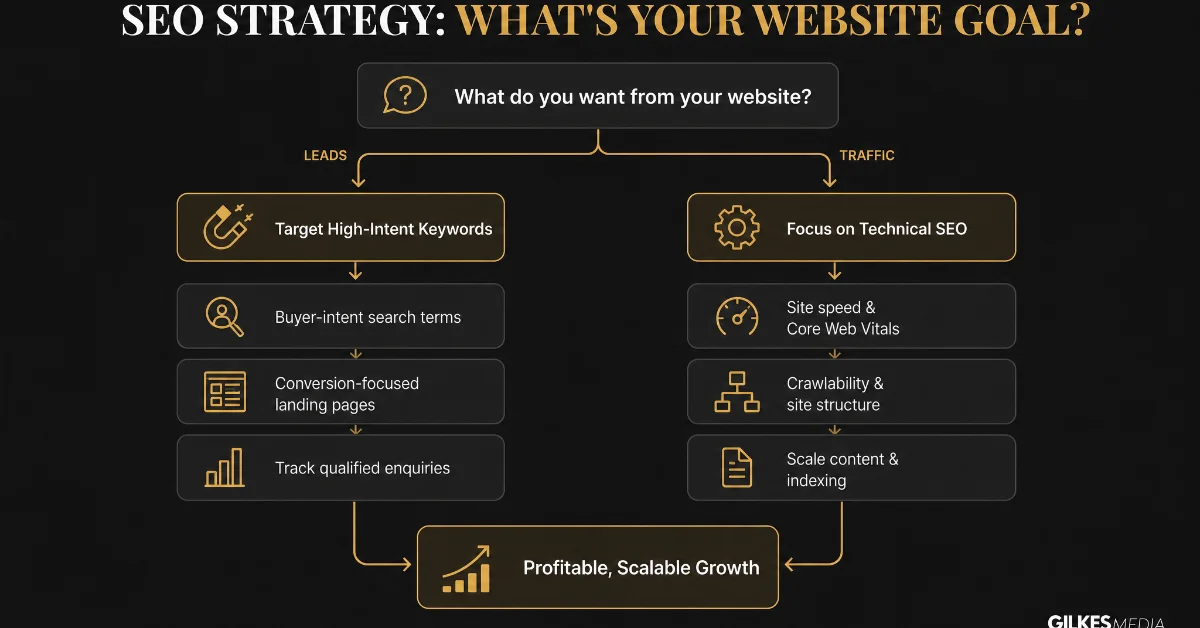
The key takeaway is that your SEO strategy must be tied directly to a commercial outcome, whether that is immediate leads or building brand authority through valuable content that attracts the right audience.
For B2B manufacturing, LinkedIn is non-negotiable. It is the only platform where you can target prospects with surgical precision based on their job title, company, industry, and seniority. It is less about direct, "click here to buy" lead generation and more about strategic relationship building and account-based marketing.
Use LinkedIn to:
Think of LinkedIn as the digital version of a high-value trade show. It is where you go to network, build relationships, and position your company as a leader, not to make a quick, transactional sale.
Ultimately, the most effective approach combines these channels into a cohesive system. The data supports this. A significant 98% of UK manufacturers generate sales-qualified leads through digital marketing. Channel performance varies, with email often delivering the highest ROI, but 69% of companies still rely heavily on organic search and social media. When it comes to B2B, 93% of marketers agree that LinkedIn is the most effective social platform. You can discover more UK digital marketing statistics on Localiq to see a broader breakdown.
Your ideal mix will always depend on your specific goals, budget, and sales cycle. However, a balanced strategy that uses PPC for immediate wins, SEO for long-term authority, and LinkedIn for strategic networking will put you in the strongest possible position to dominate your niche.
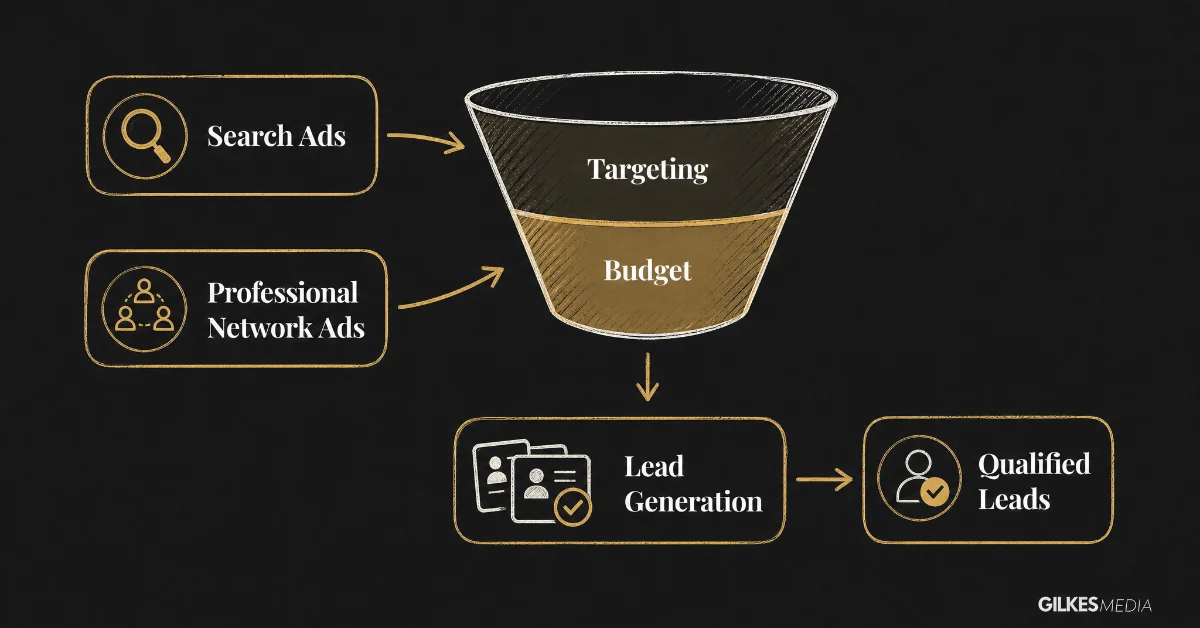
While SEO builds long-term authority, it takes time to show results. When you need a scalable and predictable flow of high-quality leads immediately, paid advertising is the most direct commercial lever you can pull. Platforms like Google Ads and LinkedIn Ads give you immediate visibility in front of buyers actively searching for solutions.
This is not about boosting posts or running vague brand ads. A performance-driven paid advertising approach for manufacturers demands precision, accountability, and a relentless focus on return on investment. It turns ad spend from a simple expense into a measurable investment in pipeline growth.
At Gilkes Media, we treat paid advertising as a science. We build campaigns around specific commercial goals, whether that is generating RFQs for a particular product line, driving downloads of a technical white paper, or breaking into a new industry vertical.
A common mistake is lumping all products and services into one large campaign. This shotgun approach burns through budget and delivers low-quality leads. A smarter strategy is to build highly specific campaigns around the distinct parts of your business.
This means creating separate, focused campaigns for:
This granular structure ensures your ad copy, keywords, and landing pages are perfectly aligned with what a specific buyer is looking for. This alignment dramatically increases the chance of them taking action. For a deeper look into this methodology, explore our specialised paid search service.
The real power of paid advertising lies in its sophisticated targeting, especially on platforms like LinkedIn. The days of hoping the right person sees your advert are over. Now, you can place your message directly in front of the key decision-makers who matter.
With paid social, particularly on LinkedIn, you are no longer just marketing to a company; you are marketing directly to the senior engineer, the procurement director, or the operations manager within that company. It is a level of precision that traditional marketing could never achieve.
On LinkedIn, we can layer targeting criteria to build an incredibly specific audience. For example, you could target:
This ensures every pound of your budget is spent reaching individuals with genuine purchasing influence. It eliminates waste and maximises the quality of leads generated.
One of the first questions we always get is, "How much should we spend?" There is no magic number, but we can establish a logical starting point and scale intelligently based on what the data tells us. The key is to work backwards from your commercial targets.
| Metric | Description | Example Calculation |
|---|---|---|
| Target Leads | The number of qualified leads you need per month. | 20 leads/month |
| Target CPL | Your acceptable Cost Per Lead. | £150 per lead |
| Starting Budget | The initial monthly ad spend required. | 20 leads x £150 CPL = £3,000 |
| Scaling Trigger | The performance signal to increase spend. | Consistently achieving a CPL below £150 |
This framework removes guesswork. It positions your paid advertising as a predictable, performance-based investment, not a cost. We track every lead and every conversion, tying ad spend directly back to your sales pipeline. This level of accountability is fundamental to a successful digital marketing strategy for manufacturers, proving the clear commercial value of every campaign.
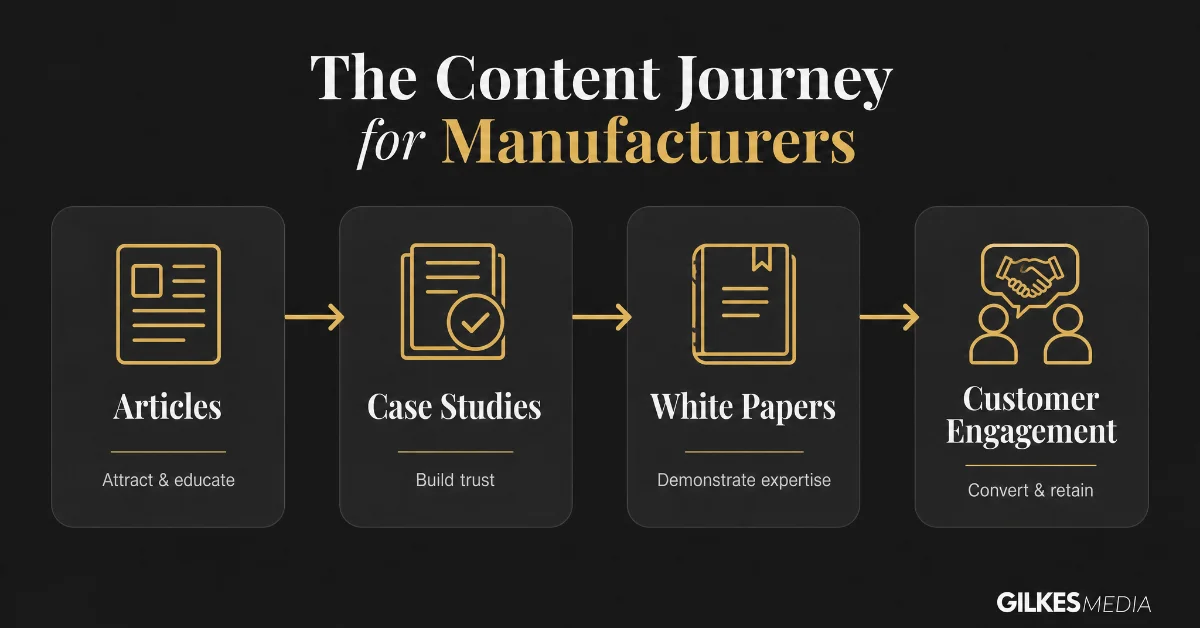
In manufacturing, content marketing is not about producing generic blog posts. Its real job is to prove your technical expertise, solve difficult problems for your buyers, and actively support a long and complex sales cycle. It is how you build trust and demonstrate capability long before a prospect ever picks up the phone.
A common mistake manufacturers make is creating content without considering where it fits in the buying journey. A procurement manager exploring initial solutions has completely different questions to an engineer who is ready to specify a component. Your content has to serve both, guiding them from awareness to a final decision.
A winning content strategy in this sector is built on substance. It is about providing genuine, practical value that makes your audience's job easier.
To get results, you must be deliberate. There is a big difference between content designed to attract attention (top-of-funnel) and assets created to help close a deal (bottom-of-funnel). Each has a distinct purpose.
At Gilkes Media, we build content strategies that also serve as a toolkit for your sales team. Every white paper, case study, and data sheet should not just attract leads; it should be a valuable asset your team can use to educate prospects and overcome objections.
This dual-purpose approach means your marketing investment delivers value at every stage, from the first click right through to the final sale.
For manufacturers, the most valuable content is almost always the most technical. These are the resources that engineers, specifiers, and technical buyers depend on to do their jobs. Focusing your efforts here builds immense credibility and directly supports sales conversations.
Your priority should be building a library of assets like these:
To get started, do not look to the marketing department for ideas. Talk to your sales and engineering teams. They are on the front line, hearing every day what customers are struggling with, the questions they ask, and the information they need to commit to a purchase. If you can systematically turn their insights into high-quality content, you will create a powerful engine for both lead generation and sales enablement.
If you cannot measure your marketing, you cannot improve it. More importantly, you cannot justify the investment to those who control the budget. Effective digital marketing for manufacturers is not about impressions or clicks; it is about generating a tangible return that the boardroom understands and values.
This means moving beyond 'vanity metrics' and focusing entirely on commercial key performance indicators (KPIs). The goal is to draw a straight line from every pound spent on marketing directly to the sales pipeline. This proves that marketing is a driver of growth, not just a cost centre.
As a specialist consultant, my entire approach is built on accountability. We establish clear, commercially-focused metrics from day one, making sure every action is designed to produce a measurable result.
To prove the value of your marketing, you need a simple, clear reporting framework. This involves tracking metrics that show genuine progress through the sales funnel, from an initial website enquiry to a closed deal. Forget about social media likes and shares; the only metrics that matter are those that signal real buying intent.
Your core focus should be on tracking:
Proving ROI is about telling a clear commercial story. It is showing that for every £1,000 invested in a Google Ads campaign, we generated £15,000 in qualified pipeline, which led to three new clients worth £50,000. That is a language every business leader understands.
Tracking these KPIs gives you the power to hold your internal teams or external partners accountable for real business results. This is especially important as more manufacturers look for specialist support. Recent data shows that 50% of B2B operations, including manufacturing, now outsource some of their marketing, a figure set to rise in 2025. You can read more on this trend and what’s driving it for UK manufacturers.
This trend makes a solid measurement framework non-negotiable for justifying spend and demanding performance.
To truly understand the impact of your efforts, adopting Modern Search Engine Marketing Reporting strategies is essential for proving ROI. This allows you to build a simple but powerful dashboard that provides a clear, at-a-glance view of performance against targets, ensuring every pound invested is justified by a tangible return.
Shifting to digital marketing always brings up practical questions. As a manufacturer, you need direct, practical answers that make commercial sense. Here are the most common queries we hear from leadership teams.
This is always the first question, and the honest answer is that it depends entirely on your commercial goals.
Instead of choosing an arbitrary number, it is better to work backwards from what you want to achieve. That said, for a serious, professionally managed campaign that includes ad spend on platforms like Google or LinkedIn, a realistic starting point is typically between £3,000 to £7,000 per month.
A smarter way to frame it is around your target Cost Per Lead (CPL). If you know a qualified lead is worth pursuing at £200, and your goal is to generate 20 of them a month, then a budget of at least £4,000 is a logical starting point. This approach turns marketing from an expense into a direct investment in your sales pipeline.
The timeline depends on the channel you are using, which is why running a couple of channels in parallel is so effective.
Starting small is the smart move. Do not fall into the trap of trying to do everything at once.
Pick one or two channels where you can make the biggest impact quickly. For most manufacturers, a powerful starting combination is a tightly focused Google Ads campaign to capture immediate demand, alongside consistently building out your website’s technical content to win the long-term SEO game.
Focus on quality over quantity. It is far better to produce one high-value, technical case study a month than it is to publish four generic blog posts. The key is to create a manageable plan, execute it consistently, and build momentum from there.
At Gilkes Media, we build practical, performance-driven marketing strategies that deliver measurable ROI for manufacturing and B2B companies. If you are ready to create a predictable lead generation engine, book a free consultation and let's discuss a focused plan for your business.
