
A B2B lead generation company exists to solve one core problem: filling your sales pipeline with high-quality, relevant opportunities. They are not just about sending you a list of names. The right partner provides a structured process to identify, engage, and qualify potential customers, freeing your sales team to focus on what they do best: closing deals.
Hiring a B2B lead generation company without a clear strategy is like setting sail without a map. You might know you want to find new customers, but the journey will be inefficient, expensive, and probably end in frustration.
Saying "we need more leads" is a recipe for disaster. It leads to misaligned expectations and wasted investment. To attract a high-calibre partner and ensure every pound you spend is accountable, you first need to define what success actually looks like for your business. This is not just about vanity metrics; it is about building a solid commercial brief that separates the strategic players from the generic service providers.
The foundation of any successful campaign is a razor-sharp understanding of who you are trying to reach. Too many businesses stop at basic firmographics like industry and company size. A true Ideal Customer Profile (ICP) goes much deeper, painting a multi-dimensional picture of the companies most likely to buy from you, and buy quickly.
To build an ICP that actually works, dig into these areas:
This process transforms your targeting from a wide net into a highly-tuned spear. It ensures your message lands with the right people at exactly the right time.
Once you know who you are targeting, you need to define what a good outcome looks like in measurable terms. Your Key Performance Indicators (KPIs) must be tied directly to commercial results, not just marketing activity.
A great lead generation partner does not just deliver contacts; they deliver pipeline momentum. Your KPIs should reflect this, focusing on the quality and commercial viability of the opportunities they create, not just the volume.
Forget tracking only 'cost per lead', a metric easily skewed by low-quality data. Instead, prioritise KPIs that tell the full story:
This infographic shows how this strategic flow works in practice: define your ideal customer, set clear performance metrics, and then allocate a realistic budget.
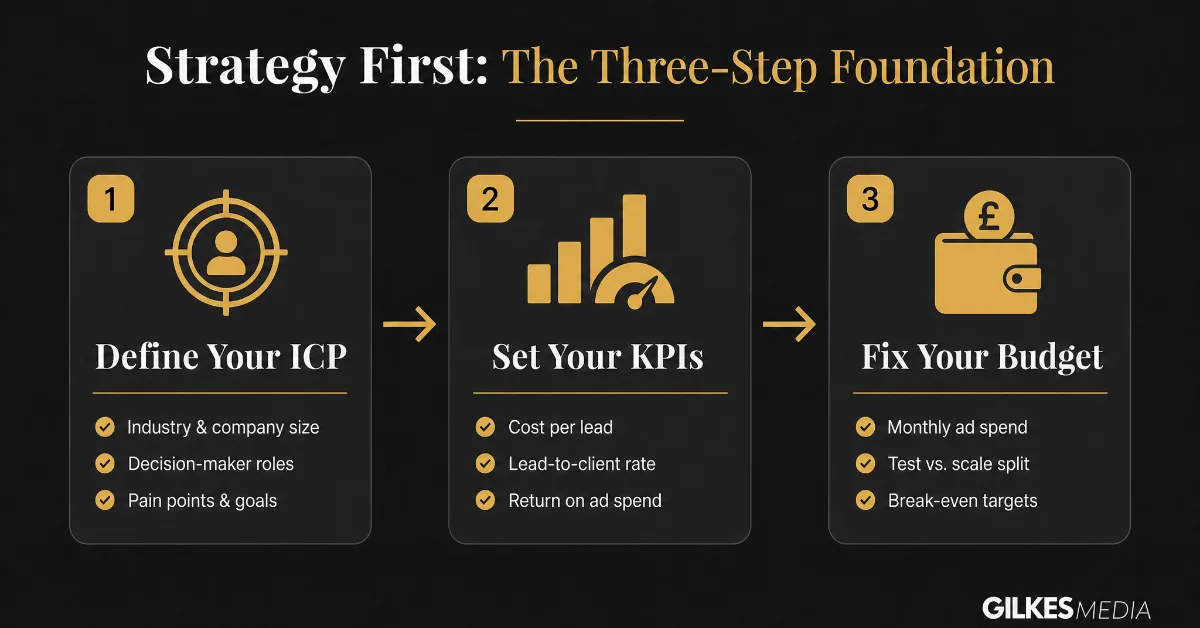
Following this sequence ensures your budget is tied to specific, measurable business goals, not just arbitrary spending targets. If you are new to all this, our guide on the fundamentals of lead generation in marketing is a great place to start.
Your budget should be a direct reflection of your growth ambitions and the value of a new customer. A common mistake is to set an arbitrarily low budget and just hope for the best. A far better approach is to work backwards from your revenue goals.
For example, if your goal is to add £250,000 in new annual contract value and your average deal size is £25,000, you need to close 10 new deals. If your historic lead-to-close ratio is 10%, you know you will need 100 qualified leads to hit your target.
This data-driven approach allows you to have a much more strategic conversation with potential partners about what is realistically achievable.
Every B2B lead generation company will show you a polished sales deck promising a pipeline bursting at the seams. But the real measure of a partner is not in their presentation, it is in the substance and transparency of their process. Your job is to look past the confident claims and scrutinise the engine that actually drives their results.
Differentiating between a slick sales operation and a genuine growth partner means digging into their past performance, understanding their day-to-day methodology, and knowing exactly what tools they are using to deliver on their promises. True experts will welcome this. The ones relying on smoke and mirrors will start to get evasive.
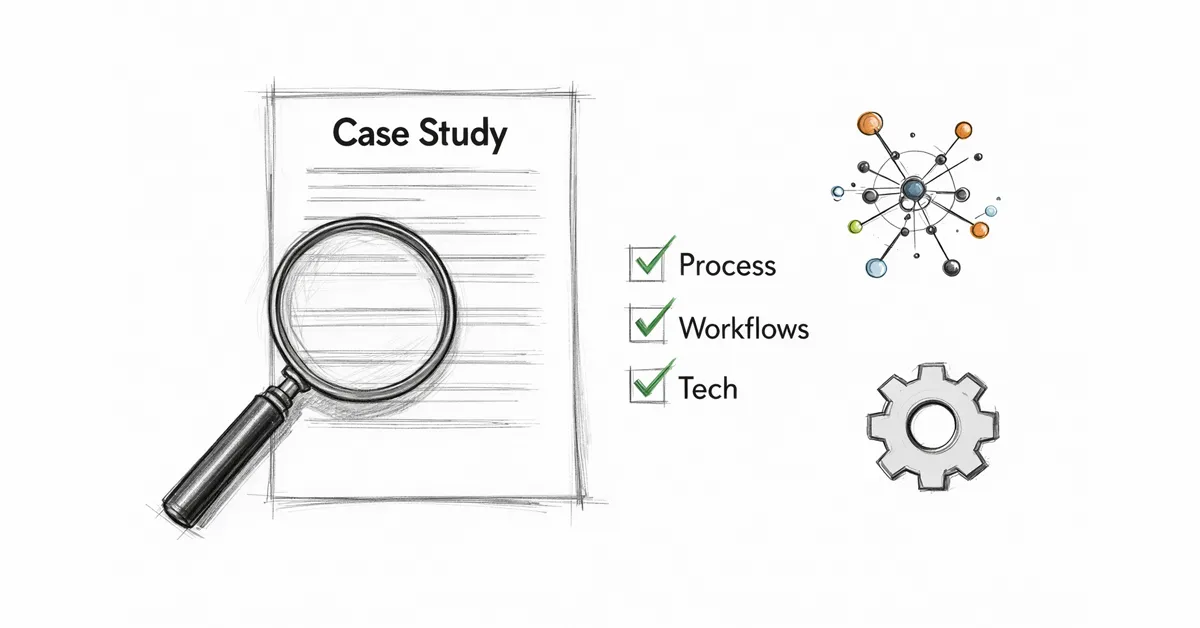
Case studies are the first piece of evidence any agency will offer, but most are commercially useless. A vague story about "increasing leads by 300%" for an anonymous client in a totally different industry means nothing to you. You need proof that is both relevant and verifiable.
When they share their success stories, push back with direct questions:
A strong case study tells a commercial story. It should clearly outline the initial business challenge, the strategy they implemented, and the measurable impact on the client's sales pipeline and bottom line, not just fluffy, top-of-funnel metrics.
The "how" is just as important as the "what". A company’s methodology reveals its strategic depth. Outdated tactics like blasting generic emails to a tired, purchased list are not only ineffective but can actively damage your brand’s reputation. You are looking for a modern, sophisticated, and multi-channel approach.
Today, a multi-channel strategy is non-negotiable for UK B2B companies. Research shows that organisations using multiple touchpoints see conversion rates 287% higher than those sticking to a single channel. For instance, combining targeted email with personalised LinkedIn outreach can deliver 34% higher response rates than email alone. A top-tier partner will integrate these channels smoothly into a single, cohesive campaign.
Here is a simple way to assess their process:
| Aspect | What to Look For | What to Avoid |
|---|---|---|
| Strategy | A bespoke plan based on your ICP and KPIs. | A "one-size-fits-all" package or template. |
| Channels | An integrated mix of email, LinkedIn, and paid media. | Over-reliance on a single channel, like cold email. |
| Personalisation | Evidence of deep research and tailored messaging. | Use of generic templates with basic merge tags. |
| Qualification | A clear, multi-step process to verify lead quality. | Passing over every single response as a "qualified lead". |
The tools an agency uses are a strong indicator of its efficiency and sophistication. You do not need to be an expert on every platform, but knowing what is in their toolkit gives you insight into their capabilities. Having a solid grasp of the best B2B lead generation tools will help you quickly gauge their level of expertise.
Ask them directly:
A partner who is transparent about their methodology, technology, and data is one who is confident in their ability to deliver real, measurable business value. This is the foundation of a successful partnership, moving beyond a simple vendor relationship to one built on trust and shared commercial goals.
Getting the commercial and legal terms right is just as important as the strategy itself. I have seen great strategies fall apart because of a poorly aligned pricing model or a vague contract. It leads to frustration, wasted budget, and a partnership that just does not work.
You need a structure that fits your cash flow, your appetite for risk, and your growth ambitions. Let’s break down the common models you will come across.
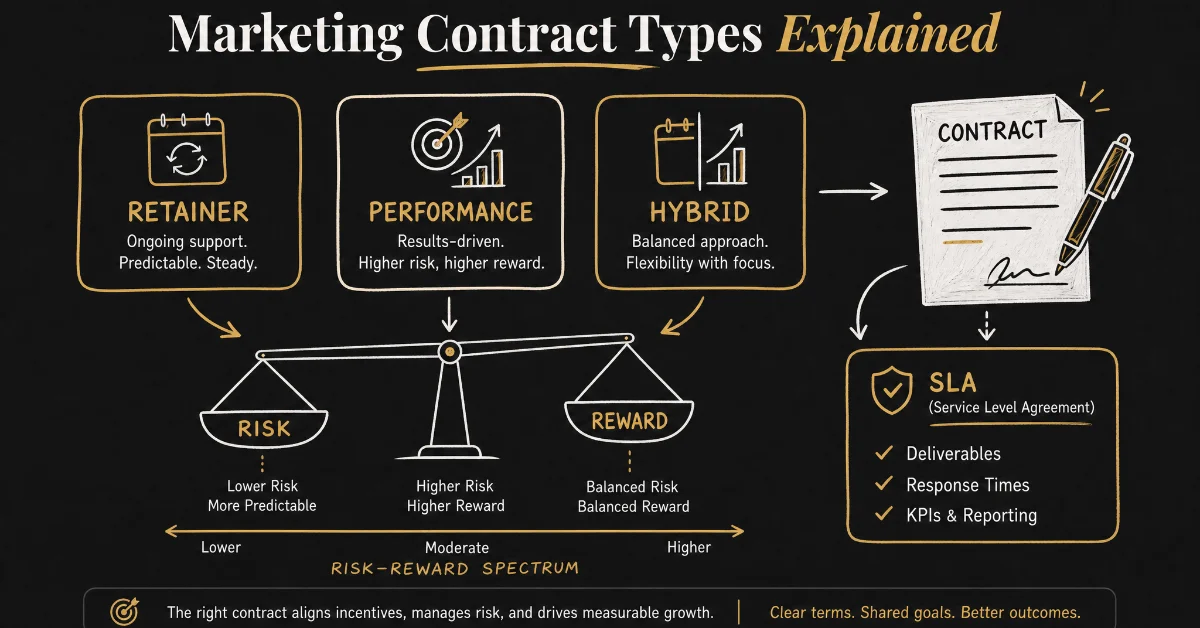
Every pricing model splits the risk and reward differently between you and the company you hire. There is no single "best" option here; what works depends entirely on your business.
To help you decide, here is a simple breakdown of the typical pricing structures, outlining the main benefits and potential risks for your business.
| Model | Best For | Key Benefit | Potential Risk |
|---|---|---|---|
| Monthly Retainer | Businesses needing a consistent, strategic partner for complex campaigns. | Predictable monthly costs and dedicated resources focused on your success. | You pay for effort and expertise, not guaranteed results. Performance can lag. |
| Pay Per Lead | Companies with a simple sales process and a clear definition of a lead. | You only pay for a specific, pre-agreed outcome, minimising upfront financial risk. | Can incentivise lead quantity over quality. May lack strategic depth. |
| Performance-Based | Mature businesses with a well-understood sales cycle and clear metrics. | Directly ties agency fees to commercial results like meetings booked or deals closed. | Often requires a higher fee per result and a long-term commitment to be viable. |
| Hybrid Model | Most businesses seeking a balance of strategy and accountability. | Blends a lower monthly retainer with performance bonuses, sharing risk and reward. | Can be more complex to structure and track, requiring clear performance tiers. |
From my experience, a hybrid model usually hits the sweet spot for most UK SMEs. It secures the strategic thinking and consistent work of a retainer but adds a performance element. This keeps everyone focused on what truly matters: delivering real pipeline value, not just ticking off tasks.
Whatever pricing model you choose, the Service Level Agreement (SLA) is the most critical part of your contract. This is where verbal promises become legally binding commitments. A weak or missing SLA is one of the biggest red flags you can find.
Your SLA is not just a legal document; it is the rulebook for your partnership. It creates a shared definition of success and ensures everyone is accountable. Without one, you are flying blind.
A solid SLA must nail down a few non-negotiable points:
Sorting these details out upfront prevents headaches later and makes sure both sides are working towards the exact same goals. For a deeper dive into the numbers behind these discussions, our guide on calculating customer acquisition cost will give you a stronger commercial footing for negotiations.
The discovery call is where you separate a genuine partner from a mere service provider. It is your best chance to get past the polished sales pitch and really understand their strategic depth, operational rigour, and whether they are a good cultural fit.
A slick presentation is easy to fake. A clear, commercially-focused answer to a tough question is not.
This is not just about ticking boxes on a checklist. It is about probing their process to see if it stands up to scrutiny. The questions you ask now will directly impact the quality of the partnership, and the leads, you get later. Think of this as your interview script for finding a partner who thinks like a consultant, not just a vendor.
The single biggest point of failure in any outsourced partnership is a misaligned definition of a "good lead". If your sales team's definition does not perfectly match what the agency delivers, you are just paying for a pipeline filled with junk that wastes everyone's time.
You need to drill down into the specifics. Ask them directly:
A strong partner will have a clear, documented system for this. They will welcome your input because they know it is critical for success. To get a better handle on this stage, check out our guide on how to qualify sales leads effectively.
Generic B2B experience is not enough. You need a partner who gets the specific nuances of your market, speaks the language your customers use, and understands the unique problems they face. Without that context, their outreach will sound robotic and fall flat.
Ask questions that test their real-world experience in your sector:
These questions force them to provide specific, relevant evidence instead of broad claims. Their answers will quickly reveal whether they have genuine expertise or are just planning to learn on your budget.
A partner’s value is not just in their process; it is in their market intelligence. They should bring insights and a proven playbook for your specific niche, accelerating your path to results rather than starting from scratch.
For UK businesses, an agency's approach to LinkedIn is a massive indicator of its sophistication. It has become the undisputed leader for B2B, driving 80% of B2B leads from social media.
For UK marketers, 89% use LinkedIn for lead generation, with 62% confirming it is an effective channel. Its average Lead Gen Form conversion rate of 13% demolishes what you would typically see from a standard landing page. You can find more on these B2B demand generation stats on theinsightcollective.com.
Given how important it is, you need to know exactly how they plan to use it.
Their response tells you whether they see LinkedIn as a strategic engagement tool or just another channel for high-volume, low-impact spam. The best B2B lead generation companies know it is all about starting meaningful conversations that turn into real commercial opportunities.
Once the partnership starts, the job shifts from choosing a provider to managing one properly.
Many businesses lose control. They approve spend, skim reports, attend a monthly call, and hope pipeline improves. That isn’t management. It’s passive optimism.
A better approach is to agree a small set of operating metrics and turn them into a service level agreement. Not a legal weapon. A working document that keeps both sides honest.
Performance-based pricing models in the UK can deliver up to 2.5x greater pipeline velocity for SMEs, driven by consistent multi-channel outreach that keeps the pipeline moving without adding internal headcount. The practical point isn’t the model alone. It’s that speed improves when expectations, handover rules, and measurement are clear.
Most reports include too much. Founders don’t need a page of vanity metrics.
Track the numbers that affect commercial decisions:
| Metric | Description | Good Target | Why It Matters |
|---|---|---|---|
| Cost per lead | Total spend divided by leads generated | Agreed before launch | Shows channel efficiency |
| Cost per qualified lead | Spend divided by leads that meet your agreed criteria | Lower than unqualified acquisition waste | Shows whether quality is holding up |
| Lead-to-meeting ratio | The share of leads that turn into real sales conversations | Improving over time | Reveals lead quality and follow-up strength |
| Pipeline contribution | The value of opportunities influenced by the campaign | Directionally increasing | Connects activity to revenue potential |
The “good target” column should be agreed commercially, not borrowed from random benchmark posts. A good target for one business can be poor for another if deal size, sales cycle, or close rate differs.
For a useful outside perspective on lead economics, What Is a Good Cost of a Lead and How Can You Lower It? is a sensible reference because it frames cost in relation to quality and conversion rather than chasing the cheapest possible enquiry.
A useful SLA is short and specific.
Include:
A lead generation programme fails unnoticed when accountability is blurred.
Marketing says leads were sent. Sales says they were poor. Leadership can’t tell whether the issue is channel quality, speed of follow-up, weak messaging, or bad fit. An SLA forces those questions into the open early.
The best outsourced relationships don't run on trust alone. They run on agreed definitions, fast feedback, and shared responsibility.
Signing the contract is the starting line, not the finish line. I have seen it time and again: the success of a B2B lead generation partnership is won or lost in the first 90 days.
A rushed or disorganised start creates friction, slows down progress, and ultimately delays your return on investment. This initial period is where you build the foundation for long-term success. A structured launch empowers your new partner to integrate smoothly, understand your business on a deeper level, and start delivering high-quality leads faster.
Your active participation here is non-negotiable.
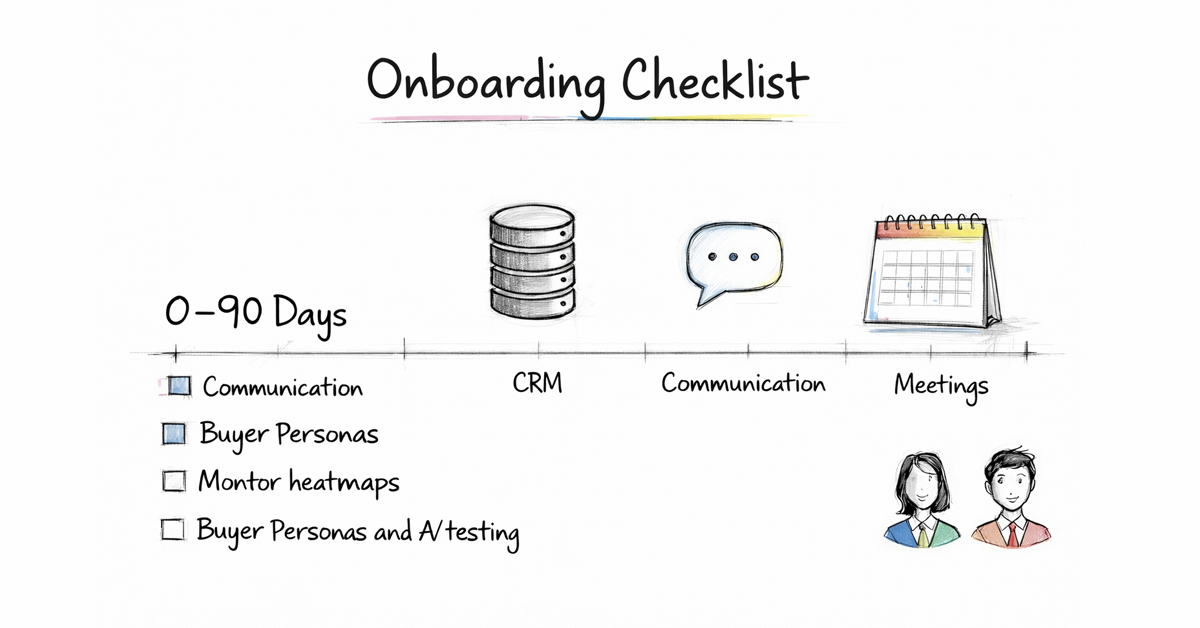
To hit the ground running, you need to arm your new partner with all the necessary assets and access from day one. Treat them as an extension of your own team, not just another vendor.
Here is a practical checklist of what you should have ready:
A well-prepared kick-off package drastically cuts down the initial "learning curve" and lets the agency focus on generating leads, not chasing down logins and logos.
Clear, consistent communication is the bedrock of a successful agency relationship. Problems arise when feedback is ad-hoc and reporting is irregular. It is vital to establish a clear operational rhythm from the outset.
Vague feedback like "these leads are not great" is commercially useless. A strong partnership requires a tight, structured feedback loop where your sales team provides specific reasons for lead rejection, allowing the agency to refine targeting in near real-time.
Agree on a weekly or bi-weekly check-in call to review progress against your KPIs. This meeting is not just for them to report to you; it is a two-way conversation to discuss what is working, what is not, and how to pivot the strategy.
This is the most critical process to get right. The feedback loop between your sales team and the lead generation company is where the theoretical ICP meets real-world market response.
Here is a simple but effective way to structure it:
This structured process moves you away from guesswork and towards a data-driven approach to campaign optimisation. It ensures every pound you invest is working harder, generating not just more leads, but better leads that your sales team is genuinely excited to pursue.
Whether you decide to outsource or keep lead generation in-house, the fundamentals stay the same. Our guide to B2B lead generation best practices is a useful benchmark for judging any partner's proposed approach, or for sharpening your own team's execution.
Choosing to bring in a B2B lead generation company is a serious commercial decision. It is completely normal to have questions about the process, the costs, and the potential pitfalls. As a consultant who has managed this from both sides of the table, I have answered these questions countless times for founders and marketing leaders.
Here are some clear, practical answers to the most common concerns, designed to give you the confidence to move forward.
There is no standard price list for lead generation services; the costs are tied directly to the scope, complexity, and your industry. In the UK, you can expect a monthly retainer for a credible partner to range anywhere from £2,000 to over £10,000.
If you decide on a pay-per-lead model instead, you might see prices from £50 to over £500 per qualified lead. This depends heavily on how niche your target market is and how strict your qualification criteria are.
The critical takeaway here is to focus on the commercial value, not just the price tag. A "cheap" service delivering low-quality leads your sales team instantly rejects is far more expensive than a premium partner delivering opportunities that actually convert into profitable customers. Always weigh the cost against the expected return and potential customer lifetime value.
The right question is not "How much does it cost?" but "What is the expected Cost Per Acquisition, and does it align with our financial model?" This shifts the conversation from an expense to a measurable investment in growth.
Navigating the market for B2B lead generation companies can feel overwhelming, but a few clear warning signs can help you filter out unsuitable partners quickly.
Be very cautious of any company that:
A genuine expert acts like a consultant focused on your business goals, not just a vendor selling a service.
Sustainable lead generation is a process of testing, learning, and refining; it is not a tap you can simply turn on. Anyone promising a flood of high-quality leads in the first week is simply overpromising.
A more realistic timeline looks something like this:
You should always budget for a 90-day ramp-up period to get a true measure of a partner’s capabilities. This disciplined approach ensures you build a reliable engine for growth, not just a short-term sugar rush of activity. Technology can definitely speed this up. For a deep dive into how technology is transforming the industry, you might want to look into resources on AI for B2B lead generation.
At Gilkes Media, we move past the typical agency fluff. I work directly with you as a senior marketing consultant to build and execute a practical, performance-driven strategy that delivers measurable pipeline growth. If you are looking for a hands-on partner who is accountable for your results, let’s talk.
