
Qualifying sales leads is the process of determining if a prospect is a good fit for your business. It is a methodical check against a pre-defined set of criteria, designed to separate genuine buyers from those who will waste your time. This vital step ensures your sales team invests its energy on deals that are likely to close, making it the critical link between marketing activity and real revenue.
Chasing every lead that lands in your inbox feels productive, but it is often a significant drain on resources. Without a solid qualification process, your sales pipeline becomes clogged with dead ends, consuming your team's most valuable asset: time. This is not just inefficient; it directly impacts morale and your bottom line.
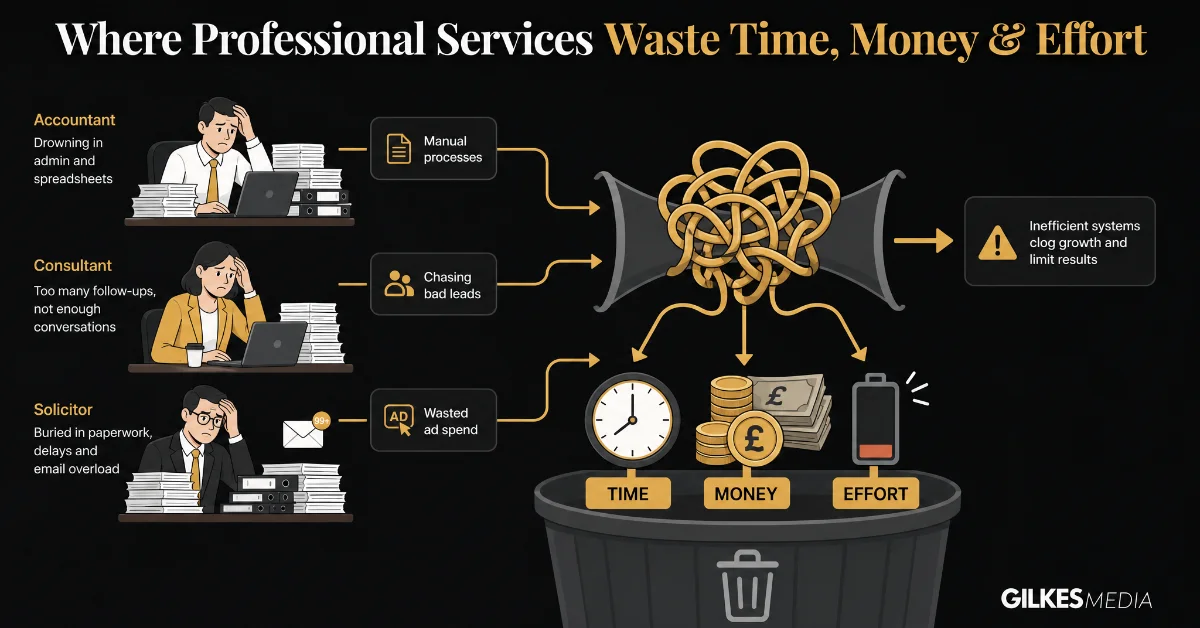
Let's attach some figures to this. Consider a typical UK professional services firm. A senior sales consultant on a £60,000 salary costs the business approximately £32 per hour. If they spend just 10 hours a week on leads who were never going to buy, that is £320 of wasted salary every single week.
Annually, that adds up to over £16,000 for just one salesperson. This calculation does not even account for the marketing budget spent to generate those leads in the first place.
This financial leak becomes more alarming when you learn that UK B2B sales reps spend a shocking 28% of their time actually selling. The rest is spent on administration and sifting through poor-quality leads. With 44% of sales reps complaining about the quality of leads they receive from marketing, the bottleneck is clear.
The damage extends beyond wasted money. Poor qualification skews sales forecasting, frustrates your best salespeople, and creates friction between marketing and sales teams. If marketing celebrates MQLs that sales view as junk, you are experiencing this problem firsthand.
Achieving alignment is mission-critical. For those looking to integrate their teams around shared revenue goals, this a complete guide to RevOps offers a valuable starting point.
Effective lead qualification is not a box-ticking exercise. It is a strategic lever for boosting efficiency, focusing resources where they will generate revenue, and building a sales forecast you can rely on.
Let's break down the real-world impact with a simple comparison.
| Business Area | Poor Qualification Outcome | Strong Qualification Outcome |
|---|---|---|
| Sales Team Productivity | Reps waste time on dead-end leads. Morale drops and burnout increases. | Reps focus on high-potential deals, closing more and feeling more successful. |
| Cost of Sale | High cost per acquisition due to wasted effort and marketing spend. | Lower cost per acquisition as resources are targeted effectively. |
| Sales Cycle Length | Long, drawn-out cycles as reps try to convince unqualified prospects. | Shorter, more efficient sales cycles with genuinely interested buyers. |
| Revenue Forecasting | Unpredictable and inaccurate. The pipeline is full but nothing closes. | Reliable forecasts based on a pipeline of qualified opportunities. |
| Marketing & Sales Alignment | Constant friction. Marketing blames sales for not closing; sales blames marketing for bad leads. | A collaborative partnership built on shared definitions and goals (MQLs/SQLs). |
| Customer Lifetime Value | Higher churn as poor-fit customers realise the solution is not right for them. | Higher LTV as you attract and retain ideal customers who get real value. |
The difference is stark. Strong qualification is not just about organisation; it is about building a healthier, more profitable business from the ground up.
Ultimately, a solid process for qualifying sales leads ensures your team invests its time wisely. They engage with prospects who have a real need, the authority to decide, and the budget to proceed. This transforms your sales function from a reactive, high-effort slog into a focused, efficient engine for business growth.
Before you can qualify a lead, you must know who you are looking for. Chasing leads without a clear target is like sailing without a compass. This is why defining your Ideal Customer Profile (ICP) is the essential first step.
Your ICP is not an abstract marketing theory. It is a practical, commercial tool that acts as the primary filter for your entire sales and marketing operation. It moves beyond basic demographics to focus on the specific traits of businesses that gain the most value from your services and, in turn, provide the most value to you.
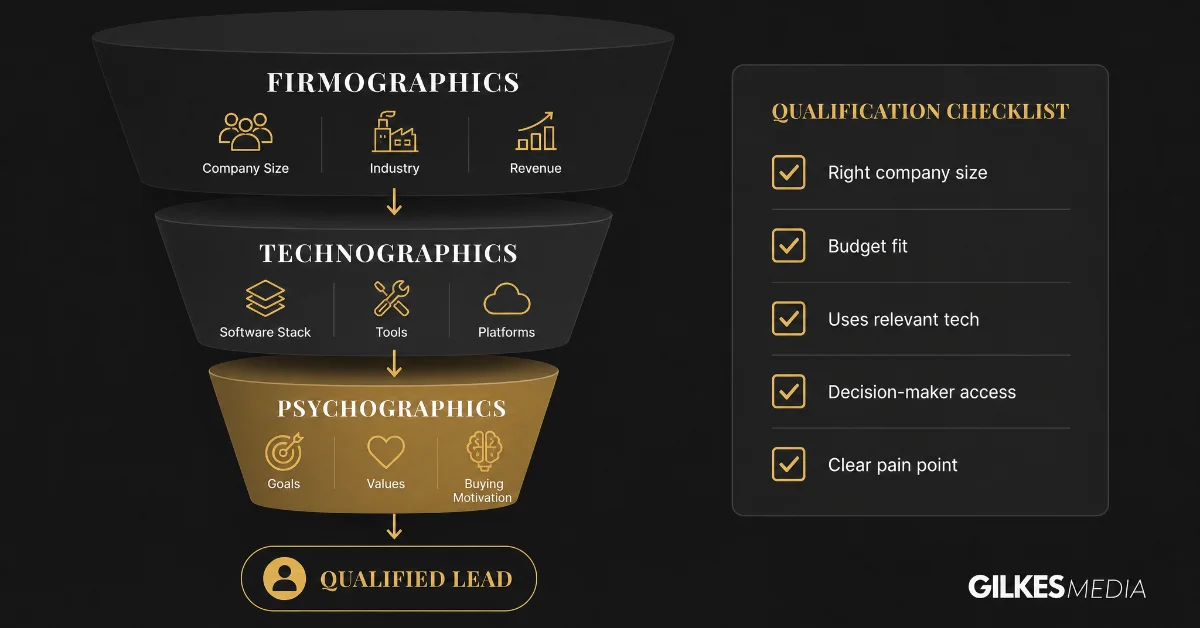
A solid ICP is built from several layers of data. At its foundation are firmographics and, increasingly, technographics. These details provide the objective facts needed to begin filtering.
Firmographics tell you if a company is a potential fit, but psychographics tell you why they would buy from you. This is about understanding their goals, their biggest challenges, and what they need from a partner. It separates a lead that looks good on paper from one that is genuinely ready for a commercial discussion.
To get to the heart of this, ask your team these kinds of questions:
The goal is to move past a simple checklist. You need a deep understanding of your best customers' commercial reality. Your ICP should describe not just who they are, but the specific business pain you are uniquely equipped to solve.
The data you need to build this profile likely already exists within your business. You do not need to start from scratch.
Bringing this information together creates a living document that becomes the single source of truth for your lead qualification efforts. A well-defined ICP aligns marketing and sales, ensuring every pound spent on lead generation attracts the right kind of business. For a deeper look at this crucial first stage of the sales funnel, read our guide on what lead generation in marketing really means.
Once your ICP is clear, every step you take to qualify leads will be sharper, more efficient, and more profitable.
Once you have defined your Ideal Customer Profile, it is time to structure your sales conversations. While gut instinct has its place, relying on it alone leads to inconsistency and missed opportunities. A formal qualification framework gives your team a reliable roadmap for asking the right questions.
Think of these frameworks as conversational guides rather than rigid scripts. They bring discipline to the discovery process, helping you uncover whether a deal truly has potential.
One of the oldest and most direct frameworks is BANT. It is a straightforward acronym that stands for:
BANT is built for efficiency. It is an excellent fit for businesses with shorter sales cycles or those selling high-value items where budget is the first major hurdle. Imagine a UK firm selling a £50,000 piece of manufacturing equipment; BANT helps them quickly disqualify prospects who cannot afford the investment.
The downside? Its "budget-first" nature can feel blunt in a consultative sale. You risk disqualifying a prospect who has a significant need but has not yet formalised a budget, a common scenario in modern B2B sales.
For service and SaaS businesses, a more modern framework like CHAMP is often a better fit. It reorders the conversation to focus on the prospect’s world before discussing your solution.
CHAMP breaks down as follows:
The shift is subtle but powerful. CHAMP starts with the problem, not the price. This allows your team to frame your solution as a valuable investment that solves a costly issue, rather than just another expense.
For a UK tech company selling project management software, leading with ‘Challenges’ helps uncover the thousands of pounds being lost to wasted staff hours. That context makes the follow-up conversation about ‘Money’ much more persuasive.
The best framework is the one that aligns with your sales process and your customer’s buying journey. There is no single right answer. Many of the most successful sales teams I have worked with create a hybrid model that suits them perfectly.
For those in complex, high-stakes B2B sales, it is also worth exploring options like the MEDDIC framework, which provides an even more detailed approach for navigating larger deals.
Here is a quick way to decide:
| Framework | Best Suited For | Key Focus | When to Use It |
|---|---|---|---|
| BANT | Shorter sales cycles, transactional sales, high-capital goods. | Budget and purchasing power. | When budget is a non-negotiable first hurdle for qualification. |
| CHAMP | Longer sales cycles, consultative sales, SaaS, professional services. | The prospect's business challenges and pain points. | When you need to build a strong value case before discussing price. |
The goal is not to follow an acronym blindly. It is to adopt a structured way of thinking so your team consistently uncovers the critical details that separate a real opportunity from a dead end.
Pick a framework that empowers your team to have better commercial conversations. Start with one, train your team on the reasoning behind it, and build it into your CRM and sales playbook. That consistency is the foundation of a predictable and scalable sales engine.
Once you have an ICP and a qualification framework, you need a system to sort through leads efficiently. A lead scoring model turns your qualification process from a manual exercise into a smart, data-driven engine.
This is not about buying complex enterprise software. It is about building a straightforward model that assigns points to leads based on who they are and how they engage with you. The goal is simple: ensure your sales team always focuses on the warmest prospects first.
A solid lead scoring model needs two different types of information to provide a complete picture.
If you only look at one, you are missing half the story. A prospect might look perfect on paper (a high explicit score) but show zero interest in buying (a low implicit score). Conversely, someone could be clicking on everything you send but work for a company that is a terrible fit. You need both to pinpoint who is truly ready for a sales conversation.
The secret to a model that works is to start simple. You do not need hundreds of rules. Begin with a handful of high-impact signals that, for your business, indicate a potential customer.
For instance, a marketing director at a 100-person tech company is a much hotter lead than a student doing research, so they receive more points. Similarly, a lead who requests a demo gets a much higher score than someone who just downloaded a general, top-of-funnel eBook.
A lead scoring model acts as an automated filter, ensuring that only the most engaged and best-fit leads rise to the top of your sales team's priority list. It replaces guesswork with a consistent, data-backed system for prioritisation.
This systematic approach is crucial. A staggering 34% of deals fail because the buyers were not ready. When you realise that up to 79% of marketing leads never convert into sales, it becomes clear that relying on form fills alone is a recipe for wasted time. A scoring model helps you focus on the people who are actually ready to talk business. You can discover more insights about these lead generation statistics to see the full picture.
Here is a sample model showing how a B2B service business in the UK might assign points.
This table shows a basic scoring system where specific attributes and behaviours are given points to help qualify leads automatically.
| Criteria Category | Attribute or Action | Points |
|---|---|---|
| Role/Seniority | C-Level or Director | +20 |
| Manager | +10 | |
| Company Size | 50-250 Employees (Ideal) | +15 |
| Key Behaviour | Requested a Demo | +30 |
| Engagement | Visited Pricing Page | +10 |
As you can see, a Director from an ideal-sized company who requests a demo would immediately score high enough to warrant a sales call.
With your scoring rules in place, the final step is setting thresholds. This creates a clear, automated handoff point from marketing to sales.
These thresholds form the foundation of your Service Level Agreement (SLA) between marketing and sales. Marketing's goal is to generate leads that cross the MQL threshold. Sales' responsibility is to act on every SQL within an agreed timeframe. This creates alignment and accountability, ensuring a high-value lead never goes cold.
You have defined your Ideal Customer Profile, chosen a framework, and built a scoring model. Now, you must turn that plan into a smooth, repeatable system your team can use every day. A strategy is only as good as its execution.
The first step is to integrate your qualification criteria into your CRM. Set up custom fields that mirror your chosen framework, whether BANT, CHAMP, or a custom model. If "Challenge" is a key qualifier, there needs to be a dedicated field in your CRM where reps can log that information. This is about making your process the path of least resistance.
Once your CRM is set up to capture the right data, you can start automating the workflow. The goal is to eliminate manual work and ensure high-value leads get immediate attention.
Effective automation can be simple:
This flowchart provides a high-level view of how lead data and behaviour feed into a scoring system.
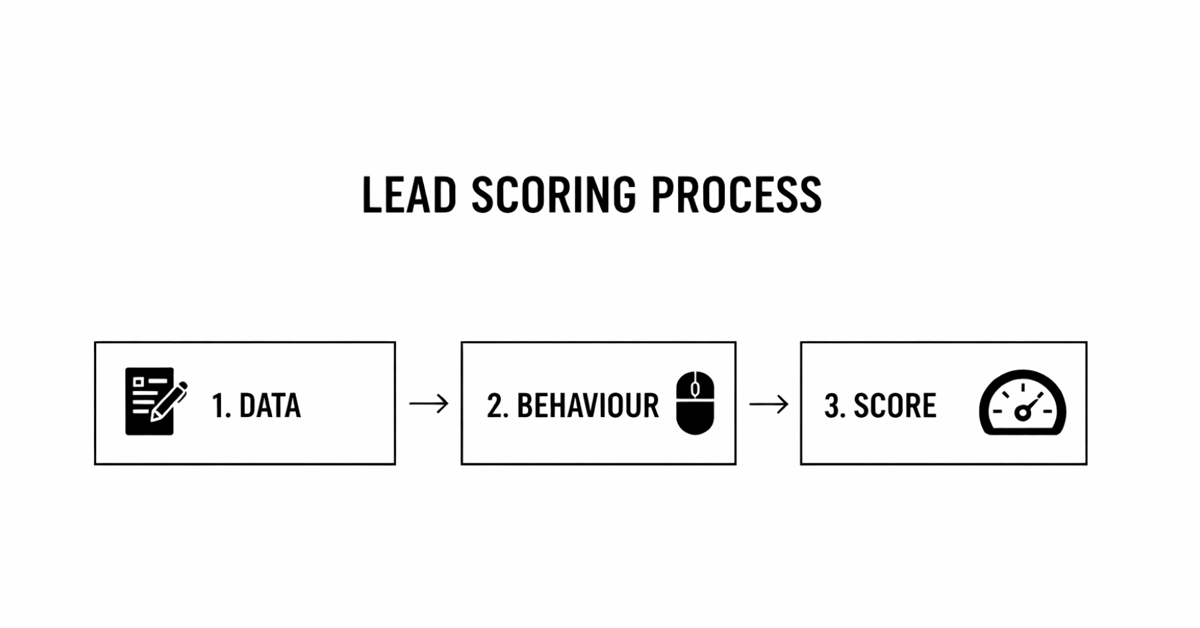
It shows the process of turning raw data from forms and user actions into a simple score that tells your sales team where to focus their energy.
One of the most powerful actions you can take is to create a formal Service Level Agreement (SLA) between your marketing and sales teams. This document is key to ending the age-old argument about lead quality and follow-up.
An SLA is not just a corporate document; it's a peace treaty. It defines the mutual commitments each team makes to the other, creating a shared sense of ownership over the pipeline.
Your SLA should clearly define:
This agreement transforms your funnel from two separate departments into one unified revenue engine. It ensures promising leads get prompt attention, while those not ready can be passed back to marketing. Our guide on lead nurturing best practices offers effective strategies for handling those returned leads.
Finally, document everything. Create a simple playbook that outlines the ICP, the qualification framework, the scoring rules, and the SLA. Train your team not just on the "what" but the "why" behind the process. When everyone understands how their actions contribute to better efficiency and more revenue, they become invested in the system's success.
Your lead qualification process is not something you can set and forget. Think of it as a living system that needs constant attention to perform at its best. The real value comes from measuring its commercial impact and using that data to make smart adjustments.
This ongoing cycle of measuring, gathering feedback, and optimising separates a decent qualification process from a great one. It is how you ensure your strategy keeps pace with your market, consistently driving a better return on your marketing investment.
To determine if your process is working, you need to track the numbers that tie directly to revenue. It is easy to get sidetracked by vanity metrics, like the total number of Marketing Qualified Leads (MQLs). You need to focus on data that shows real commercial progress.
Here are the three key metrics to watch:
Getting a handle on these numbers is non-negotiable. For a more detailed look at connecting marketing efforts to the bottom line, our guide on B2B lead generation strategy offers a practical framework.
Numbers tell you what is happening, but your sales team can tell you why. They are on the front line, speaking with prospects every day. Their insights are the fastest way to sharpen your ICP and fine-tune your scoring rules.
Your sales team’s daily conversations are a goldmine of qualitative data. Formalising a way to capture their insights is key to turning anecdotal feedback into actionable process improvements.
Do not wait for a quarterly review to ask for feedback. Set up a simple, consistent way to capture their thoughts. This could be a dedicated Slack channel or a quick 15-minute huddle each week.
Ask specific questions to get the best insights. Try, "Which MQLs felt unprepared for a sales call this week, and why?" or "Are we hearing about any new challenges from prospects?".
The most important part is to act on what you hear. If sales consistently report that leads from a particular industry are a dead end, it is time to adjust your ICP and scoring model. This agile approach is what turns your qualification strategy into a powerful engine for growth.
Let's address some of the most common questions that arise when businesses get serious about their lead qualification process.
As a rule, you should conduct a full review of your Ideal Customer Profile and lead scoring model every six months. It is also wise to do this whenever there is a significant shift in your market, your product offering, or your business strategy.
However, the real secret is to listen to your sales team. I recommend checking in with them informally every quarter. If they report that 'marketing-qualified leads' are not ready for a sales conversation, that is your signal to act. It means your criteria need adjusting, and you should not wait for the six-month review. This process must be a living part of your business.
The most common and costly mistake is focusing too much on a single data point, usually budget. Many businesses disqualify a promising lead simply because they do not have a specific budget allocated at that moment.
A potential client might have a massive, urgent problem that you can solve and the authority to get funds approved once they find the right solution. Modern approaches like the CHAMP framework are smarter because they push you to understand the prospect's challenges first. If you fixate only on budget, you are discarding future customers who are a perfect long-term fit but are simply at an earlier stage in their buying journey.
Yes, absolutely. While a dedicated CRM like HubSpot or Pipedrive makes the process easier, the core principles of qualification work with any tool, even a simple spreadsheet.
The discipline you bring to the process is far more important than the specific tool you use. Consistency drives results, not expensive software.
Create a well-organised spreadsheet. Set up columns for your chosen criteria (like Budget, Authority, Need, and Timeline), a field for the lead score, and detailed notes. The key is to be disciplined. Document every conversation and systematically measure every lead against your defined profile.
Ready to stop wasting time on unqualified leads and build a pipeline you can count on? At Gilkes Media, I work directly with founders and leadership teams as a hands-on marketing consultant to implement practical, performance-driven paid advertising strategies. Book a free, no-obligation consultation to discuss your growth goals.
