
Generating leads is only half the battle. In a competitive market, the real differentiator is what happens next. Many businesses invest heavily in paid advertising to attract interest, only to see potential customers go cold due to inconsistent or irrelevant follow-up. This disconnect between lead generation and sales conversion costs businesses thousands in wasted ad spend and missed revenue.
Effective lead nurturing bridges this critical gap. It is a systematic process of building relationships with prospects at every stage of their journey, providing them with the right information at the right time. Done correctly, it transforms casual interest into sales-readiness, ensuring the investment you make in attracting leads delivers a tangible return. For businesses seeking a hands-on approach to implementation, exploring specialised lead nurturing services can provide the strategic support and execution needed to accelerate results and maximise performance.
This guide moves beyond theory, outlining 10 practical, commercially-focused lead nurturing best practices you can implement to shorten sales cycles, increase close rates, and maximise the ROI of your entire marketing effort. We will explore the specific frameworks and automation strategies that turn your lead pipeline into a predictable revenue engine, covering everything from email automation and content marketing to advanced lead scoring and personalisation. You will leave with actionable insights to build a solid system that converts more of your hard-won leads into profitable, long-term customers.
Email nurture sequences are structured, automated campaigns designed to guide leads through the buyer's journey with targeted content. Rather than sending sporadic, one-off emails, automation allows you to deliver a progressive series of messages that build trust, educate prospects, and maintain engagement at scale. This method ensures consistent, relevant touchpoints without constant manual effort, making it a cornerstone of effective lead nurturing best practices.
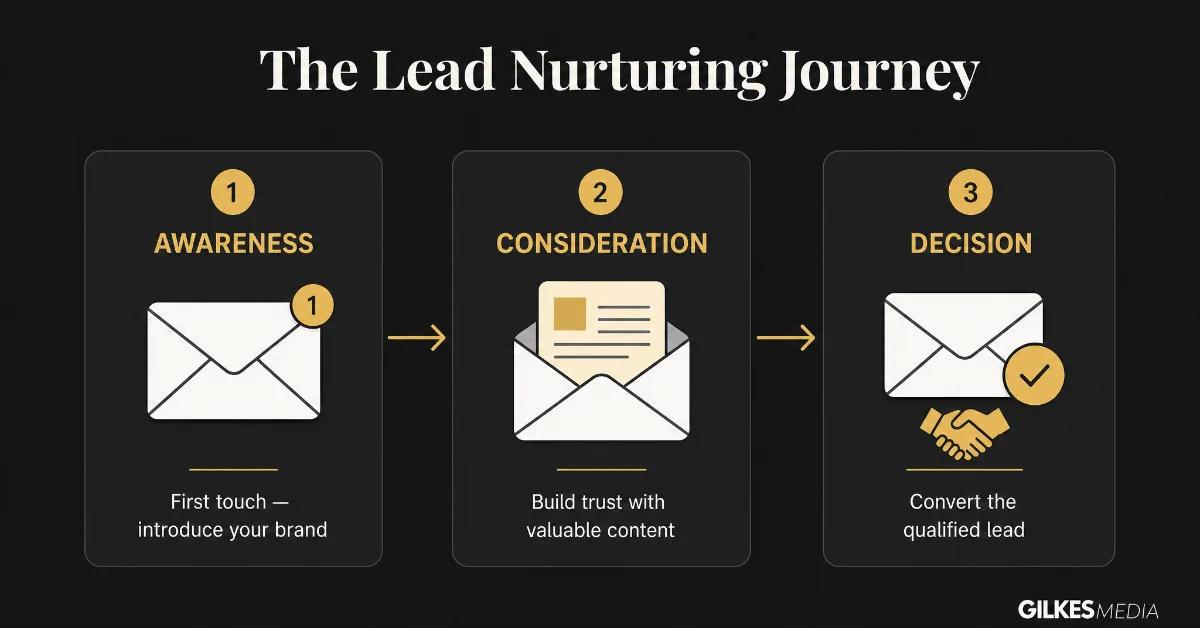
This approach is highly effective because it meets leads where they are. A new lead who downloaded a top-of-funnel guide receives different content than someone who has just attended a product webinar. By automating these pathways, businesses ensure every lead receives the right information at the right time, systematically moving them from initial awareness towards a sales-ready state. This is a foundational element of any solid B2B email marketing strategy.
To get started, focus on creating a foundational sequence and defining clear rules for how leads enter and exit the workflow.
Content marketing is the engine that powers modern lead nurturing. It involves creating and distributing valuable, relevant, and consistent content to attract and retain a clearly defined audience. By providing educational resources like blog posts, guides, whitepapers, and case studies, you address your leads' problems and position your company as a trusted authority. This builds credibility and keeps prospects engaged long before they are ready for a sales conversation.
This approach is fundamental because it aligns with how people research and buy today. Prospects want to educate themselves, understand their challenges, and explore potential solutions on their own terms. By offering insightful content, you become a valuable partner in their journey, earning their trust and preference. This principle is a cornerstone of effective lead nurturing best practices and the foundation of many successful inbound marketing models.
To build a content strategy that nurtures leads effectively, focus on creating high-value assets and distributing them strategically to capture interest and build authority.
Lead scoring is a systematic approach to ranking prospects against a scale that represents their perceived value to your organisation. By assigning points for specific behaviours, demographic data, and firmographic attributes, you can instantly identify which leads are warm enough for sales and which require further nurturing. This ensures your sales team focuses its valuable time on high-probability opportunities, dramatically improving efficiency and conversion rates.
This framework is one of the most crucial lead nurturing best practices because it creates a clear, data-driven bridge between marketing and sales. Instead of relying on guesswork, both teams operate from an agreed-upon definition of a "qualified lead". A lead who has visited your pricing page multiple times and fits your ideal customer profile (ICP) will have a higher score than a student who downloaded a single guide, allowing for precise and effective resource allocation.
To build a powerful yet manageable scoring model, start with a simple set of rules and refine them over time based on performance data.
Retargeting is a powerful method for re-engaging prospects who have visited your website but left without converting. By placing a small, unobtrusive tracking pixel on your site, you can serve targeted advertisements to these visitors as they browse other websites and social media platforms. This strategy keeps your brand top-of-mind, reinforces your value proposition, and brings high-intent individuals back to complete a desired action, making it one of the most effective lead nurturing best practices for maximising your marketing spend.
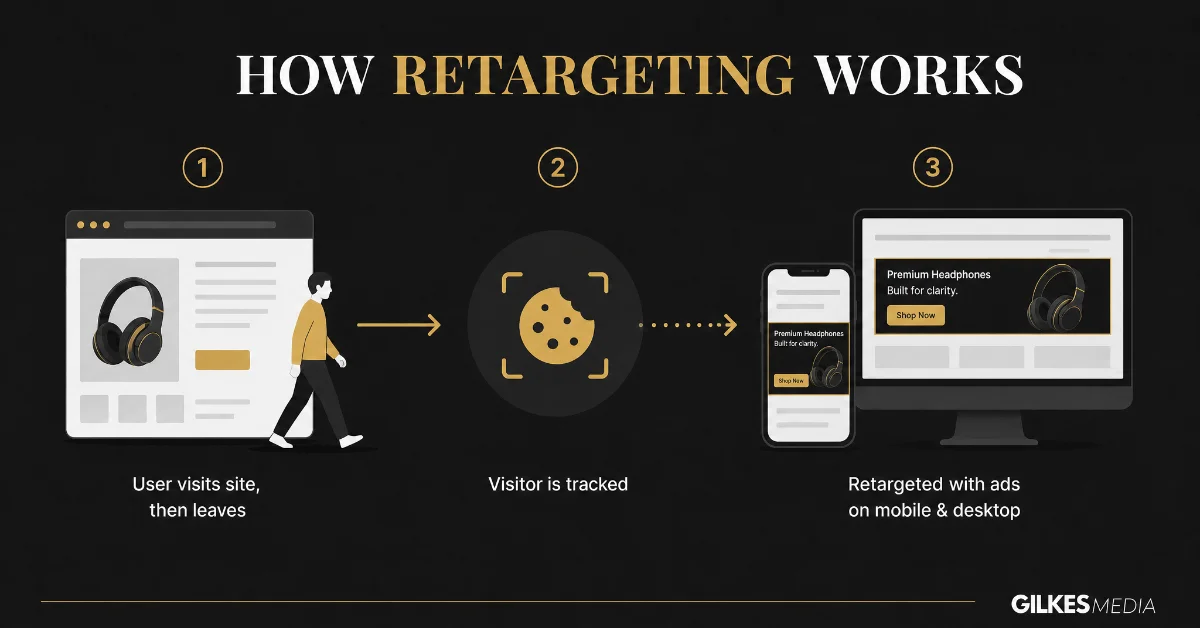
This approach is highly efficient because it focuses your budget on a warm audience that has already shown interest in your business. Instead of spending more to attract cold traffic, you are nurturing prospects who are already familiar with you. For instance, a SaaS company can retarget trial sign-ups with ads that highlight key features, while a professional services firm can show relevant case studies to users who previously viewed their services page, significantly improving conversion rates.
Effective retargeting relies on precise audience segmentation and a clear advertising sequence that guides prospects toward conversion.
Personalisation involves tailoring messaging, content, and offers to a lead's specific characteristics, such as their industry, company size, or past behaviour. Instead of broadcasting a generic message to everyone, dynamic content allows you to speak directly to each segment's unique needs, dramatically increasing relevance and engagement. This is a crucial step in evolving from basic lead nurturing to a sophisticated, high-conversion system.
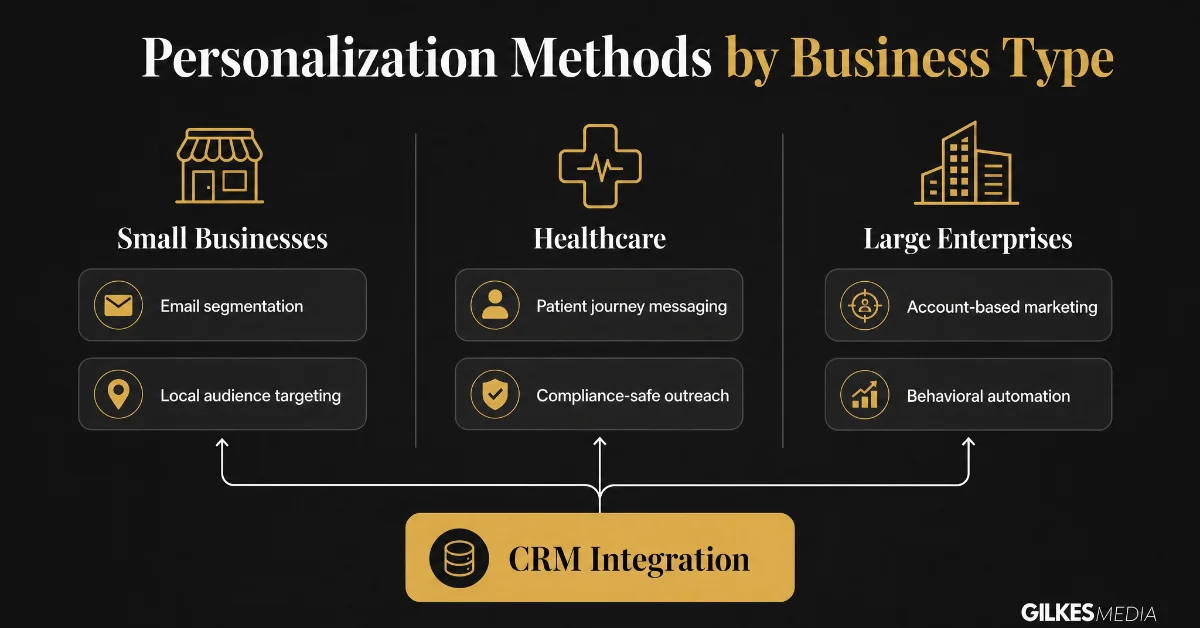
This approach is effective because it makes the prospect feel understood. When a visitor from a financial services firm lands on your website and sees a case study from their industry, the connection is instant and powerful. Platforms like HubSpot and Marketo have popularised this by embedding dynamic content capabilities directly into their marketing hubs, making one of the most powerful lead nurturing best practices accessible to more businesses.
Start with simple, high-impact changes based on the data you already have, and expand your efforts as you gather more insights.
Webinars and live educational events are interactive sessions designed to engage prospects by offering deep, valuable insights into a specific industry topic or problem. Instead of a static piece of content, these events create a dynamic, two-way conversation, allowing you to build authority, demonstrate expertise, and capture high-intent leads in real-time. This direct engagement makes them a powerful tool in any modern lead nurturing strategy.
This approach is highly effective because it attracts prospects actively seeking solutions. Someone who dedicates an hour to attend a live session is signalling a strong interest in the topic. Companies like HubSpot and Drift have built significant parts of their lead generation engines on this model, hosting regular webinars that solve genuine problems for their audience, thereby nurturing thousands of leads from awareness to consideration.
To succeed, focus on delivering genuine value and creating a structured process for promotion and follow-up. This ensures you not only attract attendees but also convert that engagement into sales opportunities.
Account-Based Marketing (ABM) is a strategic, focused approach that treats individual high-value accounts as markets in their own right. Instead of casting a wide net to capture individual leads, ABM aligns marketing and sales teams to orchestrate highly personalised campaigns designed to win over specific, pre-identified target companies. This method prioritises quality over quantity, concentrating resources on the accounts most likely to drive significant revenue.
This approach is powerful because it flips the traditional marketing funnel. Rather than generating a large volume of leads and nurturing them down, ABM starts by identifying ideal-fit accounts and then engages key decision-makers within them through coordinated, multi-channel outreach. This focus ensures that marketing efforts are highly relevant, cutting through the noise and directly addressing the specific challenges and priorities of target organisations, making it one of the most effective lead nurturing best practices for B2B companies with high-value contracts.
Getting started with ABM requires a disciplined, collaborative approach between marketing and sales. The key is to start small and demonstrate success before scaling.
Sales enablement is the strategic process of equipping your sales team with the resources, tools, and content they need to close deals more effectively. It bridges the crucial gap between marketing-led nurturing and sales-led closing. By providing well-timed, relevant collateral, you arm salespeople with the proof points and persuasion tools required to handle objections, build credibility, and accelerate the sales cycle. This is a critical component of lead nurturing best practices, ensuring marketing's efforts translate directly into revenue.
This approach is powerful because it aligns marketing content directly with sales conversations. When a prospect raises a specific objection about security or questions the return on investment, the sales representative can immediately share a targeted whitepaper or ROI calculator. This transforms the sales process from a simple pitch into a consultative, value-driven discussion, positioning your team as trusted advisors rather than just vendors.
A successful strategy begins by listening to your sales team and prioritising the creation of high-impact assets that address real-world prospect challenges.
Referral and partner programmes formalise word-of-mouth marketing, creating structured incentives for existing customers and strategic partners to send new business your way. Rather than relying on chance, these systems create a predictable, scalable channel for high-quality leads. Leads from referrals often have higher conversion rates and lower acquisition costs because they come with built-in trust and context, making this one of the most efficient lead nurturing best practices.
This approach is powerful because it uses your existing network's credibility. A warm introduction from a trusted peer or a complementary service provider is far more impactful than a cold outreach email. By creating a formal programme, you transform satisfied customers and aligned businesses into a motivated, external sales force that can expand your reach into new markets and audiences.
Start by identifying your most loyal advocates and make it incredibly simple for them to refer new business, then formalise the process with clear rewards.
Marketing automation is the engine that powers the entire lead lifecycle, systematising the process from initial capture and nurturing through to the final sales handoff. By using platforms like HubSpot or ActiveCampaign, you can create a cohesive, automated journey that ensures no lead falls through the cracks and every prospect receives consistent, timely follow-ups. This approach provides clear visibility into how leads progress, making it a critical component of scalable lead nurturing best practices.
This systematic management prevents the common problem of valuable leads going cold due to manual oversight. It defines a clear pathway for every contact, automatically segmenting, scoring, and routing them based on their behaviour and engagement level. For example, a lead who signs up for a product trial is immediately routed into a different, more sales-focused workflow than someone who downloaded a top-of-funnel whitepaper. This ensures sales resources are focused on the most qualified opportunities.
Start by mapping your ideal customer journey before building complex workflows. A clear plan is essential for effective automation.
| Strategy | 🔄 Implementation complexity | ⚡ Resource requirements | ⭐ Expected effectiveness | 📊 Expected outcomes / impact | 💡 Ideal use cases & key tip |
|---|---|---|---|---|---|
| Email Nurture Sequences and Automation | Medium - strategy + automation setup | Low–Medium - email platform, content & setup time | ⭐⭐⭐⭐ | Consistent engagement; measurable opens/clicks/conversions; scalable ROI | Best for lead volume from ads / SMEs - tip: 3–5 emails, segment, set clear exit criteria |
| Content Marketing and Educational Resources | Medium–High - ongoing planning & SEO | High - writers, SEO, promotion, long-term investment | ⭐⭐⭐⭐ | Organic traffic, authority, long-term CAC reduction; lead attraction & pre-qualification | Awareness-stage focus / research-heavy markets - tip: publish pillar content and repurpose |
| Lead Scoring and Qualification Frameworks | Medium - rule design & sales alignment | Low–Medium - CRM integration, data hygiene | ⭐⭐⭐⭐ | Higher conversion rates, shorter sales cycles, smarter handoffs | B2B with sales teams - tip: start simple (3–5 criteria) and review monthly |
| Retargeting and Remarketing Campaigns | Low–Medium - pixel setup + creative sequencing | Medium - ad spend and creative refreshes | ⭐⭐⭐⭐ | Higher CVR from warm audiences; good ROAS when audiences are large enough | Convert site visitors / cart abandoners - tip: segment audiences, use frequency caps, exclude converters |
| Personalization and Dynamic Content | High - cross-channel data & implementation | High - CDP/tech, content variants, ML for scale | ⭐⭐⭐⭐⭐ | Significant conversion uplift (often 10–30%); improved lead quality & LTV | High-value B2B / healthcare / segmented audiences - tip: start with 3–5 segments and A/B test |
| Webinars and Live Educational Events | Medium–High - planning, promotion, delivery | Medium - hosts, tech, paid promotion | ⭐⭐⭐⭐ | Generates high-quality, intent-driven leads; strong attendee→sale conversion | B2B / professional services - tip: promote early, oversubscribe, run follow-up sequences |
| Account-Based Marketing (ABM) and Personalized Outreach | High - account research and orchestration | High - dedicated team, personalised creative, data | ⭐⭐⭐⭐ | Higher deal sizes and close rates; efficient spend but slower to scale | Enterprise / high-value accounts - tip: start with 20–50 accounts and assign ownership |
| Sales Enablement and Collateral Strategy | Medium - content creation + sales alignment | Medium - case studies, templates, tracking | ⭐⭐⭐⭐ | Shorter sales cycles and higher close rates; repeatable sales assets | Sales-driven organizations - tip: create 3–5 high-impact assets and track usage in CRM |
| Referral and Partner Programs | Medium - program design & partner management | Low–Medium - incentives, tracking, co-marketing | ⭐⭐⭐⭐ | Very high conversion rates; low CAC and higher LTV for referred customers | Professional services & niches with strong networks - tip: start with top customers and simplify sharing |
| Marketing Automation and Lead Lifecycle Management | High - platform, workflows, CRM integration | Medium–High - platform costs, implementation, training | ⭐⭐⭐⭐ | Consistent follow-up, pipeline visibility, scalable lead handling | Organisations with many leads / limited headcount - tip: map lifecycle first and start with one key workflow |
We have explored the ten foundational pillars of modern lead nurturing, from the precision of automated email sequences to the strategic power of account-based marketing. Each practice, whether it is implementing a solid lead scoring framework or using multi-channel retargeting, represents a critical component in the engine that turns initial interest into sustainable revenue. The core message is clear: effective lead nurturing is not a single action but a sophisticated, interconnected system.
The difference between a leaky funnel and a predictable sales pipeline lies in how deliberately these components are integrated. It is about building a cohesive journey where every touchpoint, from an educational blog post to a personalised sales email, feels relevant, timely, and valuable to the prospect. This is where many businesses falter. They may excel at one tactic, like content creation, but fail to connect it to a sales enablement strategy or an intelligent automation workflow. This disconnect creates friction, stalls momentum, and ultimately costs you customers.
To translate the insights from this article into tangible results, you must move from passive learning to active implementation. The most successful founders and marketing leaders we work with focus on systematic, incremental improvements rather than attempting to overhaul everything at once.
Your immediate priorities should be to:
Mastering these lead nurturing best practices is more than a marketing exercise; it is a commercial imperative. In a competitive market, the relationships you build before a sales conversation ever happens are your greatest asset. A well-executed nurturing strategy delivers a consistent flow of sales-ready leads, shortens the sales cycle, and increases customer lifetime value. It transforms your marketing spend from a cost centre into a predictable and scalable investment in growth.
The goal is to create a system that works for you, qualifying, educating, and building trust with your audience around the clock. By focusing on segmentation, personalisation, and timely, multi-channel communication, you build a powerful competitive advantage that is difficult for others to replicate. It ensures that when your prospect is finally ready to buy, your business is the only one they consider.
Ready to build a high-performance lead nurturing system that delivers a measurable return on investment? At Gilkes Media, we specialise in designing and implementing the exact strategies covered in this article for ambitious, growth-focused businesses. If you need a hands-on marketing consultant to translate this theory into a practical, revenue-generating reality, schedule a free, no-obligation strategy call today.
