SEO website development is not a technical task. It is the process of building your most valuable commercial asset. A strategically built website serves as a predictable, cost-effective engine for generating high-quality leads and sales, impacting your bottom line directly.
Too many UK businesses treat their website like a digital brochure, a one-off cost to be minimised. This is a costly mistake.
A high-performance website is not a line item in your marketing budget. It is a strategic investment designed to deliver a compounding return over time. It's an asset that appreciates in value as it builds authority and attracts qualified customers.
When you prioritise SEO website development from day one, you are building a machine that works for you 24/7. It finds potential customers at the exact moment they are searching for a solution you provide, making it one of the most efficient sales tools available. This approach moves you away from constantly paying for attention and towards owning a platform that generates it organically.
Investing in a proper SEO foundation directly impacts your business's financial health and competitive standing. The logic is simple: a website that ranks well for commercially relevant terms attracts users who are actively looking to buy.
This inbound interest leads to tangible commercial outcomes.
This process illustrates how strategic SEO directly translates into lower acquisition costs and a healthier lead pipeline.
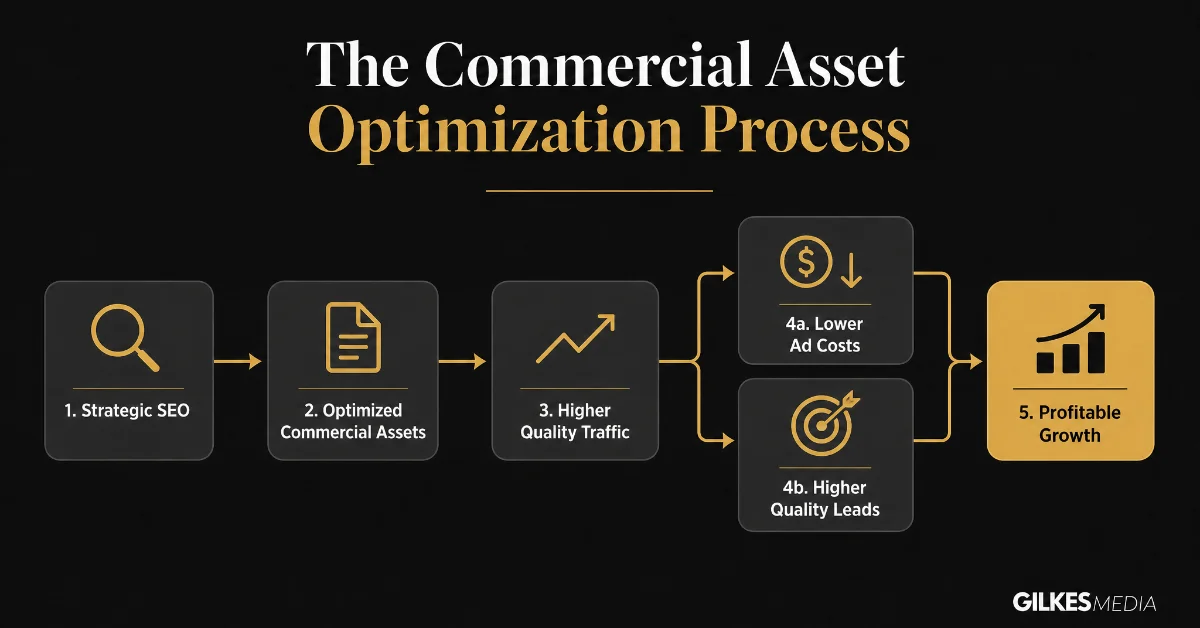
As you can see, a deliberate SEO strategy is the starting point for building a website that delivers measurable commercial returns. It's the engine, not the paint job.
Looking at acquisition channels side-by-side, the commercial logic for SEO becomes crystal clear. While paid ads offer speed, organic search delivers unparalleled cost-efficiency and conversion quality over time.
| Acquisition Channel | Typical Conversion Rate | Relative Cost-Per-Lead |
|---|---|---|
| Organic Search (SEO) | 10–15% | Lowest |
| Paid Search (PPC) | 3–5% | Medium |
| Paid Social (Meta/LinkedIn) | 1–3% | High |
| Outbound (Cold Calls/Email) | <1% | Highest |
The commercial impact of organic search is well-documented. For UK businesses, organic channels account for roughly 40–50% of all website traffic.
More importantly, leads generated from SEO convert at rates around 10–15%, far surpassing the typical 1–2% seen from outbound marketing efforts. This efficiency makes understanding the core principles of what is performance marketing essential for any growth-focused business.
Before a single line of code is written, you must think like an architect. A website's structure, its Information Architecture (IA), is the blueprint for everything that follows. It is the foundation for how both search engines and customers interact with your site.
Get this right and you build an asset that attracts and converts for years. Get it wrong and you are planning for an expensive and painful rebuild down the line.
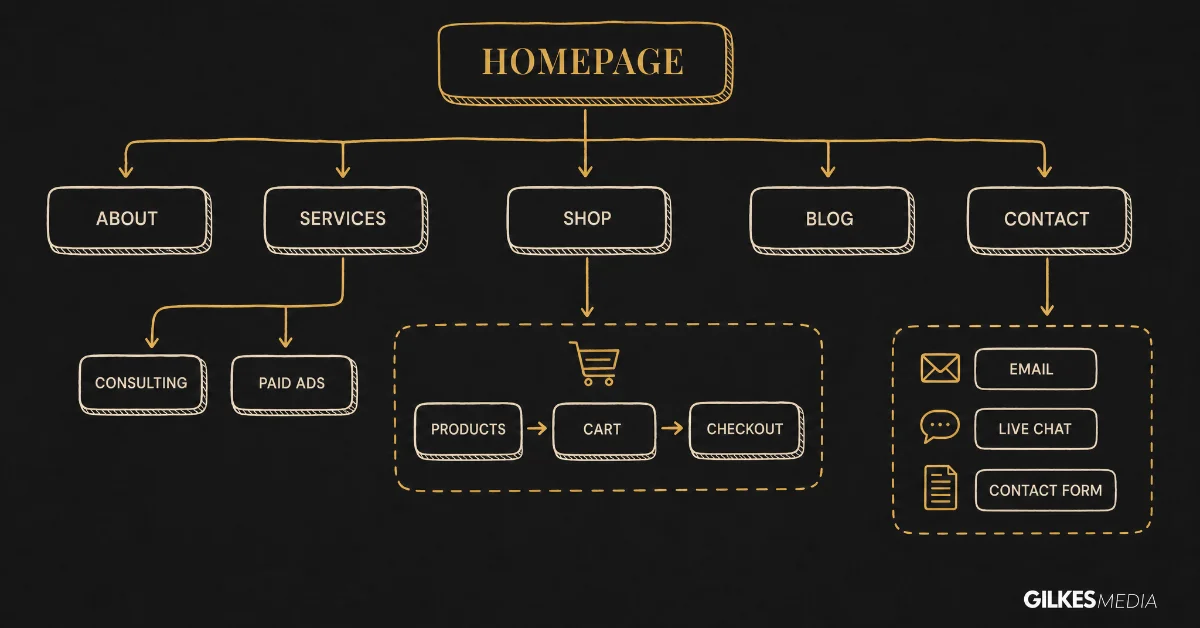
The most common mistake I see is businesses structuring their website around internal departments or jargon. Here is a hard truth: your customers do not care about your organisational chart. They care about their problems. A powerful IA mirrors their journey, creating a logical path from a Google search to a sale.
This blueprint does more than just help with navigation. It is a map that tells search engines how your pages relate to each other, distributing authority and relevance across your site. A well-planned structure makes it far easier for Google to crawl, index, and rank your most important commercial pages.
The first step is to forget what you think your site structure should be. Instead, put yourself in your customer's shoes. How do they find you? What are they looking for? You need to translate that journey into a logical hierarchy of pages.
Let's take a practical example. Imagine a UK-based software company selling a project management tool. A weak structure would be built around software features. A strong one is built around customer problems.
The difference is clear. This structure captures traffic at multiple stages of awareness. A prospect searching for "project management for construction firms" lands on a page that speaks their language directly. Someone else looking for a specific "time tracking tool" also finds a clear entry point. This kind of thoughtful architecture is non-negotiable when designing a B2B website that is built to generate leads.
Your URL structure is a significant, often overlooked, part of your site's blueprint. It needs to be clean, descriptive, and hierarchical, reinforcing the architecture you have planned. A logical URL helps both users and search engines understand a page's context instantly.
Let’s look at two URLs for an e-commerce store selling men's shoes:
Poor URL:
yourstore.co.uk/products/prod-id-8734-mens-brown-leather
Good URL:yourstore.co.uk/mens-shoes/oxfords/brown-leather
The second URL is instantly clear. It tells Google this page is about brown leather shoes, filed under the "Oxfords" sub-category, which itself lives under the main "Men's Shoes" category. This strengthens keyword relevance and creates a natural breadcrumb trail for users.
Here are a few simple rules for effective URLs:
Getting your Information Architecture and URL strategy right from day one is one of the most powerful moves you can make in SEO website development. It lays a solid foundation for sustainable organic growth and saves you from the technical nightmare of a site migration. It ensures every single page has a clear purpose and a logical place within your digital storefront.
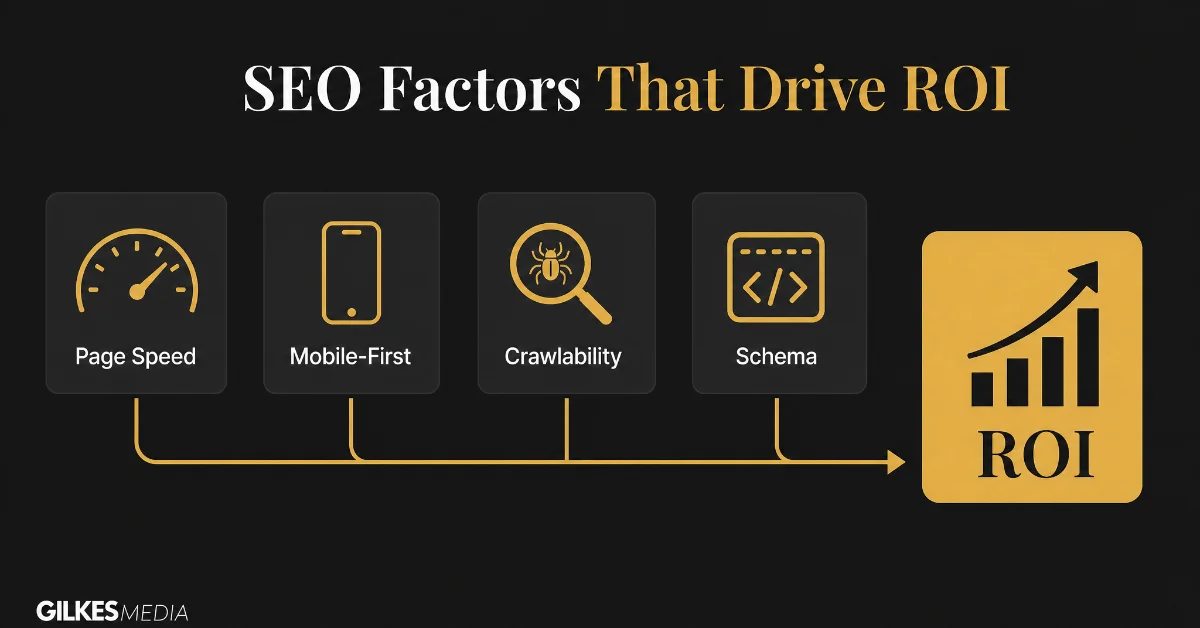
Once your strategic blueprint is in place, it’s time to build the engine. Technical SEO is the foundation that allows your content and strategy to perform. It is not about ticking boxes; it is about creating a website that search engines can crawl, understand, and trust with absolute efficiency.
A technically sound website is faster, more reliable, and more authoritative in Google's eyes. This translates directly into a better user experience, which leads to higher rankings and more leads and sales. Ignoring these pillars is like building a house on sand. Sooner or later, it will collapse, no matter how good it looks.
Google's Core Web Vitals are a set of specific, user-focused metrics that measure how a site feels to a real person. Think of them as Google’s way of quantifying that crucial first impression. Is the page fast, responsive, and stable?
This is not just a technical vanity metric. Site speed has a direct, measurable impact on your bottom line. Research consistently shows that even a one-second delay in page load time can reduce conversions by up to 7%. For an e-commerce site with a turnover of £200,000, that’s a £14,000 loss in revenue from a completely avoidable technical issue.
Your key metrics to discuss with a developer are:
- Largest Contentful Paint (LCP): How quickly does the main content load? Aim for under 2.5 seconds.
- First Input Delay (FID): How quickly does the page react when a user clicks something? Keep it under 100 milliseconds.
- Cumulative Layout Shift (CLS): How much does the layout jump around while loading? Get this score below 0.1.
Hitting these numbers means optimising images, streamlining code, and choosing quality hosting. It is a non-negotiable part of modern SEO website development.
With well over half of all web traffic now coming from mobile devices, Google indexes and ranks your site based on its mobile version, not the desktop one. Having a "mobile-friendly" site is not enough. Your entire design and development process must be mobile-first.
This means you design for the smallest screen first, then scale up. It ensures the user experience is smooth on every device, which is critical for keeping people engaged and driving conversions. A clunky mobile site does not just frustrate users. It actively tells Google your site is not a high-quality result, directly damaging your search visibility.
The commercial reality is stark: if your site fails on mobile, you are turning away more than half of your potential customers. A fully responsive approach is fundamental to our website design and development services, ensuring no lead gets left behind.
Before Google can rank your pages, it must first find, crawl, and understand them. This breaks down into a few key areas.
robots.txt file and a well-structured XML sitemap are your best friends here.noindex tags can stop pages from appearing in search results. Regular technical audits are essential for catching these problems early.Beyond the basics, Schema Markup is your secret weapon. It is a form of microdata that gives search engines explicit context about your content. You are essentially adding labels to your information, telling Google, "This is a product review," "This is an upcoming event," or "These are our business hours." This helps your site earn rich results, like review stars and FAQs in the search listings, which can significantly boost your click-through rates.
A quick table can help your development team prioritise what truly matters.
Here's a practical checklist outlining the core technical SEO elements to implement during development, focusing on what moves the needle for the business.
| Technical Element | Business Impact | Key Metric to Monitor |
|---|---|---|
| Mobile-First Design | Captures 50%+ of your audience and is a primary ranking factor. | Mobile usability score in Search Console. |
| Core Web Vitals Optimisation | Directly improves conversion rates and user experience. | LCP, FID, CLS scores in PageSpeed Insights. |
| Clean URL Structure | Makes the site easier for users and search engines to navigate. | Click depth, Indexation rate. |
| XML Sitemap & robots.txt | Ensures search engines can find and crawl all important pages efficiently. | Index coverage report in Search Console. |
| HTTPS Security | Builds user trust and is a confirmed lightweight ranking signal. | Site-wide SSL certificate implementation. |
| Schema Markup | Increases visibility and click-through rates from search results. | Rich result eligibility and clicks. |
| Internal Linking | Distributes page authority and helps Google understand content hierarchy. | Number of internal links to key pages. |
Focusing on these elements from the start prevents costly fixes down the line and builds a powerful foundation for growth.
Your Content Management System (CMS) is not just a piece of technical software. It is the engine that powers your entire marketing operation. Picking the right one is a serious commercial decision, directly impacting your speed, SEO potential, and ability to generate leads for years to come.
Get this right and you empower your team to act on opportunities, optimise content without friction, and scale your efforts smoothly. Get it wrong and you are stuck with a system that creates headaches, adds unnecessary costs, and holds your search performance back.
For most UK businesses, the choice usually boils down to a handful of platforms. Each has its own strengths and commercial trade-offs. The best fit depends entirely on your business model and your goals.
The decision really comes down to this: do you lead with content, or do you lead with products? For service-based businesses, consultancies, or anyone relying on thought leadership, WordPress offers far superior agility. For e-commerce brands, Shopify streamlines the entire path to purchase.
Picking the CMS is only half the job. A truly successful SEO website development project is one where technology serves a solid content strategy. Your website should be a dynamic asset, not a static brochure. The pillar and cluster model is the single most effective framework to achieve this.
Here’s how it works:
This structure is brilliant for two reasons. First, it organises your content logically for users, establishing your expertise and making your site easy to navigate. Second, it creates a powerful internal linking architecture that channels authority to your most important pages, helping them rank for competitive, high-intent keywords.
Your CMS has to make this easy. It needs simple internal linking, logical content categorisation, and the ability to create different page templates for your pillars and standard blog posts. A flexible platform like WordPress really shines here, letting your marketing team build these strategic assets without needing constant developer support.
Ultimately, your CMS should be a tool that removes barriers, not one that creates them.
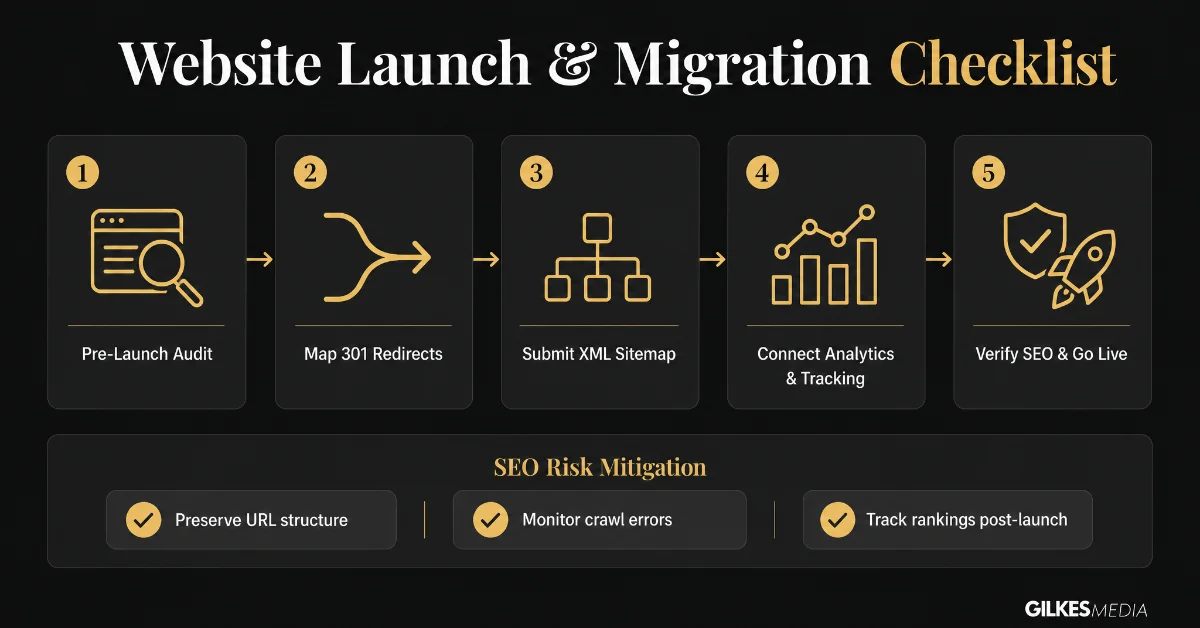
A website launch or migration is one of the highest-stakes moments in your digital marketing. Get it right, and you accelerate growth. Get it wrong, and you can destroy years of accumulated SEO equity overnight.
A flawless execution is not about luck. It is the result of a meticulous, risk-averse process designed to protect and enhance your search visibility.
This is where strategy meets execution under pressure. The goal is a completely smooth transition for both your users and search engines, ensuring no drop in traffic, rankings, or leads. It all comes down to a detailed plan that covers every contingency before, during, and after you go live.
A successful migration hinges on a comprehensive checklist. This is not just a list of technical tasks; it is about safeguarding your most valuable commercial asset. Leaving even one small item to chance can create huge problems that are far more costly and stressful to fix later on.
The pre-launch phase is your meticulous audit and preparation stage. This is where you map out all your existing assets and decide exactly where they will live on the new site. The post-launch phase is all about verification and monitoring, making sure everything has transitioned exactly as planned.
Raw traffic figures are a poor measure of a successful SEO website development project. A 10% drop in overall traffic might seem like a failure, but not if your organic lead conversion rate has doubled in the same period.
Success is defined by commercial outcomes, not vanity metrics. We need to shift the conversation from "how many visitors did we get?" to "what was the commercial impact of those visits?"
The ultimate measure of a successful launch is its contribution to your bottom line. Did it generate more qualified leads? Did it improve your ranking for high-intent keywords that drive sales? Did it lower your overall cost per acquisition? These are the questions that matter.
The investment in SEO tools and expertise reflects this commercial focus. For instance, the UK SEO software market, which generated an estimated £4.2 billion in 2024, is forecast to reach a staggering £8.8 billion by 2030. This growth shows that UK businesses are increasingly investing in platforms that can measure and prove the commercial return of their search efforts. You can read the full analysis on the drivers behind the UK SEO software market growth.
To track real performance, your reporting dashboard should be built around these metrics:
We've covered the strategy and technical details of building a website that performs. Now, let’s address the practical questions UK business owners and marketing managers frequently ask.
No fluff, just straightforward, commercially-focused answers to provide clarity.
There’s no single price tag, but we can provide a realistic idea of the investment required. A simple "brochure" style website might start from £3,000 to £7,000, but this figure rarely covers the deep strategic and technical work needed for a proper SEO foundation.
A true SEO website development project, one that includes strategic architecture, technical performance optimisation, and an initial content plan, is more realistically in the £8,000 to £25,000+ range for a small to medium-sized business.
What drives that cost? A few key factors:
Think of this as a capital investment in your most important business asset. A cheap website almost always costs you more in the long run through redesigns, missed organic traffic, and expensive post-launch fixes. Always ask for a cost breakdown that clearly separates design from the foundational SEO work.
It’s crucial to set the right expectations. SEO is a long-term asset, not an overnight win. For a brand-new website with no existing authority, it can take 6 to 12 months to start gaining real traction for competitive keywords as the site builds trust with search engines.
If you're redesigning an existing website that already has some authority, you can often see positive movement within 3 to 6 months, assuming the technical migration was handled flawlessly.
However, you should see encouraging signs almost immediately. These are the leading indicators to watch:
Real commercial impact, measured in qualified leads and sales, follows these early technical wins. Be deeply sceptical of any agency promising page-one rankings in a few weeks. It simply does not work like that.
Website builders have come a long way. For a very simple local business, a solo practitioner, or a portfolio site, platforms like Squarespace or Wix can be a perfectly fine starting point. They handle many of the technical basics automatically.
The problem is, they have a ceiling. For any business with serious growth ambitions in a competitive market, these platforms often become a bottleneck. Their closed nature restricts your ability to fine-tune crucial performance elements, such as:
The decision is simple: if your business model depends on winning organic search traffic to generate leads, you will almost certainly outgrow a website builder. A self-hosted platform like WordPress or a headless CMS gives you the flexibility and control you will need down the line.
The most common and damaging mistake we see is treating SEO as something you "bolt on" after the website has been designed and built. This approach is fundamentally broken and ends up being incredibly expensive.
When SEO is an afterthought, you are guaranteed to face costly rework. The site architecture will be wrong, the URL structure will be a mess, or the core code will be too slow. This leads to blown budgets, delayed launches, and a website that is handicapped from the moment it goes live.
Proper SEO website development integrates search strategy into every single stage. It is not a marketing task for later. It is the strategic foundation of the entire build, influencing everything from the initial brief and wireframes to the final line of code.
At Gilkes Media, we build high-performance websites and execute marketing strategies that deliver measurable commercial results. If you are ready to build a site that acts as a true growth engine for your business, schedule a free, no-obligation consultation today.
Find out how we can help your business grow at gilkesmedia.co.uk
