
In today's competitive B2B landscape, generic advice on lead generation falls short. Founders and marketing leaders need a clear, commercially focused strategy that delivers measurable returns without wasting budget or resources. This guide moves beyond theory to provide a practical, consultant-led framework covering the most effective B2B lead generation best practices.
Drawing on extensive hands-on experience and over £3 million in managed ad spend, I will break down the precise channels, tactics, and systems required to build a predictable client pipeline. We will explore everything from high-intent paid advertising on platforms like LinkedIn and Google to long-term content strategies and the critical technology needed to tie it all together.
Each section offers actionable insights designed to help you make informed decisions, prioritise investment, and drive sustainable growth. We will cover:
This article is built for action, not just theory. The goal is to provide a comprehensive playbook that helps you move from unpredictable lead flow to a solid, scalable acquisition engine. To effectively implement these strategies and stay ahead of the curve, it is beneficial to review modern approaches such as these 9 Lead Generation Best Practices for 2026. Let’s focus on what truly works.
Account-Based Marketing (ABM) is a focused, strategic growth approach where marketing and sales teams work together to target a predefined set of high-value accounts. Instead of casting a wide net hoping to catch any lead, ABM concentrates resources on engaging key decision-makers within specific organisations that are the best fit for your product or service. This methodology flips the traditional marketing funnel, starting with identification rather than general awareness. It is one of the most effective b2b lead generation best practices for businesses with long sales cycles and high-value deals.
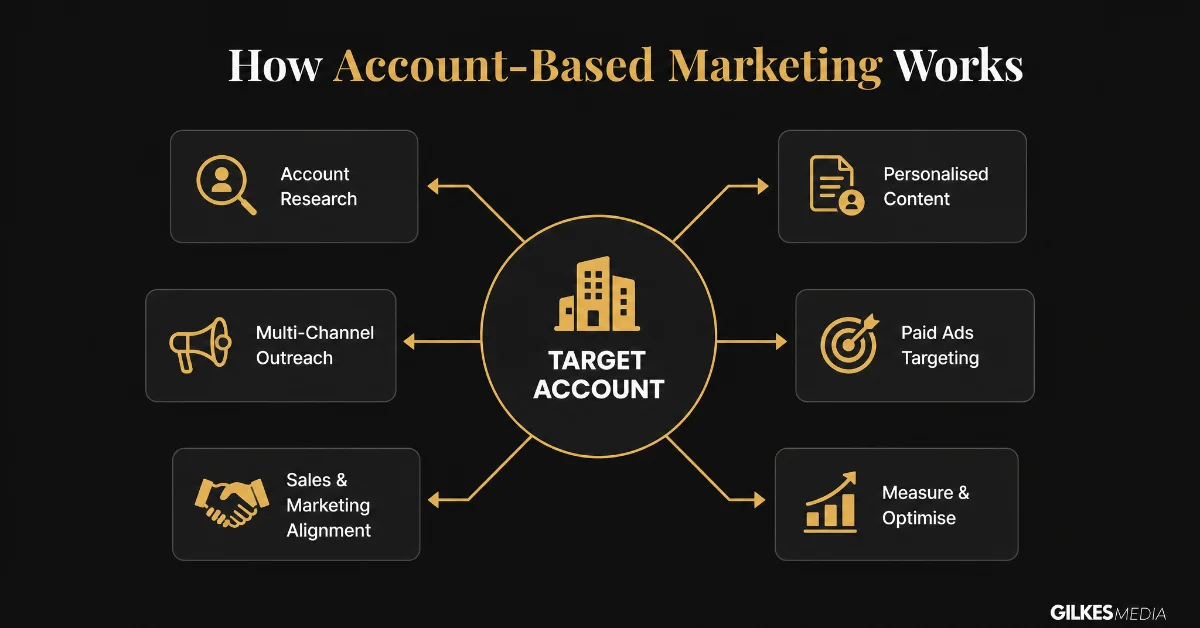
This approach is highly effective because it treats each target account as a market of one. All messaging, content, and campaigns are personalised to address the specific business challenges and needs of that account. This creates a more relevant and compelling experience for the buying committee, leading to higher engagement, faster sales cycles, and larger deal sizes. It is about quality over quantity, building deep relationships with accounts that can deliver significant, long-term revenue.
For founders and SMEs, starting with a pilot programme is the most practical way to test and refine your ABM model without a significant upfront investment.
LinkedIn advertising and outreach uses the world's largest professional network to reach decision-makers and business stakeholders with highly targeted B2B messaging. By combining paid advertising with strategic organic outreach, businesses can access unparalleled demographic, job title, and company-level targeting capabilities. For B2B firms, LinkedIn is often the highest-intent channel, as users are actively engaged in a professional context and are more receptive to relevant business communications.
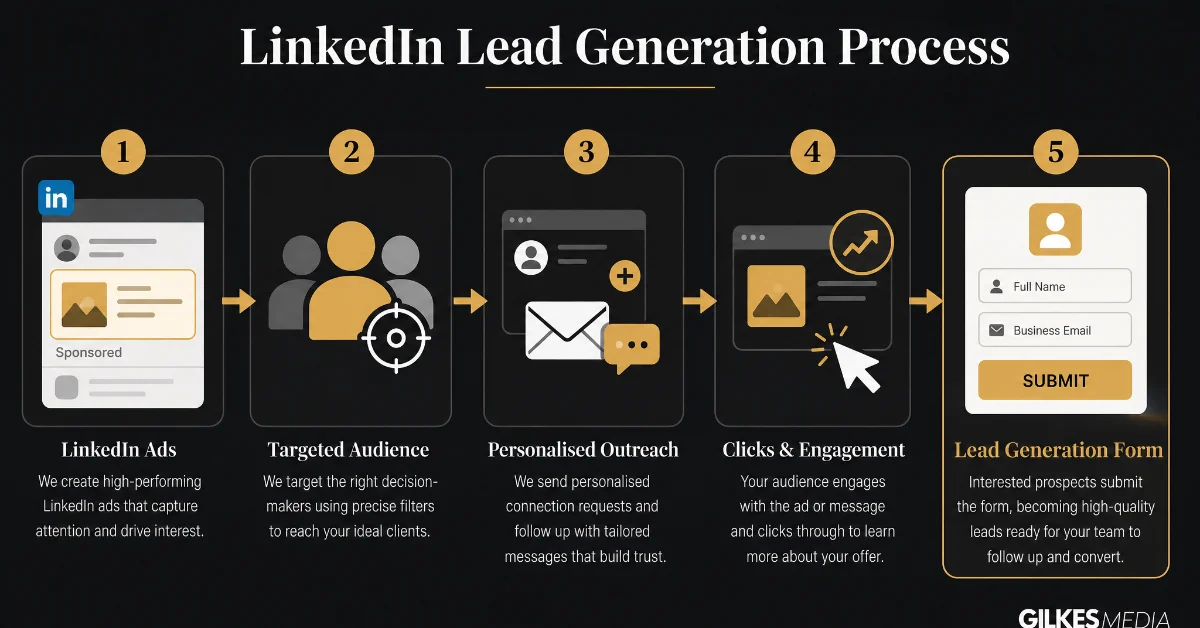
This platform is uniquely powerful because it allows businesses to pinpoint the exact professionals who influence purchasing decisions. Whether you are targeting C-level executives in the financial services sector or operations managers in mid-sized manufacturing firms, LinkedIn provides the tools to deliver your message directly to them. This precision minimises wasted ad spend and makes it one of the most cost-effective b2b lead generation best practices for acquiring high-value leads. For example, professional services firms frequently generate qualified leads for £25-£60, demonstrating its strong ROI potential.
A successful approach blends paid campaigns for scale with personalised organic outreach for relationship building. Start small, test your messaging, and scale what works.
Content marketing is a strategic approach focused on creating and distributing valuable, relevant, and consistent content to attract and retain a clearly defined audience. For B2B businesses, it builds trust, educates prospects, and establishes authority through resources like in-depth blog posts, whitepapers, and case studies. This positions your organisation as the go-to expert in your field, pulling in high-intent inbound enquiries from prospects who are actively seeking solutions.
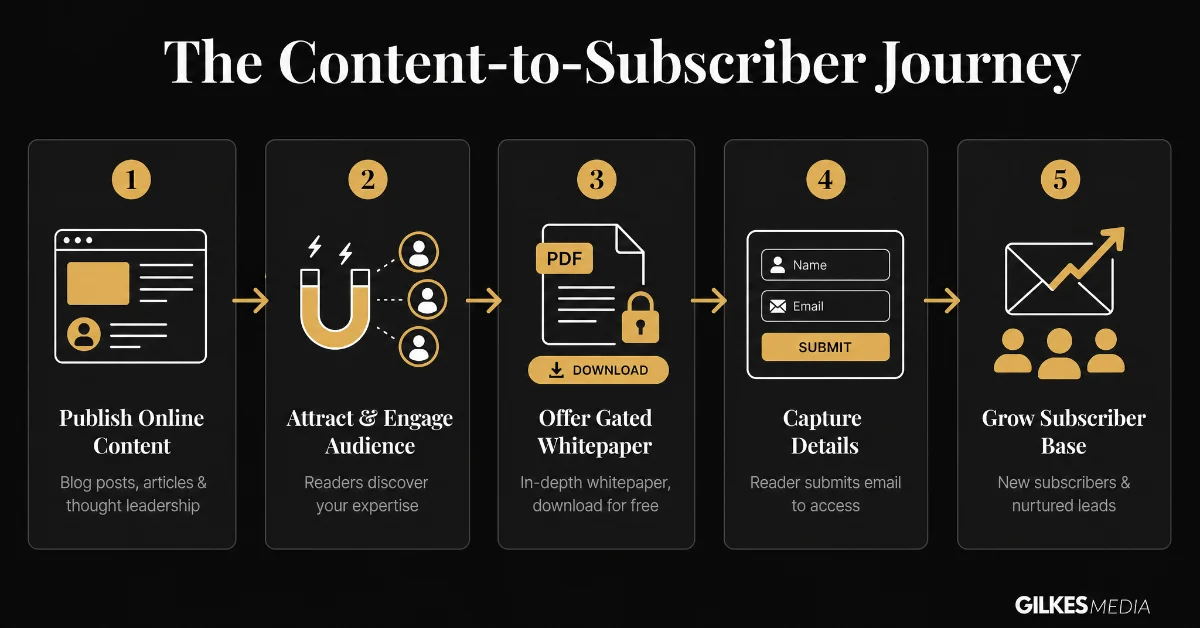
Unlike direct advertising, content marketing is a long-term asset that generates compounding returns. A single high-quality blog post can attract organic traffic and generate leads for years. When executed well, it serves as the foundation for your entire lead generation engine, fuelling social media, email nurturing, and sales conversations. It is a core component of many b2b lead generation best practices because it builds brand equity and creates a sustainable pipeline of qualified leads. To understand how this fits into a wider strategy, you can find out more about the differences between demand generation and lead generation.
For founders and SMEs, the key is to start with a focused content plan that directly addresses your Ideal Customer Profile's most pressing questions and challenges.
Email outreach combines personalised prospecting with automated nurture sequences to engage prospects directly and guide them through longer B2B buying cycles. Unlike channels controlled by platform algorithms, email offers a direct, owned line of communication to your target audience. When executed correctly, it remains one of the highest-ROI b2b lead generation best practices because it enables deep personalisation at scale with minimal spend.
This dual approach is highly effective. Cold outreach initiates conversations with high-fit prospects, while automated nurture sequences maintain engagement with warmer leads who are not yet ready to buy. By delivering relevant value over time, you build trust and keep your solution top-of-mind, ensuring you are the first choice when the buying intent arises. This systematic follow-up prevents valuable leads from going cold and maximises the potential of your marketing efforts.
For founders and SMEs, a successful email strategy is built on relevance and value, not volume. The goal is to start a conversation, not just broadcast a sales pitch.
Search Engine Marketing (SEM) is a powerful method for capturing high-intent prospects precisely when they are actively searching for solutions. It primarily involves Pay-Per-Click (PPC) advertising on platforms like Google Ads, where businesses bid on keywords relevant to their services. This approach places your business directly in front of potential clients who have a clear, immediate need, making it one of the most direct and measurable b2b lead generation best practices.
The effectiveness of SEM lies in its intent-driven nature. Unlike other marketing channels that interrupt prospects, SEM connects with them at the exact moment they express interest. For example, a finance director searching for "small business accounting software" is a far warmer lead than one who sees a generic social media post. Because you only pay when someone clicks your ad, the model is inherently performance-driven and provides a clear line of sight to return on investment (ROI).
For founders and SMEs, success with SEM requires a structured approach that focuses on maximising ROI from every pound spent. A disciplined setup is crucial for avoiding budget waste and generating qualified leads consistently.
Webinars and live virtual events are high-impact lead generation assets that combine in-depth content education with direct, real-time engagement. A well-executed webinar can attract dozens or even hundreds of relevant prospects, capturing valuable registration data while providing an ideal platform to demonstrate expertise, showcase solutions, and build relationships at scale. This tactic is one of the most effective b2b lead generation best practices, especially for explaining complex products or services.
This approach works exceptionally well in B2B because it positions your organisation as a thought leader and allows for a deeper exploration of topics that a blog post or social media update cannot cover. By offering genuine educational value, you attract a highly qualified audience that has actively opted in to learn more about a specific challenge your business solves. This creates a powerful opportunity to nurture interest and guide attendees towards a commercial conversation, with some professional services firms reporting that 10-30% of attendees become customers.
For founders and SMEs, the key is to focus on delivering high-value content that solves a specific problem for your ideal customer, rather than just delivering a product pitch.
Strategic partnerships and referral programmes use the trust and reach of complementary businesses, industry networks, and existing customers to generate highly qualified leads. Instead of acquiring leads independently, this approach recognises that warm introductions from a trusted source convert at a significantly higher rate. It is one of the most cost-effective b2b lead generation best practices because it taps into pre-existing relationships.
This method works by transforming your network into an active, motivated sales channel. A referral from a respected peer or partner carries implicit validation, cutting through market noise and shortening the sales cycle. For businesses serving the same Ideal Customer Profile (ICP) without competing directly, a partnership creates mutual value, providing a new revenue stream for the partner and a steady flow of high-intent leads for you. It is about building a symbiotic ecosystem where everyone benefits.
For SMEs, starting with a simple, well-defined programme focused on a handful of high-potential partners is the most effective approach. This allows you to refine your process before scaling.
Marketing Automation, coupled with Customer Relationship Management (CRM) integration, is a powerhouse strategy for managing leads at scale. This approach uses software platforms like HubSpot, Pardot, or Marketo to automate repetitive marketing tasks, personalise communication, and nurture prospects through the buying journey without constant manual effort. By connecting these systems to your CRM, you create a smooth flow of data between marketing and sales, ensuring no lead falls through the cracks. This is one of the most vital b2b lead generation best practices for scaling operations efficiently.
The real power of this integration lies in its ability to track prospect behaviour across every touchpoint. When a lead visits a pricing page, downloads a guide, or opens an email, the system records it. This data is then used to score leads based on their sales-readiness and trigger automated, relevant follow-up actions. For businesses with long sales cycles and complex buying committees, this ensures that prospects receive the right message at the right time, warming them up for a productive conversation with the sales team.
For founders and SMEs, the key is to start with simple, high-impact workflows and build complexity over time. A phased approach prevents overwhelm and demonstrates a clear return on investment.
Paid social advertising uses platforms like LinkedIn, Facebook, and Instagram to reach highly specific B2B audiences based on detailed demographic, professional, and behavioural data. While LinkedIn is the traditional B2B powerhouse, platforms like Facebook and Instagram offer cost-effective ways to reach decision-makers in a less formal context. This strategy excels at driving top-of-funnel awareness and mid-funnel consideration, especially when paired with valuable lead magnets.
This approach is powerful because it allows businesses to insert their message directly into the daily feeds of their ideal customers. Unlike search-based advertising, paid social can generate demand where none existed, introducing solutions to prospects who were not actively looking. The visual and engagement-focused nature of these platforms also helps build brand recall and credibility more effectively than text-only channels, making it a cornerstone of modern b2b lead generation best practices.
For founders and SMEs, the key is to start with a focused budget on one platform, prove the model, and then expand. LinkedIn is often the safest starting point for its precise professional targeting.
A landing page is the digital handshake for your marketing campaigns; it is where prospects decide whether to engage further or leave. Conversion Rate Optimisation (CRO) is the systematic process of improving this page to increase the percentage of visitors who take a desired action, such as filling out a form or requesting a demo. Instead of relying on guesswork, CRO uses analytics, user behaviour data, and A/B testing to make informed decisions that directly boost lead volume and reduce cost-per-lead. This makes it one of the most crucial b2b lead generation best practices for maximising the ROI from your ad spend and organic traffic.
This approach is powerful because it focuses on getting more value from the traffic you already have. By methodically testing elements like headlines, calls-to-action (CTAs), form length, and page layout, you can make significant gains in performance. For example, a professional services firm could double its consultation requests simply by improving CTA clarity. It’s a continuous cycle of hypothesis, testing, and analysis that turns your website into an efficient lead generation engine, ensuring every marketing pound works as hard as possible.
For founders and SMEs, CRO does not require a huge budget to start. It requires a disciplined, data-led approach focused on incremental improvements.
Despite the digital shift, in-person events like trade shows and conferences remain a cornerstone of many successful B2B lead generation techniques. These gatherings offer a rare opportunity for direct, face-to-face engagement with a concentrated audience of relevant prospects, partners, and decision-makers. The value lies in building personal connections and capturing high-intent leads in an environment designed for industry networking.
When executed strategically, event participation becomes a powerful engine for filling the sales pipeline. A SaaS company attending Web Summit can secure high-value demos with enterprise CTOs, while a construction supplier at an industry trade show can generate qualified leads from project managers. The key is a proactive approach that starts long before the event and continues long after.
For more insights into maximising your event ROI, this article on turning event attendance into a lead generation machine provides excellent tactical advice.
| Item | 🔄 Implementation complexity | ⚡ Resource requirements | 📊 Expected outcomes | 💡 Ideal use cases | ⭐ Key advantages |
|---|---|---|---|---|---|
| Account-Based Marketing (ABM) | 🔄🔄🔄 High - deep account research & cross-team coordination | ⚡⚡⚡ High - ABM tools, dedicated teams, time | 📊 Targeted pipeline, higher deal values; ⭐⭐⭐ | 💡 B2B enterprise sales, long cycles, professional services | ⭐ Higher conversion rates; strong sales–marketing alignment |
| LinkedIn Advertising and Outreach | 🔄🔄 Medium - campaign setup + outreach processes | ⚡⚡ High - CPC/CPM and creative resources | 📊 High‑intent leads and brand exposure; ⭐⭐⭐ | 💡 Reach decision‑makers in B2B, professional services, SaaS | ⭐ Precise targeting; direct access to executives |
| Content Marketing & Thought Leadership | 🔄🔄🔄 Medium‑High - consistent production & SEO | ⚡⚡ Medium - writers, SEO, time (lower ad spend) | 📊 Long‑term organic traffic and qualified inbound; ⭐⭐⭐ | 💡 Brand building, inbound lead generation, thought leadership | ⭐ Authority building; sustainable CAC reduction |
| Email Outreach & Nurture Sequences | 🔄🔄 Medium - list building, personalization, automation | ⚡ Low‑Medium - email tools + research time | 📊 Very high ROI, direct responses; ⭐⭐⭐ | 💡 Cold prospecting, long sales-cycle nurture, trial follow-up | ⭐ Direct, personal outreach; strong attribution |
| Search Engine Marketing (SEM) & PPC | 🔄🔄 Medium - keyword strategy + landing page setup | ⚡⚡ High - ongoing ad spend & active management | 📊 Immediate, high‑intent leads; measurable ROI; ⭐⭐⭐ | 💡 Capture active demand, quick pipeline growth, all industries | ⭐ Fast, scalable, highly measurable results |
| Webinars & Live Virtual Events | 🔄🔄🔄 High - planning, promotion, delivery, follow-up | ⚡⚡ Medium‑High - presenters, production, promotion | 📊 Large batches of qualified leads; deep engagement; ⭐⭐ | 💡 Product demos, thought leadership, ABM presentations | ⭐ Deep education and relationship building; reusable content |
| Strategic Partnership & Referral Programs | 🔄🔄 Medium - partner sourcing and program setup | ⚡ Low‑Medium - relationship management & incentives | 📊 Warm leads with higher conversion rates; ⭐⭐⭐ | 💡 Channel expansion, complementary service referrals, networks | ⭐ Low CAC; trust-driven, high-converting referrals |
| Marketing Automation & CRM Integration | 🔄🔄🔄 High - technical setup and workflow design | ⚡⚡⚡ High - platform costs, integrations, training | 📊 Better lead scoring, fewer lost leads, sales efficiency; ⭐⭐⭐ | 💡 Scaling nurture, ABM orchestration, CRM-aligned sales teams | ⭐ Personalization at scale; automated lead routing |
| Paid Social (Facebook, Instagram, LinkedIn) | 🔄🔄 Medium - creative testing & audience strategy | ⚡⚡ Medium - ad spend, creative production | 📊 Strong awareness/consideration; moderate direct leads; ⭐⭐ | 💡 SME targeting, visual campaigns, retargeting flows | ⭐ Large reach, visual engagement, cost‑efficient CPMs |
| Data‑Driven Landing Pages & CRO | 🔄🔄 Medium - analytics, testing, UX iterations | ⚡ Low‑Medium - analytics tools, dev/design time | 📊 Higher conversion rates, lower CPL; measurable uplifts; ⭐⭐⭐ | 💡 Improve ROI of paid/organic campaigns and experiments | ⭐ Boosts efficiency without more traffic; data‑driven gains |
If you're considering bringing in outside expertise to execute on these best practices, our guide on vetting B2B lead generation companies covers the questions to ask and the red flags to watch for before you sign a contract.
We have covered a comprehensive list of B2B lead generation best practices, from the highly targeted precision of Account-Based Marketing to the scalable reach of paid search and the long-term authority of content marketing. Each strategy, whether it is LinkedIn advertising, CRO, or strategic partnerships, offers a powerful lever for growth. However, the most critical takeaway is not the strength of any single tactic, but the compounded power they create when they work together.
True lead generation mastery is not about flicking a switch on a single channel. It is about building a cohesive, integrated engine where your efforts are interconnected and mutually reinforcing. Your high-value content becomes the fuel for your LinkedIn ads. Your optimised landing pages capture the high-intent traffic from your Google Ads campaigns. Your automated email sequences then nurture those new contacts, guiding them from initial awareness to sales-readiness without manual intervention. This interconnectedness transforms disparate activities into a predictable and scalable revenue-generating system.
Adopting these B2B lead generation best practices can feel overwhelming. The key is to avoid trying to implement everything at once. Instead, adopt a methodical, strategic approach that aligns with your specific business goals, resources, and ideal customer profile.
Here is a practical framework for moving forward:
The ultimate goal is to move beyond short-term, campaign-based thinking and establish a sustainable system that consistently delivers qualified leads into your sales pipeline. Implementing these B2B lead generation best practices is the pathway to achieving that predictability and control over your business's growth. It requires discipline, strategic focus, and a commitment to data-driven decision-making, but the rewards are transformative, driving new levels of revenue and market leadership.
Ready to move from theory to execution? As a hands-on marketing consultant and paid ads specialist, I work directly with ambitious businesses to design and implement these integrated, performance-driven lead generation strategies. If you are ready to build a reliable engine for growth with personal accountability, book a no-obligation strategy call to see how Gilkes Media can help.
