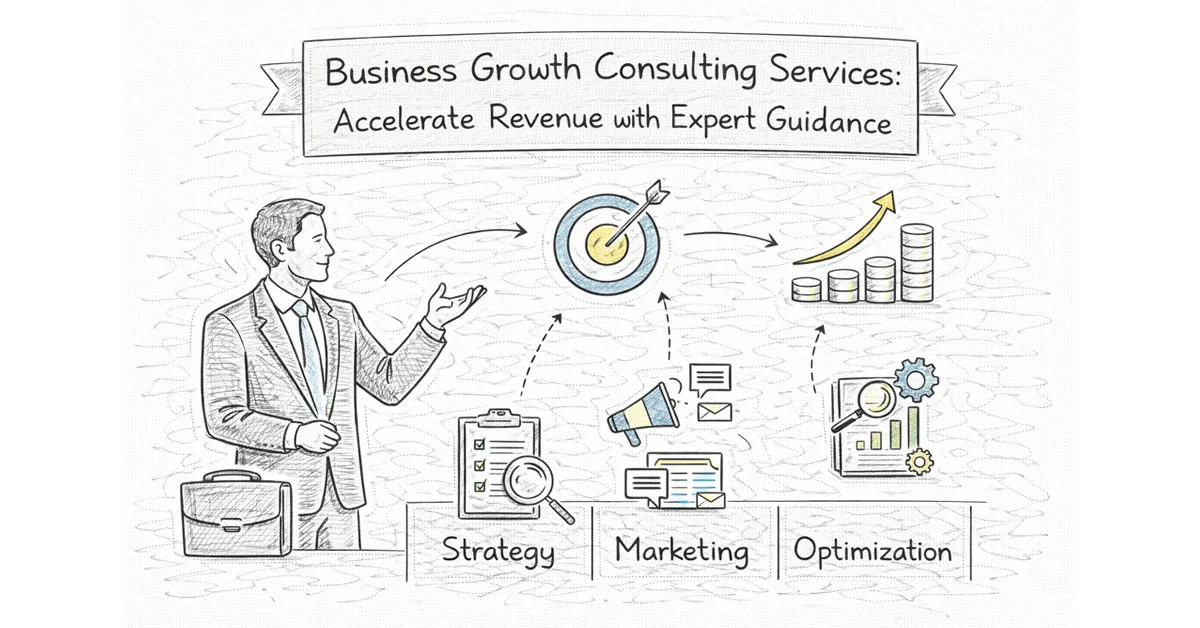
Business growth consulting is a strategic partnership. It’s designed to find the commercial weak spots in your business, put measurable marketing solutions in place, and drive real, tangible revenue. It goes beyond typical agency tasks, giving you senior-level expertise focused squarely on your most important financial goals.
Let's cut through the jargon. Hiring a business growth consultant is not about outsourcing a to-do list to a large, faceless agency. It’s about bringing a senior, commercially-minded expert into your team, someone whose only job is to connect marketing activity directly to your bottom line.
Think of it as adding a seasoned Growth Director without the full-time overhead. This person works alongside you to get to the root of what is holding you back from scaling. They dig into your market, audit your current strategies, and then build and execute a practical plan to get more leads, improve conversion rates, and increase sales.
The real difference comes down to focus and accountability. A traditional agency might send you reports on website traffic or social media likes. A true growth consultant, on the other hand, is obsessed with the metrics that actually affect your bank balance.
A consultant's value is measured by their impact on your growth trajectory. The goal is to deliver a clear return on investment by systematically improving the key levers of your business, from lead generation to customer acquisition cost.
The demand for this kind of sharp, expert guidance has exploded. The UK consulting sector, which includes business growth consulting, has seen its revenue almost double from £10.56 billion in 2018 to £20.4 billion in 2023. This is not a coincidence. It shows a clear shift: UK businesses are increasingly turning to specialised expertise to navigate tough markets and drive new growth. You can read the full research on consulting market trends to see how businesses are adapting.
Ultimately, this approach is about building a sustainable system for growth. As your strategic partner, a consultant like Gilkes Media brings the hands-on expertise and accountability needed to turn ambitious goals into measurable results, making sure every pound spent on marketing is an investment in your company's future.
A genuine consultant does not just sell you a list of services; they deliver a cohesive system for growth. Think of it less like a shopping list and more like a high-performance engine, where every component works together to turn your marketing spend into measurable business results. It’s about moving beyond isolated tactics and building a strategic framework where every action has a clear commercial purpose.
This approach ensures your marketing efforts are investments, not just activities. The following pillars form the foundation of any effective growth consultancy, each designed to diagnose issues, execute with precision, and maximise returns.
Before you can accelerate, you need a clear map of where you are and where you are going. A strategic audit is the critical first step. It’s an objective, data-driven assessment of your entire marketing and sales ecosystem, designed to uncover the hidden opportunities you’re likely missing.
An experienced consultant will dig into key areas like:
This diagnostic phase is fundamental. It replaces assumptions with hard data, forming an evidence-based foundation for every subsequent action. It ensures the growth plan is built on solid ground, targeting the areas that will yield the biggest impact, fastest.
Once we’ve identified the opportunities, paid acquisition becomes the engine for growth. This is about far more than just "running ads" on platforms like Google or Meta. It’s a disciplined, analytical process designed to generate a consistent flow of high-quality leads and sales at a profitable cost.
As a paid acquisition specialist, my focus is always on the commercial realities. We build and manage campaigns that are meticulously structured to achieve specific business goals, whether that’s increasing lead volume, driving online sales, or lowering your Customer Acquisition Cost (CAC).
A well-executed paid acquisition strategy is a scalable system for revenue generation. It allows you to control your growth trajectory by predictably turning advertising spend into new customers, giving you a powerful lever to pull whenever you need to drive the business forward.
The UK's management consulting market, a core part of business growth services, is valued at a staggering £82 billion, with 184,000 businesses operating in this space. This highlights the immense trust UK businesses place in external expertise. Notably, 77% of SME leaders recently reported that their growth met or exceeded expectations, outpacing larger firms, a success often fuelled by the agile and focused strategies consultants provide.
The chart below illustrates the simple but powerful hierarchy of a consulting partnership, moving from strategic alignment down to diagnosis and, finally, to execution.
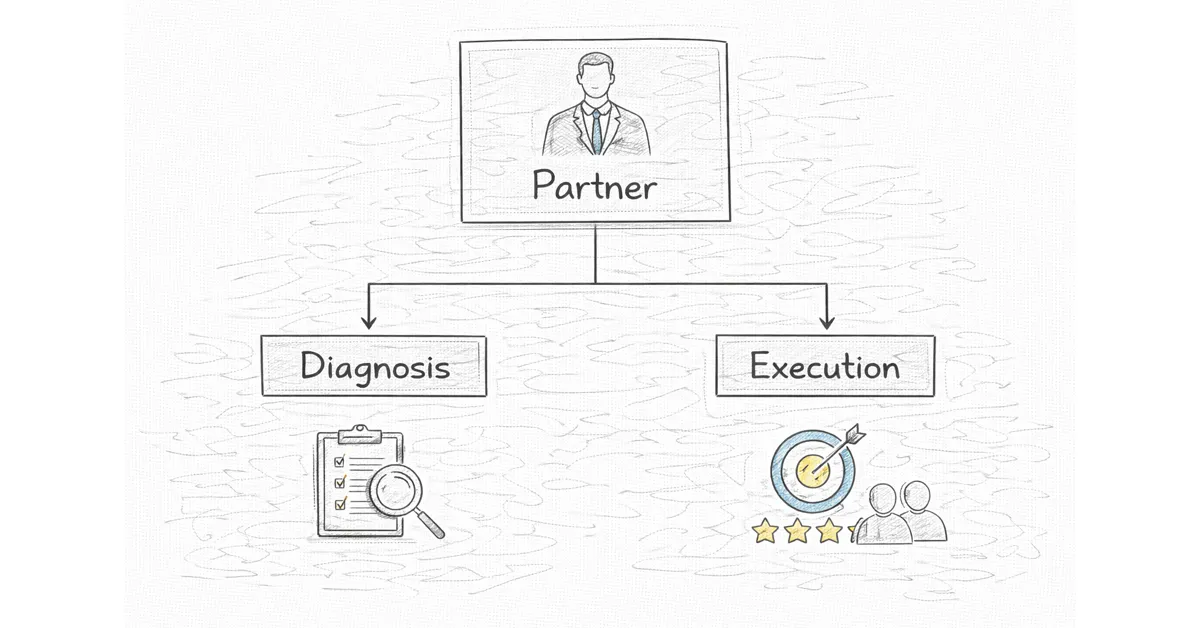
This visual reinforces a key principle: effective execution is always guided by a thorough diagnostic process, all working within a collaborative partnership.
Driving traffic to your website is only half the battle. If those visitors do not take action, fill out a form, make a purchase, or book a call, then the investment is wasted. This is where Conversion Rate Optimisation (CRO) comes in. It is the systematic process of improving your website and landing pages to convert more of those hard-won visitors into valuable customers.
It’s a science, not a guessing game. By analysing user behaviour and running A/B tests on headlines, calls-to-action, and page layouts, we can make incremental improvements that deliver a significant impact on your bottom line. Even a small increase in your conversion rate can dramatically lower your cost per lead and boost overall revenue, making it one of the highest-impact activities in any growth strategy.
These services are part of a wider ecosystem designed to align your marketing and sales functions for maximum impact. To see how this fits into the bigger picture, it is helpful to explore related areas like sales enablement consulting. Ultimately, a consultant's role is to integrate these core pillars, strategy, acquisition, and optimisation, into a smooth and effective growth machine. You can explore our own approach by reading more about our digital marketing consultancy services.
Deciding to bring in a growth consultant is the first big step. The next, equally important decision is how you work with them. The way your partnership is structured directly shapes the focus, the budget, and the results you can expect.
Getting this right from the start is critical. It ensures the consultant’s work aligns perfectly with your business needs and financial realities. After all, the best model for a business gearing up for a huge product launch looks very different from one needing steady, long-term performance management.
Let's break down the common ways you can structure this relationship to make sure every pound is invested wisely.
A project-based engagement is perfect when you have a specific, well-defined goal with a clear start and end point. This model works best when you need a specialist to come in, execute a particular task, and deliver a tangible result.
Think of it like hiring a specialist contractor to build an extension on your house. You have a clear blueprint, a fixed budget, and an agreed-upon completion date.
Examples of project-based work often include:
This approach gives you excellent budget predictability, since the scope and cost are locked in upfront. It’s a fantastic way to access senior expertise for a critical initiative without taking on a long-term expense.
For businesses that need continuous support and ongoing optimisation, a monthly retainer is the way to go. This is the standard for managing dynamic activities like paid advertising or SEO, where constant monitoring, analysis, and tweaking are absolutely essential for success.
A retainer is not just a transaction; it's a true partnership. It moves beyond a one-off task and establishes an ongoing relationship where the consultant becomes deeply embedded in your business, working month after month to drive performance.
A monthly retainer is not just about outsourcing tasks; it's about securing consistent strategic oversight and hands-on execution. This model ensures your growth momentum never stalls, with an expert always focused on optimising your performance and adapting to market changes.
This model provides continuous access to senior-level expertise, proactive management, and regular, insightful reporting, making it the bedrock for any business serious about sustained growth.
Sometimes, all you need is a short, sharp, intensive burst of high-level strategic thinking. A strategic workshop is a focused session, typically lasting anywhere from half a day to two days, designed to solve a specific problem or map out a clear plan.
These workshops are collaborative and action-oriented. They get your leadership team in a room with an expert facilitator to cut through the noise, align on priorities, and walk away with a concrete, actionable roadmap. This is ideal for annual planning, tackling a major business challenge, or kicking off a new strategic direction with total clarity.
To help you decide which structure best fits your current goals and resources, the table below gives a simple breakdown of the most common engagement models. It compares how they work, who they are for, and what you can expect to invest.
| Engagement Model | Best For | Typical Investment (£) | Key Benefit |
|---|---|---|---|
| Project-Based | Specific, one-off goals with a clear end date (e.g., campaign launch). | £2,000 - £10,000+ | Fixed cost and a defined, tangible outcome. |
| Monthly Retainer | Ongoing management and continuous optimisation (e.g., paid ads). | £1,500 - £5,000+ /month | Consistent progress and long-term strategic partnership. |
| Strategic Workshop | Intensive planning and problem-solving sessions. | £1,000 - £4,000+ | Rapid alignment and a clear, actionable plan. |
Ultimately, the right engagement model comes down to your unique situation. By understanding these options, you can select a framework that aligns perfectly with your business objectives, ensuring your investment in business growth consulting services is structured for maximum impact from day one.
A great partnership is not built on guesswork; it’s built on a clear, structured process that gets us aligned from day one. When you bring in a growth consultant, you need less uncertainty, not more. This is the roadmap we will follow together, a collaborative and accountable journey designed to move from initial understanding to measurable results with total focus.
This five-stage process ensures every action is strategic, every decision is data-driven, and every outcome is tied directly to your commercial goals.
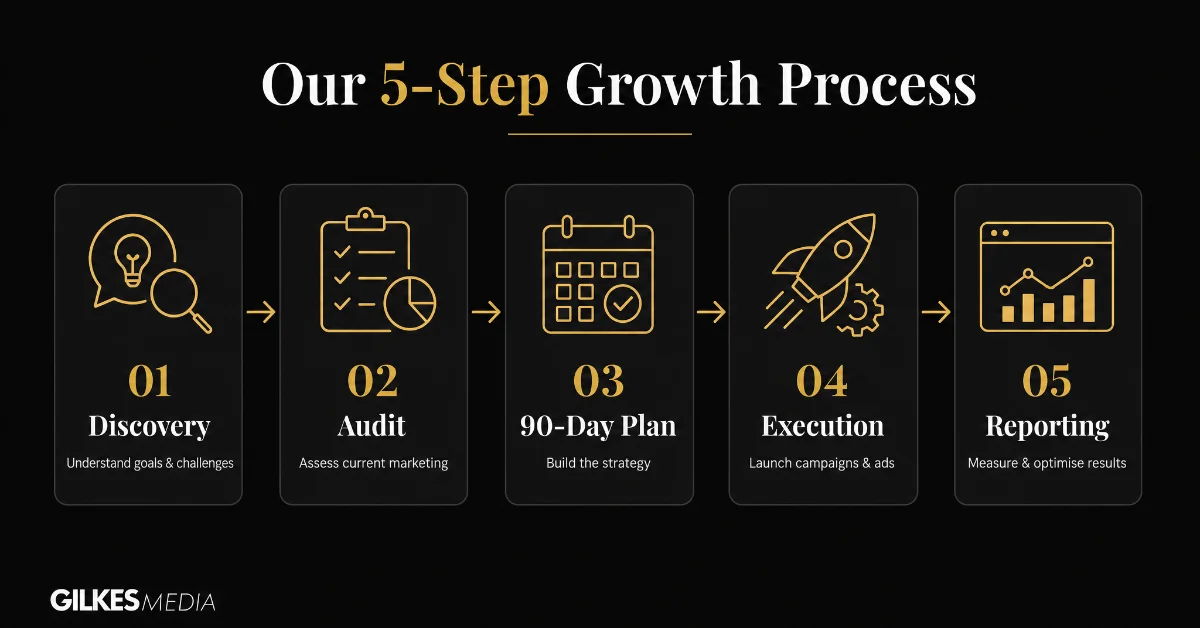
It all starts with a simple, direct conversation. This initial discovery phase is where we lay the foundations for everything that follows. We will dig into your business: your products or services, your ideal customers, your biggest challenges, and most importantly, your commercial ambitions.
The aim here is mutual clarity. We need to nail down exactly what success looks like for you. Is it generating a specific number of qualified leads each month? Hitting a target Return On Ad Spend (ROAS)? Or perhaps it is about slashing your Customer Acquisition Cost (CAC). By setting these clear, quantifiable goals upfront, we ensure the entire strategy is built to deliver what truly matters to your bottom line.
With our objectives defined, we move to a comprehensive audit of your existing marketing assets and performance data. This is not about assumptions; it's an objective, evidence-based deep-dive. I’ll analyse your website, your analytics setup, current ad campaigns, and the competitor landscape to pinpoint strengths, weaknesses, and untapped opportunities.
This is where the real strategy begins to take shape. The audit often reveals critical insights, like friction points in your sales funnel or marketing channels that are quietly draining your budget. The findings give us the hard data needed to build an action plan that's both effective and realistic.
Strategy without a clear plan is just a theory. After the audit, I’ll develop a practical, 90-day action plan. Think of this as our operational roadmap. It details the specific priorities, actions, timelines, and Key Performance Indicators (KPIs) we will be laser-focused on for the next quarter.
This plan removes all ambiguity and guarantees we are both focused on the same immediate goals. It is a living document that outlines exactly what will be done, by when, and how we will measure its success. This commitment to a defined short-term plan is a core part of effective business growth consulting services, as it creates momentum and focus right from the start.
A 90-day plan provides the perfect balance of strategic direction and tactical agility. It’s long enough to implement meaningful changes and see results, yet short enough to allow for regular reviews and adjustments based on real-world performance data.
Plan agreed, we move into execution. As a hands-on consultant, this means I am personally managing the implementation of the strategy. That could be building and launching new paid ad campaigns or overseeing CRO initiatives to get more from your existing traffic.
Crucially, this stage is not static. It is a continuous cycle of execution, monitoring, and optimisation. I will be actively managing performance, making data-driven tweaks to improve results week by week. This agile approach ensures your investment is always working as hard as it possibly can.
Transparency and accountability are non-negotiable. You will get regular, jargon-free performance reports that focus on the KPIs we agreed on back in Stage 1. These reports connect marketing activity directly to business outcomes, showing you exactly how we’re tracking against your goals.
But these updates are more than just data. They are strategic review sessions where we discuss what’s working, what is not, and what our next steps should be. This ensures the strategy evolves to meet the dynamic needs of your business and the market.
Impressions, clicks, and social media likes might feel good, but they do not pay the bills. The real measure of success for any business growth consulting services is not marketing activity; it's tangible business impact. To get there, we have to shift the focus from vanity metrics to the Key Performance Indicators (KPIs) that directly reflect commercial health and growth.
This is about speaking the language of business, not just marketing. Metrics like Cost Per Lead, Customer Acquisition Cost, and Return On Ad Spend are the bedrock of any effective growth strategy. They give us the hard data needed to make smart decisions, justify investment, and prove your marketing budget is delivering a genuine return.
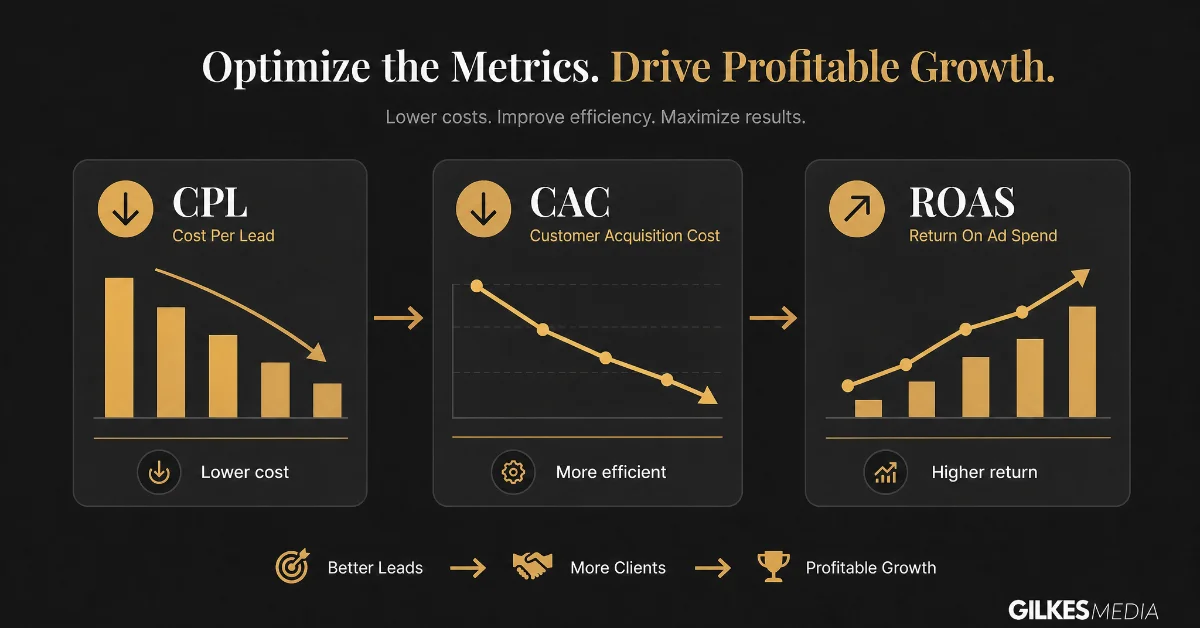
Your Cost Per Lead is a straightforward but incredibly powerful metric. It tells you exactly how much you’re spending to generate one new enquiry or lead for your business.
CPL = Total Marketing Spend / Total New Leads
A high CPL might show that your targeting is too broad or your messaging is not hitting the mark. A low CPL, on the other hand, suggests your campaigns are efficient and reaching the right people. Tracking this is the first step in understanding if your lead generation is economically viable and lets us ask the right questions, like which channels are bringing in leads most cost-effectively.
While CPL measures the cost of an enquiry, Customer Acquisition Cost takes it a crucial step further. It calculates the total cost of winning an actual paying customer, factoring in all your sales and marketing expenses.
CAC = Total Sales & Marketing Costs / Number of New Customers
This metric gives you the complete picture of your acquisition efficiency. If your CAC is higher than the lifetime value (LTV) of a customer, your business model simply is not sustainable. A key goal for any growth consultant is to drive CAC down while maintaining or increasing customer quality, ensuring you build long-term profitability. You can read our guide on how to measure marketing ROI for a deeper dive into this.
Your CAC is one of the most honest metrics in your business. It cuts through the noise and tells you exactly what it costs to grow. Getting this number right is fundamental to building a scalable and profitable company.
For any business using paid advertising, Return On Ad Spend is the ultimate measure of campaign profitability. It shows exactly how much revenue you’re generating for every pound you put into your ads.
ROAS = Total Revenue from Ads / Total Ad Spend
A ROAS of £5:1, for instance, means you are generating £5 in revenue for every £1 you invest. This KPI is absolutely essential for making smart decisions about where to put your budget. Understanding metrics like what is ROAS in digital marketing is crucial for knowing if your growth initiatives are working and ensuring your ad spend is an investment, not an expense.
These are not just numbers to stick in a report; they are decision-making tools that provide clarity and direction.
By focusing on these commercially-driven KPIs, a consultant provides a clear, accountable partnership. At Gilkes Media, our work is grounded in these numbers, ensuring every single action we take is designed to move your business forward in a measurable, meaningful way.
Picking a partner to help scale your business is one of the most important decisions you’ll make. The market is crowded with consultants, and it is far too easy to get lost in slick sales pitches that promise the world but deliver very little. To find a true partner, you need to look past the surface and evaluate the substance behind their claims.
This is not about finding an agency to tick boxes and run tasks; it’s about finding an expert who can deliver a measurable commercial impact. A great consultant does not just talk about marketing activity, they talk about your ROI, your cost per lead, and your revenue goals.
The first filter should always be experience. You are paying for senior-level expertise, so you must be sure that’s who you will be working with directly. Far too many larger firms will have a seasoned director handle the sales call, only to pass your account to a junior team member once the contract is signed.
When you’re vetting potential consultants, insist on seeing proof of performance.
To cut through the noise, you need to ask pointed questions that reveal a consultant's real capabilities and approach. Their answers will tell you everything you need to know.
Your ideal consultant is a partner who is accountable, transparent, and completely focused on your commercial success. They should feel like a senior member of your own team, invested in your growth journey.
Ultimately, this decision comes down to trust and evidence. For a deeper understanding of how to structure this kind of partnership, you might find it useful to read our guide on strategic marketing consultancy. By using this framework, you can select a consultant who will act as a genuine growth partner, dedicated to delivering results that directly impact your bottom line.
Even after you see the potential, it is smart to ask a few questions before bringing a growth consultant on board. Here are some no-nonsense answers to the queries I hear most often from UK business leaders. This should give you the clarity you need to decide if it is the right move for you.
This is always the first, and most important, question. While a good audit often uncovers some quick wins we can tackle straight away, real, sustainable growth does not happen overnight.
Realistically, you should expect to see a meaningful shift in key metrics, like your lead volume or cost per acquisition, within the first 90 days.
The first month is all about deep-diving into your business, auditing what you have, and building the strategy. By the end of months two and three, campaigns are live, optimisations are in full swing, and we should be seeing clear, positive trends in the data. The goal is not just a short-term spike; it's to build a predictable engine for growth, and that takes a little time to get firing on all cylinders.
A consulting partnership is exactly that, a partnership. It’s a collaboration, not a complete handover where you never hear from us again. Your team's deep knowledge of your industry and customers is gold dust.
While I’ll drive the strategy and manage the day-to-day execution, your team's input is crucial, especially at the start. Here’s what that typically looks like:
This is not about creating more work for you; it's about making sure the strategy stays grounded in your business reality and is always pointed directly at your commercial goals.
The need for a growth consultant is not about your current turnover or company size. It’s about your ambition and readiness to act. I have seen some of the biggest returns come from smaller, more agile businesses because they can implement changes quickly and jump on new opportunities without layers of corporate red tape.
The real question is not "Are we big enough?" but "Are we genuinely ready to grow?"
If you have a product or service you know is good, a real ambition to scale, and you are prepared to invest in a marketing strategy driven by data, then you are ready. The focus is on your potential, not just your present size.
Ultimately, bringing in a consultant is about getting the strategic horsepower and hands-on expertise to smash through growth plateaus and build a more profitable, scalable business.
Ready to build a clear, actionable plan to accelerate your growth? Gilkes Media offers a free consultation to align on your objectives and identify the most direct path to achieving them. Book your free growth strategy call today.
