
Crafting a marketing strategy is about making a series of smart, connected decisions. It starts with an honest look at your business, figuring out who your ideal customer really is, and then building a clear plan to reach them profitably. This is not about throwing random tactics at a wall; it is a focused framework for growth tied directly to commercial results.
Before you spend a single pound on ads, you need a solid plan. Think of your marketing strategy as a commercial blueprint. It ensures every action you take is deliberate, measurable, and aligned with your most important business objectives, like driving revenue or carving out market share. Without this foundation, you are simply making noise and burning cash.
At Gilkes Media, my approach is built on a decade of experience and over £3,000,000 of managed ad spend. It is all about clarity, accountability, and drawing a straight line from marketing activity to measurable outcomes like leads and ROI. I cut through the jargon to focus on what founders and leadership teams actually need to see.
To give you a clearer picture, here are the core pillars that every high-impact strategy needs to include.
This table breaks down the essential parts of a solid strategy, linking each piece directly to what it achieves for the business.
| Strategy Component | Key Objective | Actionable Focus |
|---|---|---|
| Market & Competitor Analysis | Identify opportunities and threats | Pinpoint competitor weaknesses and market gaps you can own. |
| Audience & Persona Definition | Attract high-value customers | Define exactly who you are selling to, including their pains, needs, and triggers. |
| Positioning & Messaging | Differentiate your brand | Craft a clear, compelling reason for customers to choose you over anyone else. |
| Channel Selection | Maximise ROI | Choose the marketing channels where your ideal customers are most active and ready to engage. |
| Measurement & KPIs | Ensure accountability & growth | Define the key metrics (like CPL, CPA, ROAS) that prove marketing is driving revenue. |
Getting these components right from the start prevents wasted time and money, and sets you up for predictable, scalable growth.
First, you need a clear-eyed look at where you stand right now. You cannot chart a course to your destination without knowing your starting point. This is not a complex academic exercise; it is a practical reality check.
Be brutally honest and ask these questions:
This initial audit provides the context for every decision that follows. It grounds your strategy in reality, not wishful thinking.
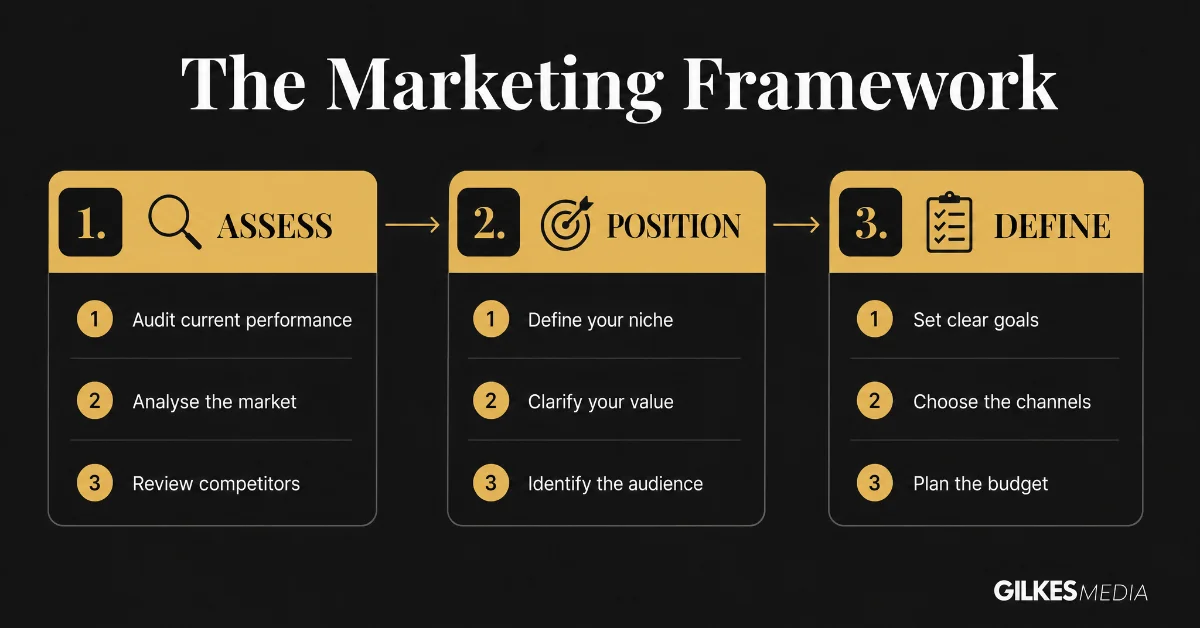
As this workflow shows, a solid framework always begins with an internal assessment before you even think about looking outward. This ensures your strategy is built on a solid business footing from day one.
Once you have a handle on your internal situation, it is time to analyse the world outside. Your goal here is to find a clear, defensible space in the market that you can own. This means taking a hard look at your competitors, not to copy them, but to spot their weaknesses and find your opportunities.
A sharp, commercially-focused analysis goes beyond a quick glance at their website. You need to dig into their messaging, pricing, customer reviews, and the channels they use to get customers. A winning strategy often hinges on doing something your competitors simply are not.
A great marketing strategy is not about being better than the competition at the same game. It is about changing the game to suit your strengths. It is about creating an unfair advantage.
This deep dive allows you to define your unique value proposition (UVP). This is the simple, powerful statement that answers the question every potential customer is asking: "Why should I buy from you and not them?" Your UVP has to be clear, compelling, and hammered home consistently across all your marketing. As you build this out, consider how using AI for marketing personalization can help you deliver that message with incredible precision.
This is the final, crucial piece of your foundation, and it is where most strategies fall apart. You must connect every single marketing activity directly to a core business objective. Too many plans become a laundry list of tactics like "post on social media" or "run Google Ads" with no clear commercial purpose.
Every pound you invest needs to have a job.
For example:
This discipline ensures marketing is never just a cost centre. It becomes a primary driver of growth, with every element accountable to a specific, measurable outcome. This foundational work also extends to your most important digital asset: your website. A clear plan for your SEO and website development is critical to capturing the demand you work so hard to create.
Vague goals like ‘get more leads’ or ‘increase brand awareness’ are budget black holes. I have seen it countless times. They sound productive in a meeting, but they lack commercial focus and make it impossible to know what is actually working.
An effective marketing strategy is built on something far more solid: clear, quantifiable objectives tied directly to your profit and loss. It is about building accountability into your marketing from day one. Instead of chasing activity, we are going to focus on impact.
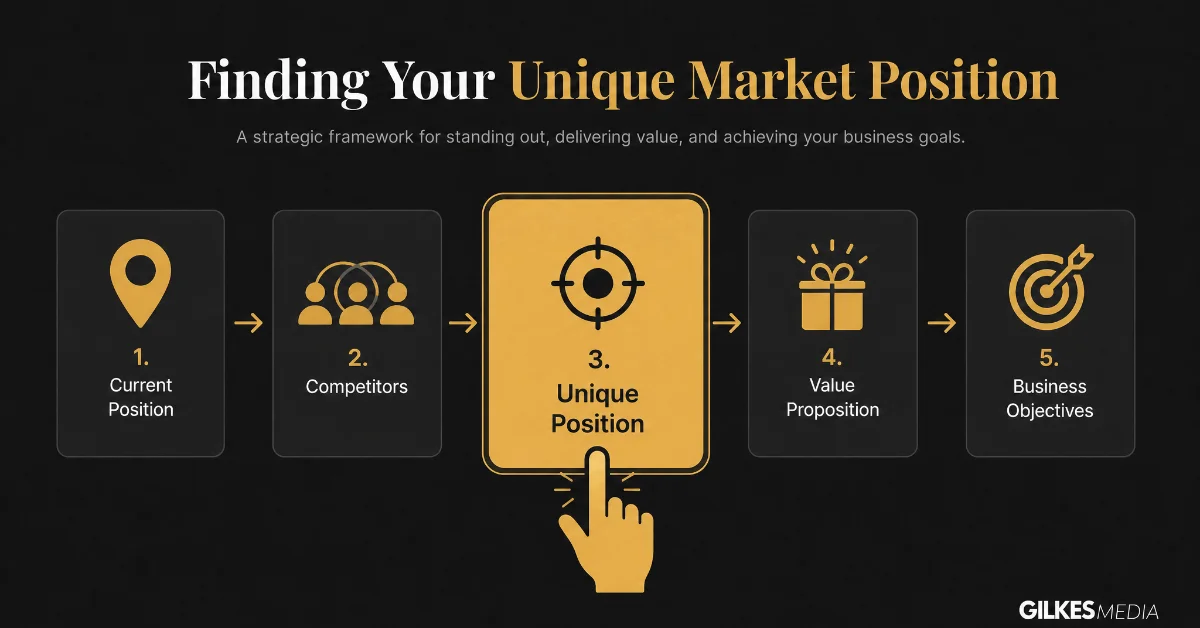
As this process shows, your business objectives are the final destination. Every other part of the strategy, from positioning to messaging, has to be aligned to get you there efficiently. These objectives give your entire plan purpose and direction.
Let’s get practical and translate some common, fluffy marketing goals into sharp, performance-driven objectives. This is a critical step that shifts your strategy from a cost centre to a revenue driver.
Here is how we reframe them:
See the difference? Specific objectives like these force you to make smarter decisions about where to invest your time and budget. They also give you a clear benchmark for success.
A massive pitfall for many businesses is chasing vanity metrics. These are the numbers that feel good but mean very little: likes, impressions, and follower counts. They look impressive on a report but rarely have a direct correlation with your bank balance.
In over a decade of generating more than 80,000 leads, I have seen countless businesses burn through budgets chasing vanity metrics. The real wins come from an obsessive focus on performance metrics that directly impact your bottom line.
Performance metrics are what truly matter. These are the numbers that tell you if your marketing is profitable and sustainable.
Tracking these KPIs is non-negotiable. They are the true indicators of your marketing strategy's health.
Defining clear goals is the first step, but the real power comes from integration. Shockingly, only 38% of UK organisations have fully integrated digital marketing into their overall strategy. This means most businesses are operating in silos, with marketing activity completely disconnected from core commercial goals, a huge, costly gap I close for my clients. You can read more about these findings from SQ Magazine's latest research.
When your objectives are clear and integrated, they shape every decision that follows.
This alignment ensures every pound spent and every hour worked is pushing your business in the same, profitable direction. It is the difference between a list of random tactics and a cohesive, results-driven marketing machine.
Your customers are not everywhere, and your budget definitely is not infinite. This simple truth is the foundation of smart channel selection.
One of the most common mistakes I see founders make is what I call "sprinkling the budget", which involves spreading resources thinly across every platform they have heard of, hoping something sticks. This approach does not work. It just guarantees you will get mediocre results everywhere.
The real work of a marketing strategy is not about being present on every channel; it is about making deliberate, informed choices about where to invest your time and money. It is strategic focus, not exhaustive coverage. You need to find the specific places where your ideal audience is most active and, just as importantly, most open to your message. The goal is a tight, diversified mix that delivers the highest possible return.
The channels you choose should be dictated entirely by who you are trying to reach and what you want them to do. It is that simple.
A professional services firm aiming to land high-value consulting contracts will find its audience on LinkedIn, not TikTok. Their strategy should naturally lean towards SEO and thought leadership content to build credibility and trust over time.
On the other hand, a B2C tech startup selling a cool gadget for under £50 needs to drive mass awareness and impulse buys. Their focus would rightly be on visual platforms like TikTok and paid social ads on Instagram, where they can show the product in action and drive immediate sales. Every channel has its own culture, user behaviour, and commercial purpose.
Your marketing channel is the bridge between your value proposition and your customer. If you build it in the wrong place, it does not matter how well-constructed it is; no one will cross it.
This is exactly why understanding performance marketing is so critical. It forces you to connect every channel directly to a measurable commercial outcome, like a lead or a sale. You can learn more about this disciplined approach in our guide to performance marketing. Adopting this mindset shifts your focus from being busy on many channels to being profitable on a select few.
Making smart decisions means looking at current data. Recent insights from the UK show that for many businesses, email marketing remains a powerhouse, with 44% adoption, followed closely by content marketing at 40%.
Interestingly, foundational channels like SEO and paid search see lower adoption rates at just 25% and 22% respectively. For founders and SMEs, these figures are gold. They help you audit your current mix and spot clear opportunities where competitors might be underinvesting.
When you see that 54% of businesses list increasing sales revenue as their top priority for 2025, it is clear that choosing the right channels is the most important strategic lever you can pull. You can dig into more of these insights in the 2025 State of Digital Marketing Report.
Start by selecting just one or two primary channels where you have the highest confidence of finding your ideal customer. Your entire focus should be on mastering these before you even think about expanding.
A practical way to make this choice is to ask three key questions:
By answering these, you can build a channel plan that is both ambitious and grounded in reality. The aim is to create a small portfolio of channels that work together. For instance, you could use paid social ads to promote a valuable piece of content that, in turn, captures email addresses for a long-term nurture sequence.
This is how you create a marketing engine, not just a series of disconnected campaigns.
A marketing strategy without a budget is just a wish list. It is the single most common reason a brilliant plan fails to get off the ground. Now we move from the strategic to the practical: how to fund your growth ambitions and turn your objectives into a reality.
This is not about plucking a magic number out of thin air. It is a commercial exercise. The goal is to turn your budget from a simple expense line into a powerful, performance-driven growth engine. Every pound must have a job to do.
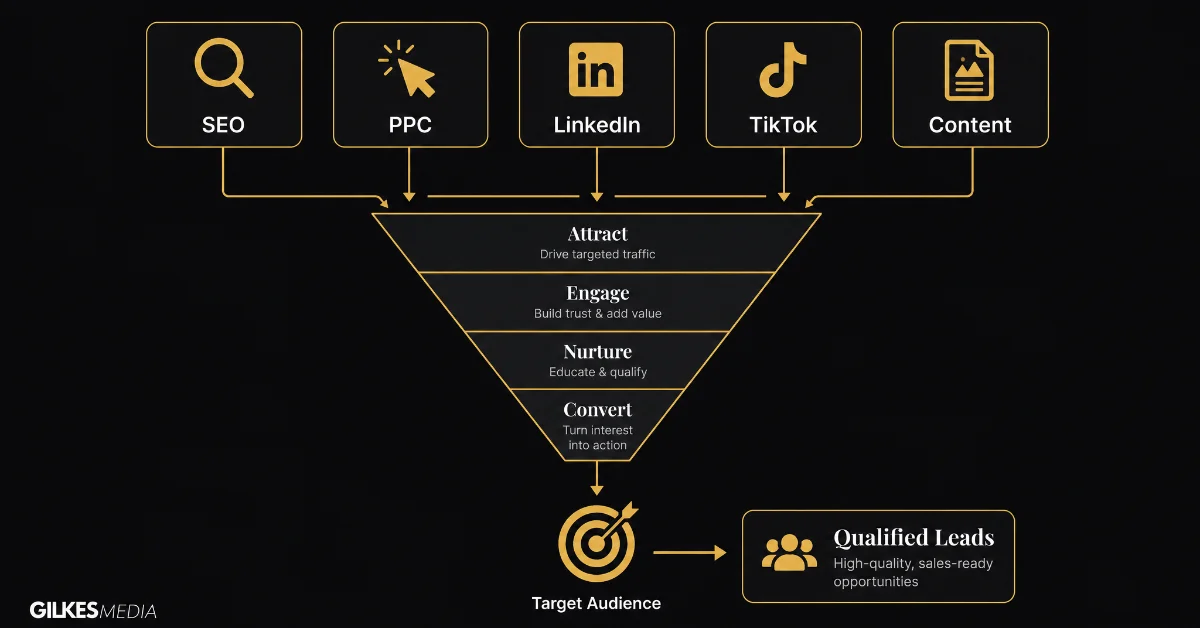
There are several established ways to set a marketing budget. The model you choose should reflect your company’s maturity, your industry, and just how aggressive your growth targets really are.
To get this right, a thorough understanding of calculating customer acquisition cost is non-negotiable. This metric is the bedrock of objective-based budgeting, allowing you to build a financial plan based on tangible results, not guesswork.
With a model chosen, you need to forecast costs. For most founders and leadership teams, the biggest expenditures will fall into three categories: paid advertising, content creation, and people.
Paid social is a prime example where clear forecasting is vital. The UK social media advertising market is projected to hit £9.95 billion in revenue by 2025 with 13% year-on-year growth. For professional services firms and B2B tech companies, this highlights a massive opportunity to reach decision-makers where they are active.
Your budget is not just a constraint; it is a strategic tool. A well-allocated budget focuses your efforts, forces you to prioritise high-impact activities, and provides the fuel needed for sustained growth.
The final piece of the puzzle is resourcing. Do you hire an in-house team, or do you partner with an external specialist? This is a critical decision that balances cost, control, and expertise.
Ultimately, the goal is to create a realistic financial plan that supports your strategic ambitions. It needs to be tracked meticulously, measured against ROI, and adjusted based on real-world performance data. This ensures you are always investing your capital where it will have the greatest business impact.
A marketing strategy is not a document you create once and file away in a forgotten folder. It is a live, operational blueprint that needs constant attention. Without a clear system for measuring what is working and what is not, you are flying blind. You are almost certainly leaving money on the table.
This is where we shift from planning to active management, turning raw data into decisive, profitable action.
The goal is to create a tight feedback loop: launch, measure, analyse, and then optimise. This cycle ensures your marketing investment does not just deliver a return, but an increasing return over time. It is about building a culture where every pound spent is justified by the commercial results it generates.
Before you can measure success, you need to define what it actually looks like in hard numbers. Key Performance Indicators (KPIs) are the specific metrics that tell you if you are on track to hit your business objectives. They absolutely must be tied to commercial outcomes, not vanity metrics like likes, impressions, or follows.
For any strategy focused on generating leads and sales, your primary KPIs will almost always include:
These are the metrics that matter. They give you an unfiltered view of your strategy's financial performance and tell a clear story about profitability, which is exactly what founders and leadership teams care about.
You do not need a sprawling, overly complicated spreadsheet to get a handle on performance. In fact, data overload is just as dangerous as having no data at all. The best approach is a simple, focused dashboard that tracks only the handful of KPIs most critical to your goals.
This dashboard should give you an at-a-glance view of your marketing engine's health. I always recommend organising it by channel. That way, you can quickly spot the top performers and identify the laggards that are dragging you down.
For each channel, track the primary KPI that matters most. It is that simple.
This table breaks down which metrics to focus on for some of the most common channels. It is a great starting point for building your own dashboard and helps connect the dots between tactical metrics and real business impact.
| Channel | Primary KPI | Secondary KPI | Business Impact |
|---|---|---|---|
| Paid Search (PPC) | Cost Per Lead (CPL) | Conversion Rate | Measures the efficiency of direct lead generation spend. |
| SEO | Organic Traffic | Keyword Rankings | Tracks long-term brand visibility and inbound lead potential. |
| LinkedIn Ads | Cost Per MQL | Click-Through Rate | Assesses effectiveness in reaching a specific B2B audience. |
| Email Marketing | Sales from Campaigns | Open Rate | Gauges the revenue-generating power of your owned audience. |
Having a clean view of your data is the first step, but the real growth comes from understanding the story it tells. For a deeper dive into making sense of the numbers, our guide on paid search analytics offers practical frameworks for turning data into actionable insights.
A great strategy is not about getting everything right the first time. It is about having the right data to figure out what is wrong quickly and the discipline to fix it decisively.
Data is useless without a structured process for acting on it. I always push clients to implement a consistent review cycle. It creates a regular forum for making data-driven decisions and stops you from getting sidetracked by noise.
Here is a rhythm that works well:
This disciplined rhythm stops you from making reactive, emotional decisions. It forces you to look at the hard numbers and make choices that systematically improve your ROI, ensuring your strategy evolves and strengthens month after month. If you’re a small business working with a tighter budget, our marketing strategy guide for small businesses focuses specifically on that scenario. If you're putting a number on this, our guide to how much UK small businesses should budget for marketing breaks down realistic spend by channel.
Even with the best playbook, you are bound to have a few specific questions. This final section tackles the most common and pressing queries I hear from founders and leadership teams day in, day out.
The answers are not theory. They are direct, practical insights from over a decade in the trenches, managing more than £3,000,000 in ad spend and generating over 80,000 leads.
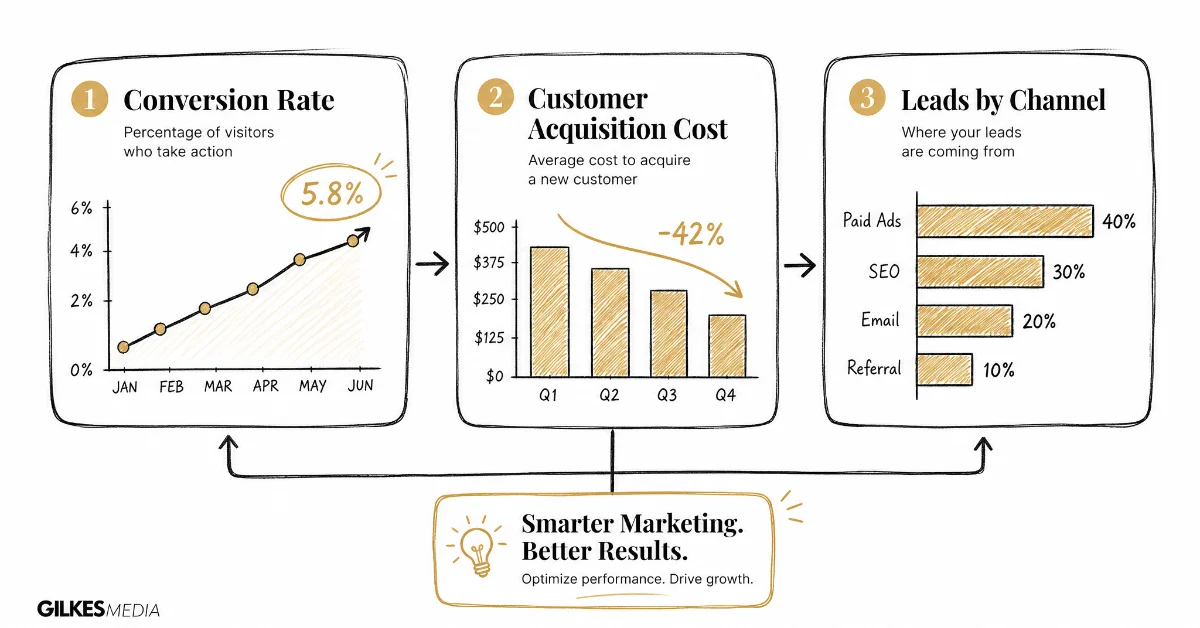
Your marketing strategy should never be a static document gathering dust on a server. Think of it as a live, operational plan.
I recommend a comprehensive, top-to-bottom review annually. This is where you align marketing with the wider business plan for the year ahead and make the big, directional shifts.
However, the real work happens more frequently. You should be conducting structured performance reviews quarterly to assess progress against your KPIs and make tactical adjustments. Is that new campaign working? Is our cost-per-lead creeping up? This is the time to ask those questions.
For fast-moving sectors or during a high-growth phase, monthly check-ins on key metrics like ad spend ROI and lead volume are absolutely crucial. The key is agility. If a channel is failing to deliver, do not wait a year to reallocate that budget. A good strategy provides long-term direction but demands short-term flexibility based on real-world data.
Easy. Starting with tactics instead of strategy.
It is the single most common and costly mistake I see. Leaders jump straight to "we need to run some Google Ads" or "let's get on TikTok" without first doing the foundational work. They completely skip defining their ideal customer, setting commercial objectives, and nailing their market positioning.
This 'tactic-first' approach inevitably leads to scattered efforts, wasted budget, and no clear way to measure what success even looks like.
The foundational work of research, objective setting, and audience definition is completely non-negotiable. It is the difference between randomly spending money and making a calculated investment in predictable growth.
There is no magic number, as it depends heavily on your industry, growth stage, and revenue. That said, a common benchmark for an established SME is to allocate 5-10% of total revenue to marketing activities.
For an early-stage startup trying to make a dent in the market, this figure can be significantly higher, often 20% or more, to fuel aggressive market penetration and brand awareness.
But the most effective method is objective-based budgeting. Start with what you need to achieve (e.g., “we need 100 new customers in the next 6 months”). Then, calculate the likely customer acquisition cost based on channel data and build your budget from there. This approach ties every pound spent directly to a commercial outcome, making it far easier to justify and track.
When you are starting out, it is almost always more effective to master one or two channels where your target audience lives and breathes. Spreading a limited budget too thinly across many different channels is a recipe for mediocre performance everywhere.
For example, if you are a B2B consultancy, dominating LinkedIn and SEO is a much smarter play than also trying to manage Instagram and TikTok with a small team and budget. The goal is to establish a consistent, profitable return from your core channels first.
Once you have a proven, repeatable model, you can strategically reinvest the profits to expand your reach and test new channels. This 'master then expand' approach is far more sustainable and delivers a much stronger ROI in the long run.
Ready to build a marketing strategy that delivers real, measurable results? At Gilkes Media, I work directly with founders and leadership teams to cut through the noise and create a focused plan for growth. If you need a senior, hands-on partner to help you generate more leads and maximise your ROI, let's talk.
