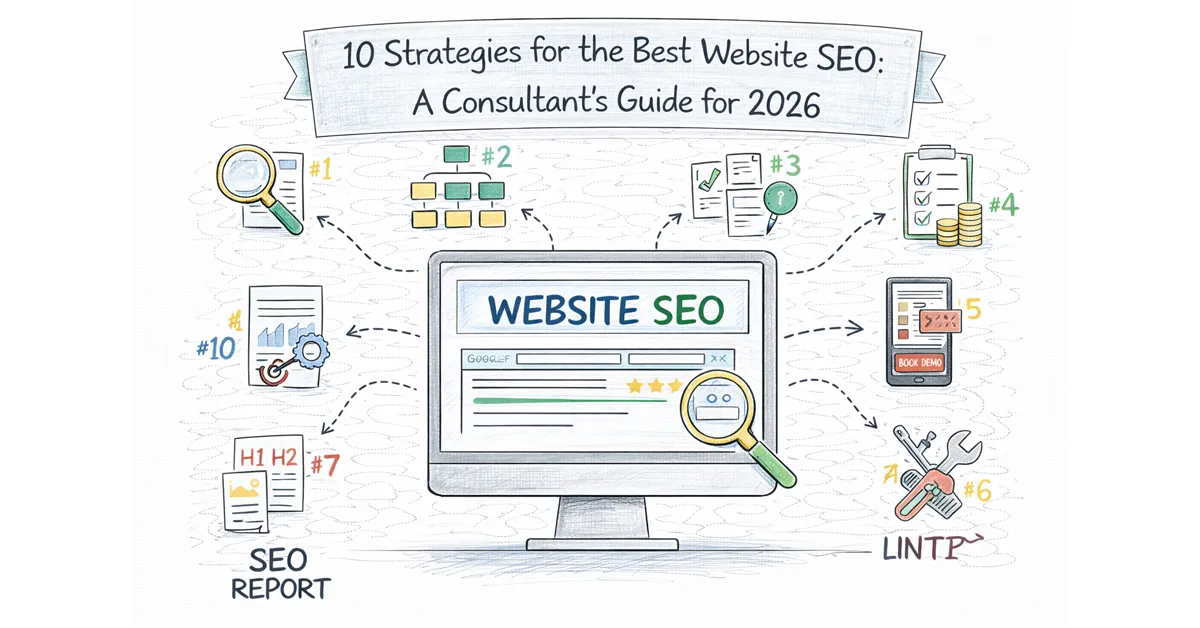
For founders and leadership teams, Search Engine Optimisation (SEO) is not an abstract marketing task. It is a critical channel for generating leads, acquiring customers, and building sustainable revenue. Yet many businesses struggle, caught between generic advice and complex technical jargon. The goal is simple: make your website a magnet for high-intent prospects who are actively searching for the solutions you provide. Achieving the best website SEO performance means turning your site into a predictable, scalable growth engine.
This guide cuts through the noise. It is not a list of quick hacks or vague theories. It is a commercially-focused breakdown of the 10 most impactful strategies that form a solid SEO foundation. Having managed over £3 million in advertising spend and generated more than 80,000 leads, my focus is on what works in the real world to deliver measurable results. Each point below is designed to be a practical, actionable component of a cohesive strategy, helping you make informed decisions and invest your resources where they will deliver the greatest return.
You will learn how to move beyond basic keyword tactics and implement a structured approach covering everything from technical performance and content authority to user experience and backlink strategy. We will explore:
This is your roadmap to building an SEO asset that drives tangible business outcomes. Let's begin.
Effective SEO begins with understanding the exact language your customers use. This process, known as keyword research, is the foundation for any successful campaign and is fundamental to achieving the best website SEO results. For founders and SMEs, particularly in professional services or B2B tech, this means moving beyond high-volume, generic terms and focusing on phrases that signal commercial intent and a specific need.
Strategic keyword targeting ensures your content answers the precise questions potential customers are asking. By aligning your website's pages with these high-intent searches, you create a direct and efficient pathway from search engine query to qualified lead. It is the difference between attracting casual browsers and engaging serious prospects who are actively seeking solutions.
Success here is about precision, not just volume. A targeted approach delivers a much stronger return on investment.
Key Insight: The goal is not to attract the most traffic, but the right traffic. High-intent keywords are your most valuable asset for lead generation, as they connect you with users at the crucial decision-making stage of their buying journey.
To implement this strategy, focus on analysis and validation using established tools.
On-page optimisation involves refining individual page elements to signal relevance and authority to search engines. Unlike outdated keyword stuffing, modern on-page SEO is about creating clarity for both users and crawlers. It is a critical component of achieving the best website SEO, as it ensures every page is structured to rank for its intended keywords while providing genuine value to visitors.
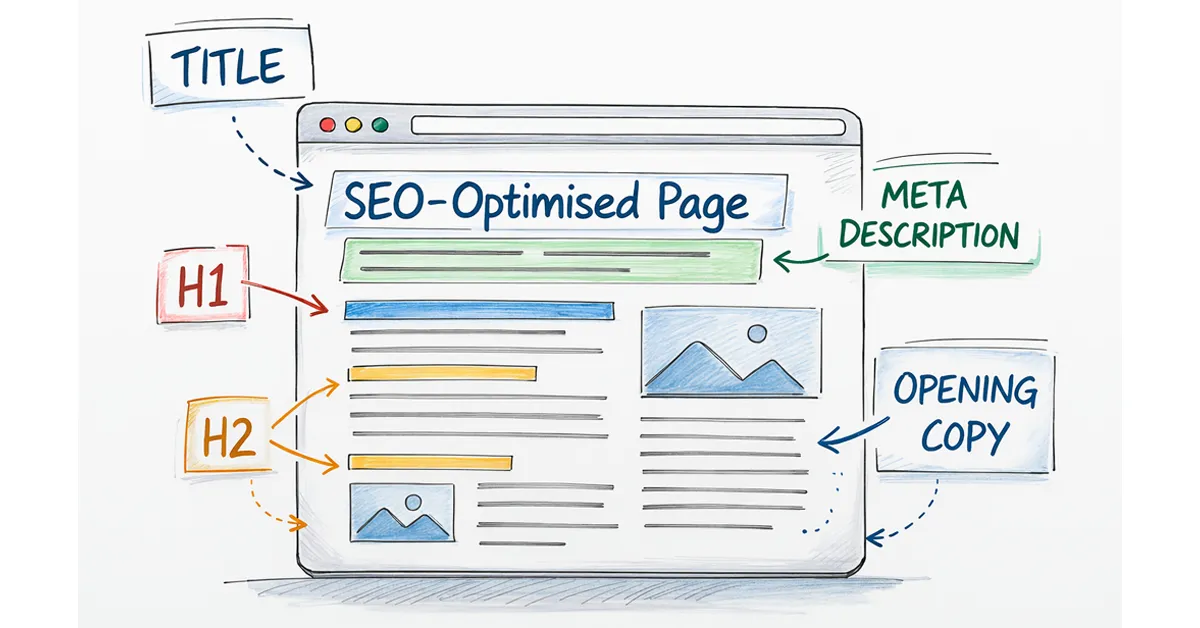
For founders and SMEs, this means treating every page as a strategic asset. By meticulously optimising title tags, meta descriptions, headers, and body content, you directly influence how Google interprets your content's purpose. This technical alignment is what translates your keyword strategy into measurable ranking improvements and qualified traffic.
Proper on-page optimisation is a game of details. Each element works together to build a coherent and compelling signal of relevance.
Key Insight: On-page SEO is your opportunity to control the narrative. You are telling search engines exactly what your page is about and why it deserves to rank, while simultaneously persuading users that your page has the answer they need.
To implement this, perform a methodical audit of your most important pages.
Technical SEO addresses the underlying infrastructure that enables search engines to crawl, index, and rank your website efficiently. Even the most compelling content will fail to perform if it is built on a poor technical foundation. For founders and SMEs, mastering this area is fundamental to achieving the best website SEO, as it directly impacts user experience, conversion rates, and overall search visibility. If you're on a platform like Wix, some of this needs a different approach - our guide to SEO and Wix for UK businesses covers the platform's own quirks.
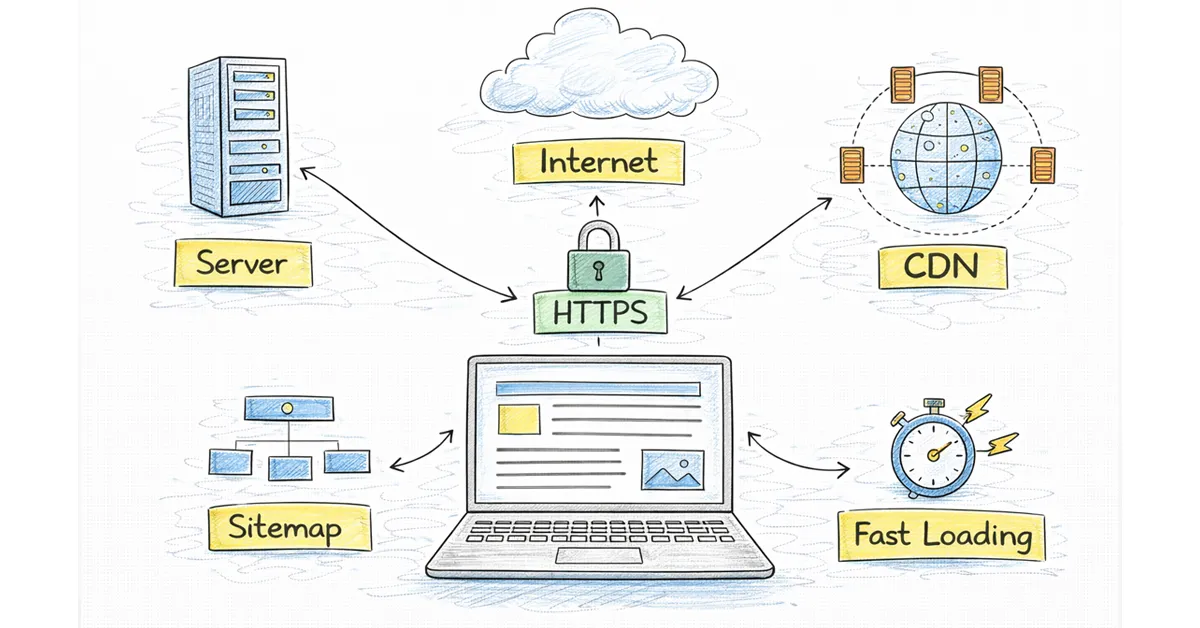
A technically sound website ensures that search engine bots can easily access and understand your content, while providing a fast, smooth experience for visitors. Factors like site speed, mobile responsiveness, structured data, XML sitemaps, and general crawlability are critical. Neglecting them undermines your keyword and content efforts, making technical optimisation an essential pillar for sustainable growth.
A technically optimised site performs better for both search engines and users, leading to higher rankings and improved conversions.
LocalBusiness schema markup on its contact and location pages. This helped it appear more prominently in local search results and the Google Map Pack, driving qualified enquiries from businesses in its immediate service area.Key Insight: Technical SEO is not a one-time fix; it is ongoing maintenance. A fast, accessible, and easily understood website structure is a prerequisite for ranking competitively and converting visitors into customers.
Use free and professional tools to diagnose and resolve technical issues methodically.
FAQ, Organization, and LocalBusiness where relevant. This helps search engines understand your content's context and can generate rich snippets in search results. You can find out more by exploring our guide to SEO-focused website development.Content remains central to SEO success, but achieving the best website SEO today means prioritising quality, relevance, and strategic organisation over sheer volume. This is where topic clustering comes in. The model involves creating a central "pillar" page around a core business topic and then developing multiple "cluster" articles that explore related sub-topics in greater detail.
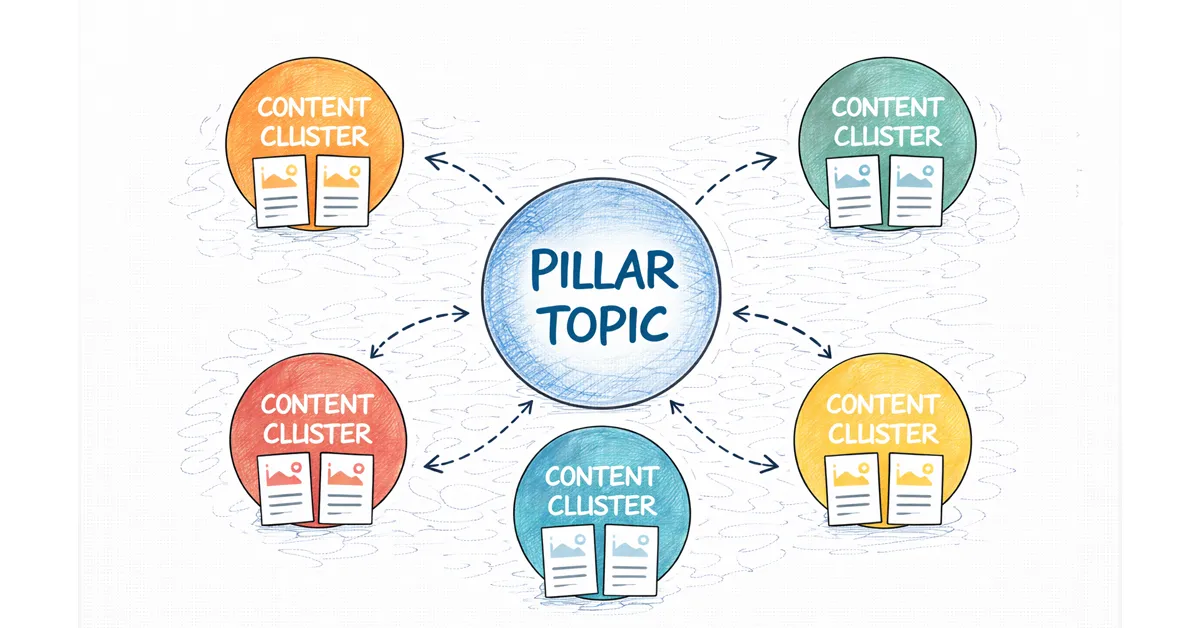
This organised approach signals to search engines that you have deep authority on a subject, which improves rankings across the entire topic group. For founders and SMEs, it creates a powerful asset that supports a strong internal linking strategy and serves prospects at every stage of the buyer journey, moving them from initial awareness to decision-making.
Success with this strategy comes from demonstrating comprehensive expertise and making it easy for both users and search engines to navigate your content.
Key Insight: Topic clustering transforms your website from a collection of random articles into an organised library. This structure builds topical authority, making it easier to rank for competitive keywords while guiding users to the exact information they need.
To implement this model, you need a planned approach to content auditing, creation, and linking.
Backlinks, or links from other websites to yours, remain one of Google’s strongest ranking signals. Effective modern practice prioritises quality over quantity. A single link from a relevant, authoritative domain carries far more weight than hundreds of low-quality links. Achieving the best website SEO requires a disciplined approach to building authority and defending your site against harmful links.
Strategic link building and regular backlink audits are two sides of the same coin. The first establishes your website as a credible voice in your industry, while the second protects your hard-won rankings from penalties. Together, they build and maintain the domain authority needed to outrank competitors and attract high-value organic traffic.
For a fuller look at what actually moves the needle in 2026, see our guide to link building in 2026, covering which tactics still work and which ones Google now penalises.
Success in link building is about earning credibility, not just acquiring links. A defensive audit strategy is essential for long-term stability and growth.
Key Insight: Building authority is an active process of creating value and promoting it, while protecting that authority requires constant vigilance. Think of it as managing your website's professional reputation online; both endorsements and negative associations matter.
To implement a solid link strategy, combine proactive outreach with defensive auditing using professional tools.
Technical SEO and user-centric design are now intrinsically linked. Google's Core Web Vitals are specific, measurable signals that evaluate the real-world experience of your users, directly influencing your rankings. This means a slow, clunky website is not just a conversion problem; it is an SEO problem. Achieving the best website SEO requires a focus on making your site fast, responsive, and stable.
For founders and SMEs, this represents a crucial intersection between marketing, web development, and customer satisfaction. A positive user experience keeps visitors engaged, reduces bounce rates, and encourages them to complete valuable actions like filling out a form or making a purchase. It signals to Google that your site provides a high-quality experience, which it rewards with better visibility.
Success in this area comes from treating site performance as a core business metric, not just a technical task. A smooth user journey translates directly into better commercial outcomes.
Key Insight: A technically sound website that delivers a brilliant user experience is a powerful asset. It simultaneously satisfies search engines and converts visitors into customers, creating a self-reinforcing cycle of growth and visibility.
To implement this, you must continuously monitor, test, and refine your website's technical performance.
For businesses with a physical footprint or defined service areas, local SEO is not just an option; it is essential. This specialised discipline focuses on capturing high-intent "near me" searches, connecting your business with customers at the very moment they need your services. Achieving the best website SEO performance for local queries involves a targeted approach that goes beyond standard on-page optimisation, directly influencing foot traffic, appointment bookings, and qualified local leads.
With the majority of mobile searches now carrying local intent, optimising for your geographic area is a direct route to revenue. For professional services firms, healthcare clinics, or tradespeople, this means appearing prominently in Google's Map Pack and local organic results. It ensures that when a potential customer searches for a solution in their vicinity, your business is the most visible and credible answer.
Success in local SEO is about dominating your specific service area and making your business the obvious choice for nearby customers.
Key Insight: Local SEO is about proximity and trust. Your goal is to prove to both search engines and users that you are the most relevant and reputable provider within a specific geographic boundary, turning local searches directly into business.
To implement a powerful local strategy, focus on consistency, visibility, and reputation management.
Understanding why a user is searching is more critical than knowing what they are searching for. This is the core of search intent analysis, a process that ensures your content directly solves the problem behind a query. Google's algorithms are designed to reward pages that perfectly match a user's intent, making this analysis essential for achieving the best website SEO.
Misaligned content, no matter how well-optimised, will fail to rank or convert. If a user wants to compare products and finds a beginner's guide, they will leave immediately. Aligning your content format and substance with the four main types of intent (informational, navigational, commercial, and transactional) is fundamental to connecting with users at every stage of their journey.
Success in modern SEO requires you to act like a problem-solver, not just a content creator. Your goal is to deliver the most direct and satisfying answer to a user's query.
Key Insight: Keywords get users to your page; matching their intent keeps them there. Google heavily weighs user signals like dwell time and bounce rate, meaning content that satisfies intent is rewarded with higher, more stable rankings.
To implement this, you must decode the search results page and map your content strategy accordingly.
SEO success is not a one-off task; it requires systematic measurement and continuous improvement based on data, not guesswork. This discipline involves monitoring rankings, organic traffic, conversions, and user behaviour to inform strategy. For founders and growth-focused teams, this transforms SEO from a static project into a compound growth engine, ensuring the best website SEO performance over time.
A data-driven approach allows you to identify what is working, what is not, and where to allocate your resources for maximum impact. By analysing performance metrics, you can refine your content, improve user experience, and double down on the strategies that generate tangible business results, such as leads and sales.
The objective is to create a feedback loop where data informs action, and action produces better data. This iterative process is what separates high-performing websites from the rest.
Key Insight: Without tracking, you are flying blind. Analytics turns SEO from an art into a science, enabling you to prove ROI, make informed decisions, and consistently outperform competitors who rely on intuition alone.
To implement this data-first approach, set up your tools correctly and establish a regular review cadence.
Google's focus on Experience, Expertise, Authoritativeness, and Trustworthiness (E-E-A-T) is no longer a niche concept but a central pillar of its ranking algorithm. This is particularly true for "Your Money or Your Life" (YMYL) content in finance, health, and professional services. Demonstrating E-E-A-T is fundamental to achieving the best website SEO outcomes in these sectors, as it proves your content is reliable and credible.
For founders and SMEs, this represents a significant opportunity. Instead of just creating content, you can build a competitive advantage by establishing genuine thought leadership. This involves showcasing real-world experience, original insights, and recognised credentials, turning your expertise into a tangible ranking asset that also builds your brand.
Success with E-E-A-T is about proving your expertise, not just claiming it. It requires a systematic approach to building and displaying signals of credibility across the web.
Key Insight: E-E-A-T is a direct reflection of your real-world reputation. Google is getting better at connecting online content to offline authority, making genuine expertise a powerful and defensible SEO advantage.
To implement this strategy, focus on consistently creating and promoting signals of your expertise.
| Tactic | Complexity | Resource Needs | Ideal Use Cases |
|---|---|---|---|
| Keyword Research & Targeting | Moderate | Moderate | B2B SaaS, professional services, targeted lead gen |
| On-Page SEO Optimisation | Low | Low | Optimising existing pages, feature snippet pursuit |
| Technical SEO & Performance | High | High | Large sites, e-commerce, scaling businesses |
| High-Quality Content & Clustering | High | High | Thought leadership, mid/long-term lead generation |
| Link Building & Authority | High | High | Competitive niches, brand building |
| UX & Core Web Vitals | High | High | Conversion-focused sites, mobile-heavy audiences |
| Local SEO & Geographic Targeting | Moderate | Low | Service businesses, multi-location firms |
| Search Intent Analysis | Moderate | Moderate | Content strategy, product pages, comparison content |
| SEO Analytics & Tracking | Moderate | Moderate | Growth teams, performance-driven founders |
| E-E-A-T & Thought Leadership | High | High | Professional services, finance, health, expert-led brands |
Achieving the best website SEO is not about finding a single secret tactic or flipping a switch. It is the result of a disciplined, interconnected strategy where each element reinforces the others. We have explored the ten fundamental pillars that separate high-performing websites from the rest, from foundational keyword research and technical health to the authority you build with high-quality content and backlinks.
The journey from your current position to a top-ranking one can seem daunting. However, the key is not to attempt everything at once. True progress comes from strategic prioritisation and consistent, focused action. Your task now is to assess where your business stands in relation to each of these ten areas and identify the one or two that will create the most significant commercial impact in the short term.
Instead of feeling overwhelmed, think of this as a structured process. Here’s a practical way to move forward:
Mastering these concepts delivers far more than just a rankings boost. It fundamentally changes how your business acquires customers. A well-executed SEO programme transforms your website from a passive digital brochure into an active, 24/7 lead generation engine. It builds brand authority, establishes trust with your audience, and creates a durable competitive advantage that is difficult for others to replicate.
Ultimately, the goal of achieving the best website SEO is to build a reliable and scalable channel for growth that is not dependent on constantly increasing your advertising spend. It is an investment in a long-term asset that pays dividends in the form of qualified leads, customer trust, and sustainable profitability. The principles outlined in this guide provide the blueprint; the next step is to begin building.
As a hands-on SEO consultant, I work directly with founders and business leaders to translate these strategies into measurable commercial outcomes. If you require a clear, accountable partner to build a performance-focused SEO programme, contact Gilkes Media for a no-obligation initial consultation. We can create a practical roadmap to turn your website into a powerful engine for business growth.
