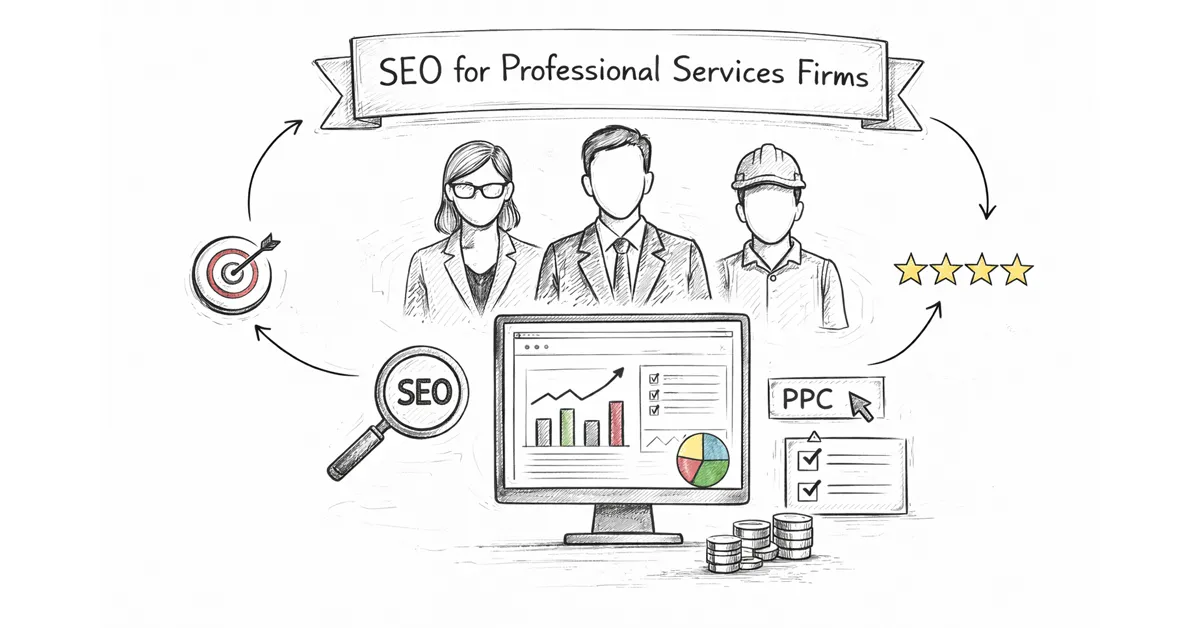
Effective SEO for professional services firms is not about chasing algorithms. It is a commercial activity designed to attract high-value clients. It works by making your expertise visible the moment a potential client is searching for a solution, positioning your firm as the credible, authoritative choice.
Before considering advanced tactics, getting the foundation right is non-negotiable. This is not about ticking boxes. It is about aligning every SEO action with your firm’s commercial goals. The core of any successful strategy is understanding how to optimize content for SEO and rank higher, forming the bedrock of genuine growth.
Without this groundwork, any investment in content or outreach will deliver disappointing returns.
The first step is to define what success actually looks like for your firm. Are you aiming for more qualified consultation requests? Perhaps you want to attract clients with larger retainers, those needing services that generate over £25,000 a year. Or is the goal to cement your firm's authority in a specific niche, such as corporate law for tech start-ups?
Your SEO objectives must be a direct reflection of your business goals. Vague targets like 'more traffic' are useless. Specific, measurable outcomes like 'increase qualified M&A leads by 20% in six months' provide the focus needed for a successful strategy.
Once your objectives are clear, you can move on to a commercially-focused keyword analysis. This is where we move beyond broad, high-volume terms to pinpoint the high-intent phrases your ideal clients actually type into Google when they need expert help.
It is the difference between targeting a generic term like "accountant" and a specific, high-value query like "R&D tax credit advice for manufacturing firms". This involves mapping keywords directly to your core services and understanding the exact questions that signal a real, pressing need for your expertise.
Consider these stages:
By focusing on these high-intent phrases, you ensure the traffic you attract is not just relevant, but commercially valuable. This foundational process connects clear goals to analysis and, ultimately, to a technically healthy website that can perform.
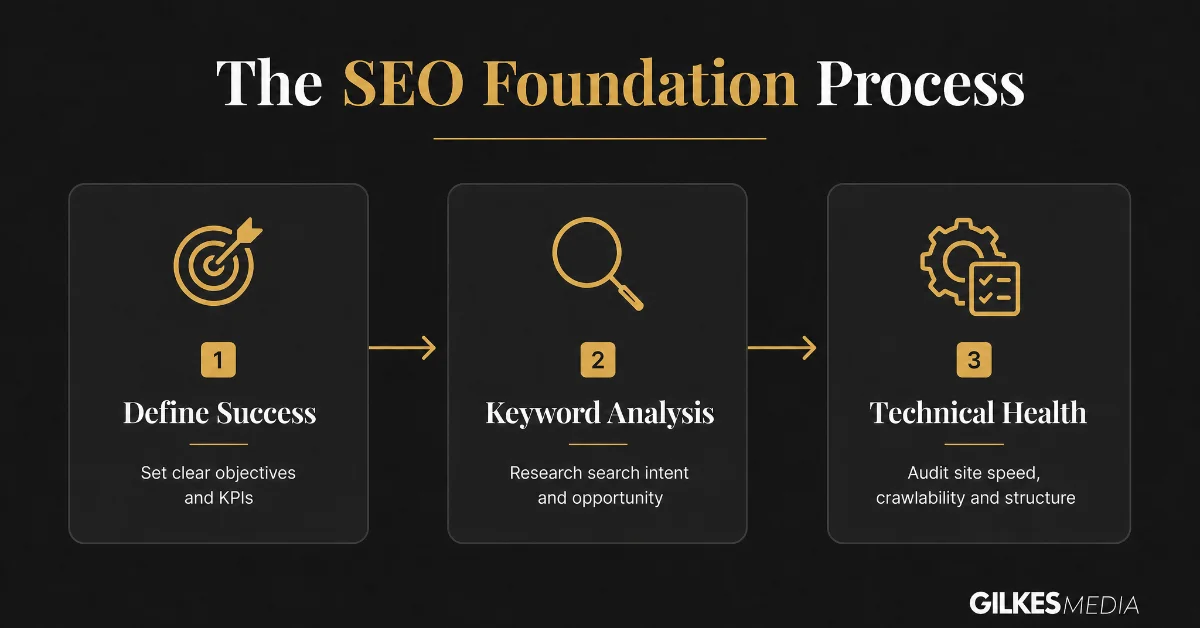
This structured approach ensures that from day one, your SEO efforts are tied directly to tangible business outcomes.
Finally, the foundation is not complete without essential technical SEO health checks. This is about ensuring search engines like Google can efficiently crawl, understand, and index your website. A technically sound website is the platform upon which everything else is built.
Issues with site speed, mobile usability, or incorrect indexing can render even the best content invisible. Many firms can uncover quick wins here by using some of the best free SEO tools to run initial diagnostics.
This table shows how these foundational pillars connect directly to business results.
Here is a summary of how these core components translate into direct commercial impact for your firm.
| SEO Pillar | Strategic Focus | Primary Business Outcome |
|---|---|---|
| Objective Setting | Aligning SEO KPIs with firm revenue goals. | Ensures marketing investment is accountable. |
| Keyword Analysis | Targeting high commercial intent phrases. | Increases quality of inbound client enquiries. |
| Technical Health | Ensuring site is accessible, fast, and indexable. | Maximises visibility of service pages. |
Mastering these three areas ensures your SEO is not just a marketing task, but a powerful engine for sustainable client acquisition.
For many UK professional services firms, whether you are a solicitor in Manchester or a financial advisor in Bristol, your most valuable clients are on your doorstep. Winning in local search is where proximity and trust become powerful commercial advantages.
Effective local SEO is not just about having a map on your website. It is about turning your physical offices into digital assets that pull in local enquiries. You need to send undeniable signals to Google that your firm is the authority in its specific area.
Think of your Google Business Profile (GBP) as your digital shop window. It is often the first interaction a potential local client has with your firm, and it needs the same care as your reception area. A neglected profile suggests a neglected practice.
Getting this right means going far beyond just listing your address.
These actions are your foundation. They build the first layer of trust and give Google the structured data it needs to rank you for valuable searches like 'accountant near me'.
Treat your GBP not as a static listing, but as a live platform for proving your expertise to your local market. Google rewards consistent activity and detail with much better visibility.
In professional services, your reputation is everything. Online reviews are the new word-of-mouth referral. A steady stream of positive feedback is one of the most powerful local ranking factors.
You cannot just sit back and hope clients leave a review. You need a simple, repeatable process to request feedback when an engagement ends successfully. The system should make it incredibly easy for a happy client to share their experience.
It is not just about collecting stars. You must respond professionally to every review, good and bad. This public interaction shows you value client feedback and are an engaged, responsive firm, which can be as influential as the original review.
Local citations are mentions of your firm's Name, Address, and Phone number (NAP) on other credible websites. Think of them as third-party verifications of your business's legitimacy and location.
Consistency here is critical. Your NAP details must be identical across every listing, from major directories like Yell and Thomson Local to niche, industry-specific portals. Even a small variation, like 'Ltd' versus 'Limited', can dilute the signal and confuse search engines.
A methodical approach works best:
This process builds a web of trust signals around your physical location, cementing your firm’s local prominence in Google's eyes.
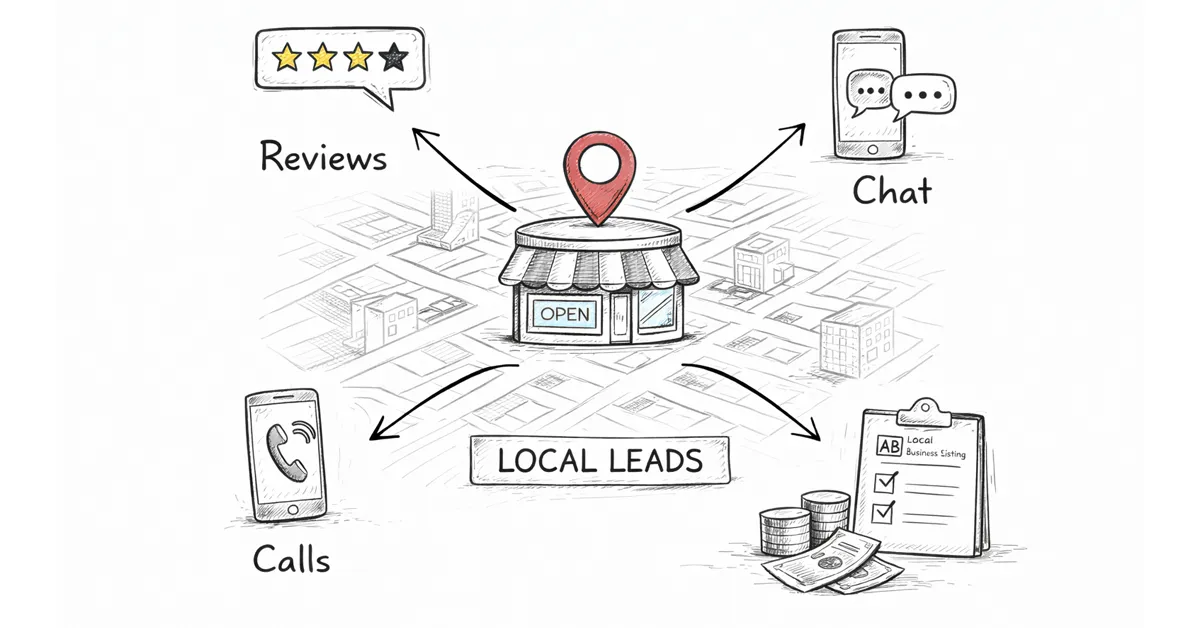
UK professional services firms are seeing a major shift in how they find new clients, and local SEO is becoming the key differentiator. The commercial impact is significant. Businesses that appear in the 'Local Pack' map listings receive substantially more traffic than those ranked just a few spots lower. If you have multiple offices or serve specific regions, this is a major opportunity. You can discover more insights about these UK search trends and what they mean for businesses.
Appearing in this prime digital real estate requires a combined effort across everything we have just discussed: a perfectly optimised GBP, a strong review profile, and consistent local citations. This is how you turn your local presence into a reliable, predictable source of high-value client leads.
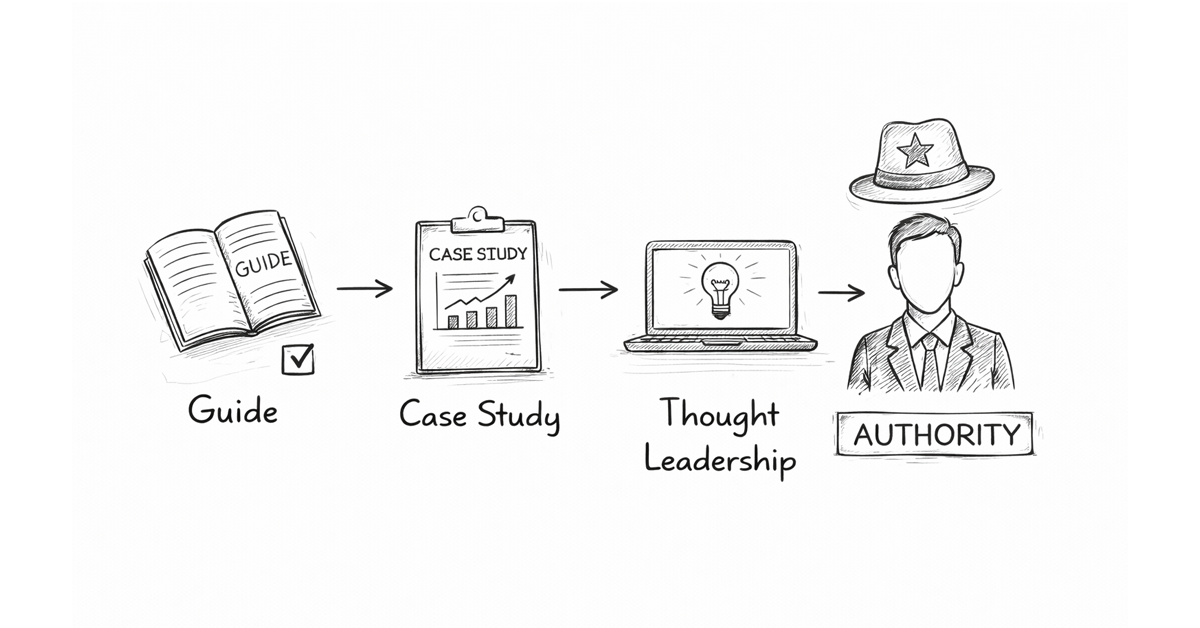
In professional services, trust is the entire foundation of a client relationship. Content is your best tool for building that trust, proving your expertise long before a prospect picks up the phone. This is not about producing generic blog posts. It is about creating genuinely valuable, insightful content that solves your ideal client's most pressing problems.
Get this right, and you will attract high-quality organic traffic. More importantly, you will pre-qualify leads. When someone finds your detailed guide on a complex financial issue, they come to the first conversation already convinced of your firm's expertise.
Most professional services firms think "content" just means "blogging". They publish an update on an industry trend, perhaps share a case study, and then repeat the process. While that has its place, it misses the deeper questions your ideal clients are asking.
The real opportunity is in creating permanent, foundational content that explains how you work and what complex concepts mean. This is what builds true authority.
Here is how to think about it:
Your goal is to build a library of expertise that positions your firm as the go-to resource in your field. This is a core part of effective on-page SEO best practices because it directly serves user search intent.
Every time a potential client asks, "What does that actually mean?" or "How does that process work?", you have a brilliant content idea. These questions are direct signals of what your market needs to understand before they can hire you.
Take a financial advisory firm. Their clients are asking:
Each of these questions deserves its own detailed page, not just a brief mention in a broad article. By creating content that gives a definitive answer, you capture high-intent search traffic and prove your expertise practically. This builds trust far more effectively than any sales pitch.
Your best content ideas are already in your sent emails and client meeting notes. Document the answers you give every day. That is the expertise your future clients are searching for.
Case studies are one of the most powerful tools for any professional services firm, yet most are written incorrectly. They tend to focus on the firm’s process, not the client's journey.
A compelling case study is not a boast. It is a story. It needs to outline the client's initial problem, the specific challenges they faced, and the strategic thinking behind your solution. Most importantly, it has to showcase the tangible business outcomes and measurable results you delivered.
This framework helps structure case studies that resonate with potential clients and demonstrate real-world impact.
| Section | Purpose | Key Information to Include |
|---|---|---|
| The Challenge | To show you understand the client's problem. | Client's industry, the specific issue, and its business impact. |
| The Solution | To explain your strategic approach. | The services you provided and the reasoning behind your plan. |
| The Outcome | To prove your value with tangible results. | Metrics like revenue growth, cost savings (£), or efficiency gains. |
| The Testimonial | To provide social proof and build trust. | A direct quote from the client endorsing your work. |
This structure transforms a project summary into a powerful sales asset that speaks directly to the needs of your next client.
If you have noticed Google’s search results look different lately, you are not alone. The rollout of AI Overviews is fundamentally changing the search landscape. For professional services firms, this is a wake-up call.
This shift means the old playbook of chasing clicks is becoming obsolete. The new goal is to establish your firm as such a definitive source of expertise that Google’s AI has no choice but to cite your content in its answers.
It is no longer just about ranking. It is about becoming a primary source.
The rise of AI Overviews is directly affecting organic traffic. Early analysis shows that when these AI-generated summaries appear, organic click-through rates can drop significantly.
However, the same research found that most sources cited in those AI answers come from the top organic results. This tells us that strong rankings are still vital, but visibility now comes in a new form, often as a citation rather than a direct click.
This presents a challenge, but also a serious opportunity. While you might see fewer direct visits, getting your firm cited by Google's AI builds immense credibility at the moment a potential client is looking for answers. It is powerful brand awareness.
To get your expertise featured in these AI answers, your content strategy needs to evolve. Generic blog posts will not be enough. You need to create comprehensive, well-structured content that definitively answers your clients' most complex questions.
Think of your website as a library of specialist knowledge. Every article, guide, or FAQ page should be crafted to be the clearest, most authoritative answer on that specific topic.
This requires a focus on:
The new objective is simple: make your content so clear, authoritative, and well-structured that it becomes the most logical source for an AI to reference when summarising a complex topic.
AI models, like people, rely on trust signals to determine which sources are credible. These signals are built both on and off your website. This is why securing authoritative backlinks from reputable industry publications, professional bodies, and respected news outlets is more critical than ever.
Every high-quality backlink acts as a vote of confidence. It tells Google that others in your field see your firm as a reliable source, a powerful signal that AI algorithms are designed to reward.
Here is a simple framework for building the necessary authority:
| Strategy | Actionable Focus | Desired AI Signal |
|---|---|---|
| Content Depth | Create detailed guides answering client questions. | Your firm is a subject matter expert. |
| Backlinks | Secure links from respected industry websites. | Other credible sources vouch for your firm. |
| Brand Reputation | Cultivate positive reviews and mentions. | Your firm is a trusted, established entity. |
By adopting this approach, you are not fighting against changes in search. You are proactively aligning your SEO strategy with them. For a deeper dive into the specifics, check this excellent A Practical Guide to AI Search Engine Optimization.
The focus has shifted from chasing clicks to cementing your status as a definitive authority. Get this right, and your firm will remain visible and influential, no matter how the search results page evolves.
Effective SEO for professional services is not about climbing rankings or getting more clicks. It is about generating new business. Chasing vanity metrics is a fast way to waste your budget. Instead, every measurement must tie directly back to a commercial outcome.
The goal is to move from simply looking at data to gaining real business intelligence. Are we attracting the right calibre of client? Are our key service pages turning visitors into qualified enquiries? What is the tangible return on our spending? This focus is what separates a marketing cost from a profit-generating investment.
First, we need to shift our perspective. It feels great to hit the number one spot on Google for a core service, but that is a milestone, not the finish line. A top ranking is only useful if it leads to a measurable commercial result.
The key performance indicators (KPIs) that matter are the ones that reflect new business opportunities and, ultimately, revenue.
This focus ensures your strategy is constantly refined to attract not just more visitors, but more of the right visitors who become profitable clients.
You cannot manage what you do not measure. Setting up precise goal tracking in a tool like Google Analytics 4 is a fundamental business requirement.
Start by defining what a 'conversion' means for your firm. It is rarely just one thing.
By assigning a realistic value to each of these conversion types, you can start to quantify the financial impact of your SEO. For instance, if you know that one in ten consultation requests becomes a client worth an average of £15,000, then each form submission has a potential value of £1,500. This reframes SEO from a cost centre to a revenue driver.
Once you are tracking conversions and have assigned them a value, you can finally calculate a genuine return on investment (ROI). This is the metric that gets the attention of partners and stakeholders, proving SEO’s commercial impact in black and white.
The formula itself is simple, but it demands diligent tracking. For a deeper dive, you can explore different models for how to measure marketing ROI to see which fits best with your firm’s financial reporting.
Here is a straightforward framework for the calculation.
| Metric | How to Calculate | Example |
|---|---|---|
| Total Lead Value | (Number of Leads) x (Average Lead Value) | 20 leads x £1,500 = £30,000 |
| Total SEO Investment | Retainer + Content Costs + Tools | £2,500 + £500 + £100 = £3,100 |
| SEO ROI | ((Value - Investment) / Investment) x 100 | ((£30,000 - £3,100) / £3,100) x 100 = 867% |
This kind of clear, financially-grounded reporting changes the conversation around SEO. You stop talking about rankings and start having strategic reviews of client acquisition, business growth, and profitability. That commercial focus is the hallmark of a successful SEO strategy in the professional services world.
Even with a solid plan, a few questions always arise when getting started with SEO. Here are the answers to the ones I hear most often from founders and marketing leaders.
The honest answer is to think in months, not weeks. While cleaning up technical issues might provide a quick boost, the meaningful results from content and authority building take four to six months to become apparent.
Think of it as building a valuable business asset, not just running a short-term campaign. The timeline depends on a few factors:
In the first three months, your focus should be on getting the foundations right and publishing content consistently. By month six, you should see a noticeable lift in relevant organic traffic and, crucially, more qualified enquiries.
This comes down to your team's skills and their available time. Many firms can handle the basics of on-page SEO and managing local listings, especially with a clear plan to follow.
However, the strategic side of SEO for professional services often requires specialist knowledge. An experienced consultant brings an external perspective, deep technical knowledge, and a focus on commercial results which is difficult to replicate internally without a dedicated expert.
A hybrid approach often works well. Your team can manage day-to-day content and site updates, while a consultant provides the strategy, technical oversight, and accountability needed to turn effort into business growth.
SEO budgets vary, but you should see it as a capital investment in a lead-generation asset, not just another marketing expense. For a small to medium-sized UK professional services firm serious about growth, a realistic budget typically falls between £1,500 to £5,000+ per month.
That investment usually covers:
Be wary of anyone promising real SEO for a few hundred pounds a month. Proper SEO takes significant time and expertise. Low prices almost always mean low-quality, ineffective tactics that can do more harm than good.
They are two sides of the same coin and work best together, but they play different roles. Understanding this is key to a balanced marketing plan.
| Factor | Search Engine Optimisation (SEO) | Paid Ads (PPC) |
|---|---|---|
| Speed | A long game; results build over months. | Instant; visible as soon as ads go live. |
| Cost | Investment in expertise and content. | You pay directly for every click. |
| Longevity | Results are durable; traffic continues. | Visibility vanishes when you stop paying. |
| Trust Signal | High. People trust organic rankings more. | Lower. Users know it is a paid spot. |
SEO builds a sustainable asset that generates organic traffic and builds your brand's authority over time. Paid ads are excellent for getting immediate traffic, testing new service messaging, and targeting specific groups quickly. The most successful firms I have worked with use both.
At Gilkes Media, I work directly with founders and leadership teams to build and execute practical, commercially-focused SEO strategies that deliver measurable results. If you are looking for a senior partner to help you turn search into a reliable source of high-value clients, I offer a free consultation to set a clear plan for your firm's growth.
Schedule your free strategy consultation at gilkesmedia.co.uk
