A lot of UK business owners are in the same position. They've paid for a decent-looking website, published a few pages, maybe added some blogs, and then waited for enquiries that never really arrive.
The analytics aren't empty. There's traffic. A few users land on service pages. Some spend a minute or two on the site. Then nothing. No meaningful pipeline, no steady flow of enquiries, and no clear view of whether SEO is helping sales at all.
That usually isn't a website problem on its own. It's a commercial strategy problem. SEO for lead generation works when the site is built to attract the right searches, move people towards action, and connect every enquiry back to revenue.
A professional website doesn't automatically produce leads. It gives you a platform. That's all.
The missing piece is usually search intent. Many sites are written around what the business wants to say, not what a buyer is actively searching for. They target broad topics, vague service language, or blog content with no commercial path behind it. The result is predictable. You get visits from the wrong people, or from the right people at the wrong stage.
Organic visibility matters because clicks concentrate heavily at the top of the results. Lumar reports that the number 1 organic result is 10x more likely to receive a click than the page in the 10th spot in its compiled SEO data, which is why better rankings can directly increase the number of visitors entering landing pages and contact journeys without paying for each visit through ads.
A good-looking website can still be commercially invisible.
Three problems show up again and again:
A useful way to diagnose this is to review your top landing pages and ask a blunt question. If someone arrived on this page today from Google, would they know what to do next?
If the answer is no, fix the page before publishing more content. That's also why conversion work matters alongside rankings. This guide on how to improve website conversion rate is worth reading if your traffic exists but your enquiry rate doesn't.
Ranking for a keyword only matters if the keyword can produce a buyer.
That's where many SEO campaigns go off course. A firm chases volume, publishes broad content, and celebrates traffic that never turns into pipeline. The stronger approach is to start with commercial intent and map keywords to the way people buy.
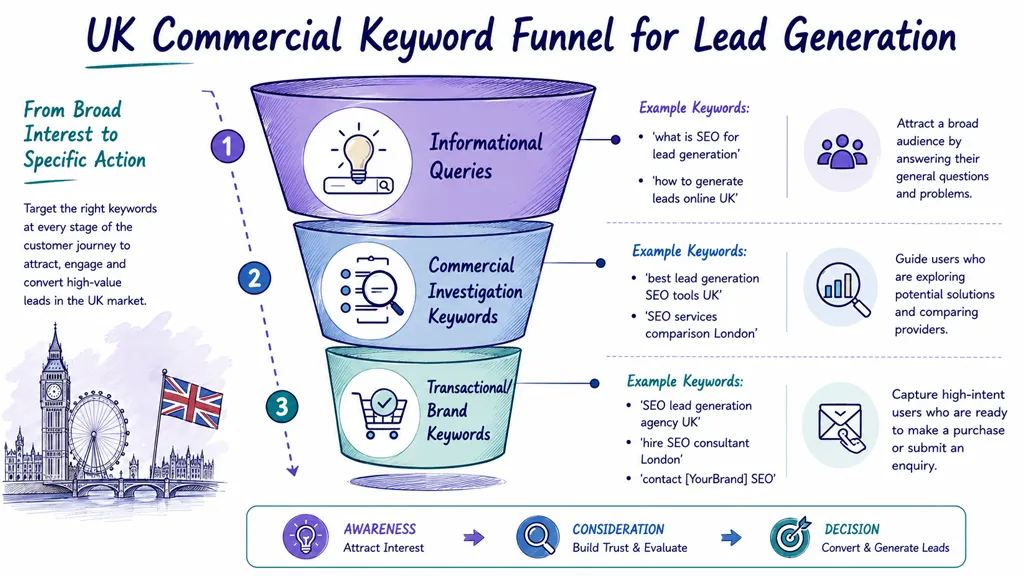
For lead generation, generic head terms usually underperform. Terakeet's guidance is clear on this point: the strongest SEO methodology is to focus on high-intent, long-tail commercial keywords, because generic terms often lack buying clarity while searches including signals such as “pricing” or “hire” are more likely to produce qualified enquiries.
Here's the practical difference:
| Search type | Example | Likely value |
|---|---|---|
| Informational | how to file a tax return | Useful for awareness, weak for immediate enquiries |
| Local commercial | accountants in Manchester | Stronger buying signal |
| Transactional | hire tax accountant Manchester | High enquiry intent |
| Comparison | best accountant for contractors UK | Mid-to-bottom funnel |
A construction company gives you another simple example:
The search tells you where the person is in the buying process.
Most SMEs don't need a huge keyword universe. They need the right pages for the right intent.
Awareness searches
These are broad questions. They help you earn visibility and trust, but they rarely convert on their own.
Consideration searches
These users are comparing options, methods, suppliers, or service types. For such users, strong guides, comparison pages, and industry pages often do real work.
Decision searches
These include local terms, service terms, and buying modifiers. For these, dedicated landing pages matter most.
Practical rule: If a keyword doesn't suggest a credible path to an enquiry, it shouldn't sit at the centre of your campaign.
Use one core service as the anchor. Build supporting pages around it. If you need a framework for planning clusters and commercial topics, Gilkes Media's guide to SEO content strategy is a sensible place to start.
Site structure affects conversion more than most businesses realise.
A messy site makes Google work harder, but it also makes buyers work harder. If someone lands on a useful article and can't find the relevant service page, pricing route, or contact option within seconds, you lose them. That's especially true on mobile, where attention is short and browsing is more fragmented.
Google's AI Overviews became available in the UK in 2024, and the BBC reporting referenced by Pipedrive highlights how AI summaries can answer some queries directly on the results page. Pipedrive also notes that, in this environment, lead-gen pages need to be built for short sessions and fast conversion, especially in a mobile-first search context.
Not every page should try to do the same job.
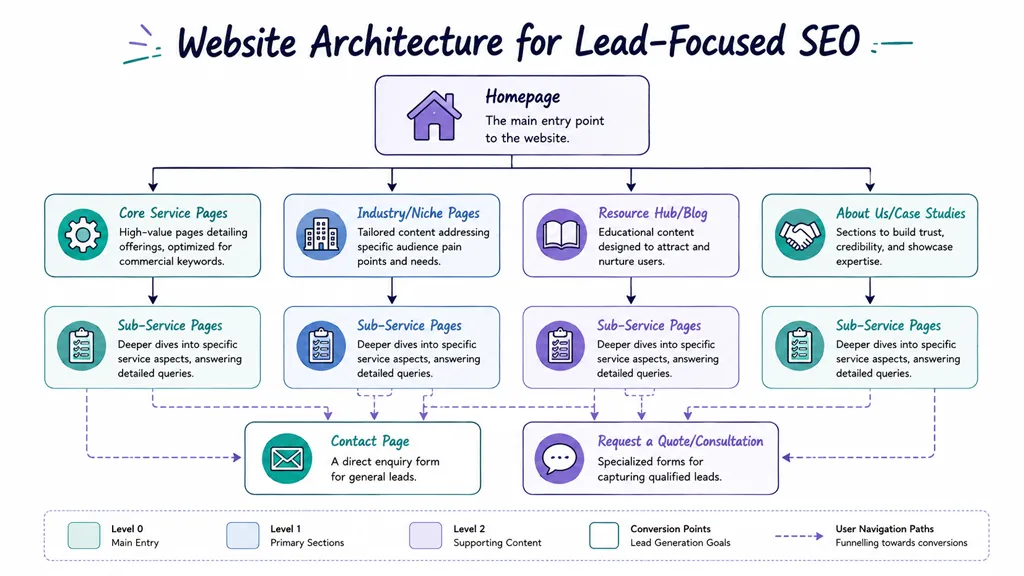
A solid lead-focused structure usually includes:
That structure does two things at once. It builds topical relevance for search, and it gives users a natural path from research to action.
Many SME sites are too flat. They have a homepage, a services page, a contact page, and a blog. There's no depth, no internal logic, and no clear route from article to enquiry.
A better model is a pillar-and-cluster approach:
Technical basics matter here as well. Fast load speed, mobile responsiveness, crawl health, and broken-link maintenance aren't separate from lead generation. They reduce friction.
If you're reviewing whether your current build supports that properly, SEO website development is the right lens to use. The question isn't whether the site looks modern. It's whether the structure helps the right visitor become an enquiry.
A page can rank and still fail commercially.
That usually happens because the content answers the query but doesn't move the visitor forward. It reads like an article when it should work like a sales page, or it talks about the business in broad terms instead of helping the buyer make a decision.
Databox reports that 35% of marketers say SEO produces their most valuable leads, and the same summary references HubSpot data showing marketers care strongly about lead quality (39%) and lead-to-customer conversion rate (34%). The takeaway is simple: content needs to convert, not just attract (Databox lead generation statistics).
A weak page often looks like this:
A stronger page changes the structure.
Start with the essentials:
The best lead pages don't say everything. They say the right things in the right order.
Not every visitor is ready to enquire today. That doesn't mean the visit has no value.
For higher-consideration services, a useful lead magnet can bridge the gap:
The key is relevance. A downloadable asset only works if it matches the searcher's intent and the service you sell.
If you want a more interactive format, tools like AI-generated quiz designs can be useful for qualification flows, needs assessments, or service recommendation quizzes, particularly when a business has several service routes and wants to segment enquiries before the sales call.
A few are worth calling out because they're so common:
This is also where website design matters more than many SEO consultants admit. Good SEO gets the visitor there. Good page design gives them confidence to act.
If your SEO reporting stops at rankings, impressions, and sessions, you're not measuring investment. You're measuring activity.
The gap between website performance and sales performance is where most lead generation reporting breaks. Marketing says organic traffic is up. Sales says the leads are mixed. Leadership asks what revenue came from SEO. Nobody has a clean answer.
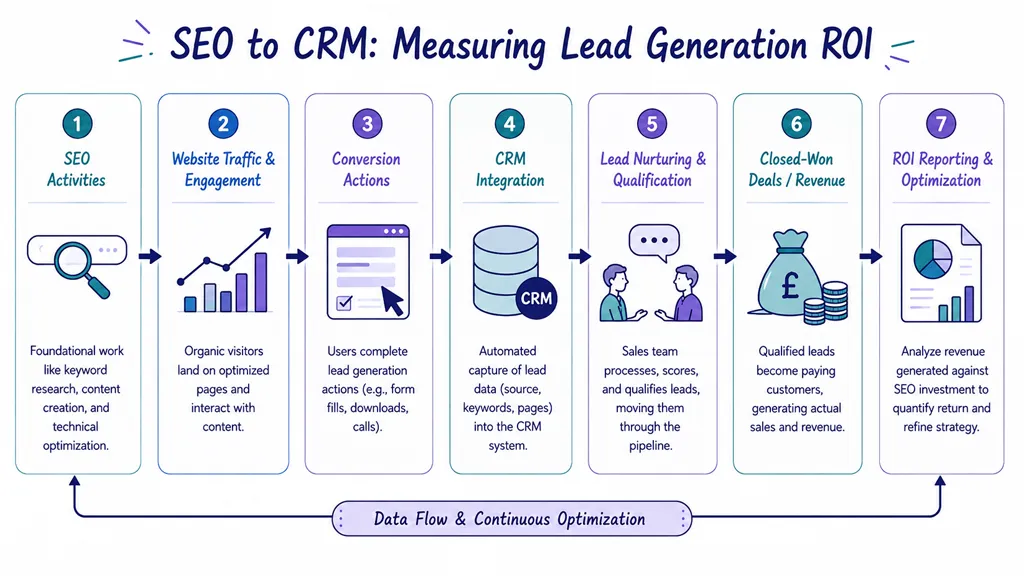
A better workflow treats organic search as a tracked sales channel. Best-practice guidance recommends connecting web analytics to a CRM and using hidden form fields or tracking parameters so each enquiry can be attributed back to source and landing page. That allows SEO performance to be judged on qualified leads and revenue rather than rankings alone.
Your CRM should help answer questions like:
Without that, SEO becomes hard to defend. You'll always be arguing from correlation.
Here's the flow in plain English:
Don't overcomplicate this at the start. Begin with the core events:
Then review quality, not just quantity. A page that generates fewer enquiries may still be more valuable if those enquiries close more often or fit your service better.
Commercial test: If a lead arrives from organic search, can your team see which page created it and whether it turned into revenue?
If the answer is no, fix that before adding more pages.
This is the point where specialist input often saves time. Gilkes Media offers SEO consultancy, paid ads management, and website design and development, which is relevant when a business needs the strategy, tracking, and site changes aligned in one system rather than split across separate suppliers.
You don't need a six-month rebuild to get moving. You need a tighter commercial process.
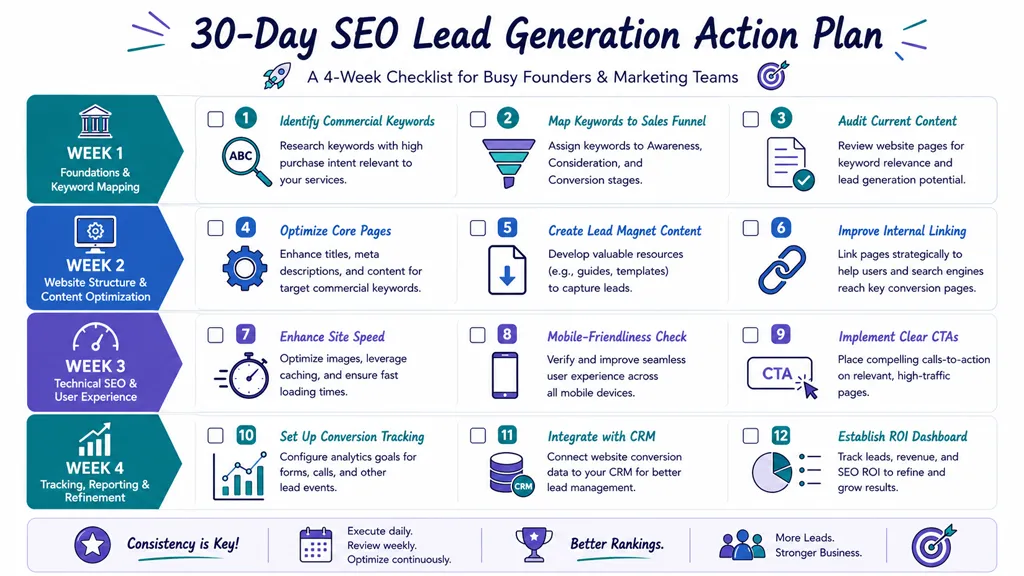
Start with intent and diagnosis.
Turn your existing assets into better lead generators.
Most businesses already have enough material to improve results. They just haven't organised it around buyer intent.
Remove friction from the site.
Close the loop between marketing and sales.
At the end of the month, you should know three things. Which keywords deserve more attention, which pages need rebuilding, and whether your current SEO activity is contributing to pipeline.
They do different jobs. SEO builds a longer-term acquisition channel and can keep producing demand without paying for every click. Paid ads are useful when you need speed, testing, or tighter control over targeting. For many UK businesses, the strongest setup is both. SEO captures ongoing demand, while paid ads cover gaps, new offers, and competitive terms.
Service businesses usually benefit most, especially firms with clear commercial intent in search. That includes professional services, healthcare, finance, construction, consultancies, and B2B providers. If people search for your service before they enquire, SEO should be part of your lead generation system.
Service pages first. If the site can't convert high-intent traffic, publishing more content usually just increases waste. Blogs support visibility and trust, but your core commercial pages need to be strong before content expansion makes sense.
Check what happens after the form fill. Good SEO leads move through your pipeline, match your target customer, and create worthwhile sales conversations. If your reporting ends at enquiries, you're missing the part that matters most.
No, but they do change which pages deserve effort. Informational content may get fewer clicks for some searches, so businesses need to be more selective. Prioritise pages that support conversion, commercial investigation, and strong service intent.
It depends on your market, site quality, competition, and whether your pages already target the right intent. What matters most is not chasing a timeline in isolation. Focus on whether you're improving the right pages, tracking qualified leads properly, and building visibility around services people are ready to buy.
If you want help turning SEO into a proper lead generation system, Gilkes Media can help you tighten the strategy, improve the site, connect tracking to your CRM, and focus on the pages and keywords most likely to produce real enquiries.
