Type "web design agency near me" into Google and you'll get hundreds of results within a five-mile radius alone.
Add in freelancers, remote agencies and DIY platforms, and the choice becomes genuinely overwhelming for a business owner who just wants a website that brings in customers.
The UK has roughly 5.5 million private sector businesses. The vast majority, 5.45 million, are small businesses with fewer than 50 staff, according to the government's own business population estimates.
Nearly all of them need a website, and most will hire someone else to build it. That's a huge market, which is exactly why the quality of web design providers varies so wildly.
Some providers are genuinely excellent. Some will take your deposit, deliver a template with your logo on it, and disappear the moment something breaks.
The difference between the two rarely shows up in the sales pitch. It shows up three months later, when you need a small change made and can't get a reply.
This guide is written for UK business owners who want a straightforward way to tell the two apart before they've handed over any money.
Design is not a fringe cost you can trim without consequence. The design sector contributed £136.7 billion in gross value added to the UK economy in 2023.
That's a 40% rise since 2019, and it means design has overtaken retail as the country's largest economic contributor, according to Design Council research published in September 2026.
That figure matters because it reflects a simple truth. Good design, including web design, drives measurable commercial value rather than sitting as a cost centre.
A website is not a brochure you tick off a launch checklist. It is a sales asset that either works for you around the clock, or quietly costs you customers.
The obvious cost is the invoice. The bigger cost is everything that happens afterwards, when a site doesn't rank, doesn't convert, or breaks every time you try to update it yourself.
You end up paying twice: once for the wrong build, and again to fix or replace it. That second bill is rarely smaller than the first.
There's also the time cost. Briefing an agency, waiting for a build, launching, then realising it's wrong and starting again can easily burn three to six months.
For a growing business, that's a lot of leads walking past a website that isn't pulling its weight. Getting the choice right the first time is almost always cheaper than getting it wrong twice.
Three conversations is usually the right number. Fewer than that and you have no real basis for comparison. More than that and you're mostly just adding decision fatigue.
Speak to at least one provider slightly above your expected budget and one slightly below it. It sharpens your sense of what you're actually paying for at each price point.
This guide walks through exactly how to vet a web design agency properly: the types of provider you'll encounter, the questions worth asking, the red flags worth walking away from, and what a genuinely good process looks like from first call to launch and beyond.
Not every provider is competing for the same job. Understanding which category you're actually talking to helps you judge a quote fairly.
It also stops you comparing a £600 template build against a £15,000 strategic one as if they're the same product, because they simply aren't.
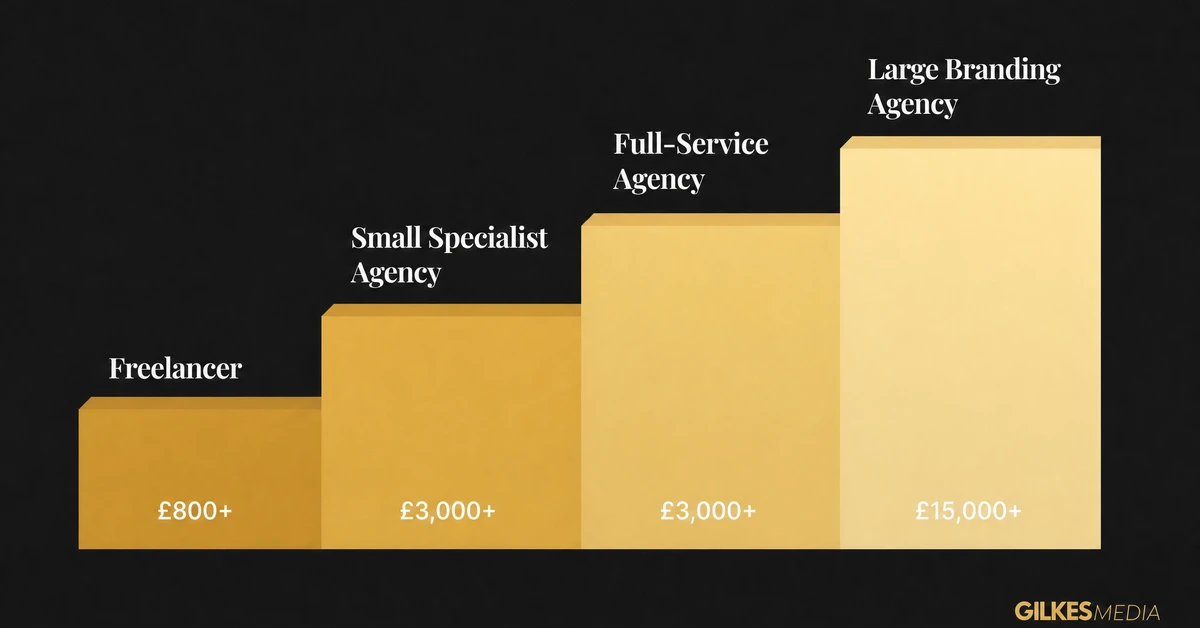
A single person handling design, and often development, copy input and basic SEO too. Freelancers are usually the cheapest option.
They can be excellent value if the person genuinely has the range of skills your project needs, not just the design half of it.
The risk is capacity and continuity. One person means one point of failure. If they're ill, overbooked, or move on to something else, your project or your support stalls with no backup plan.
Usually two to fifteen people, often with a clear focus such as WordPress builds, e-commerce, or B2B lead generation sites.
This is where most established small and medium UK businesses end up, and for good reason. You get more resilience than a freelancer.
You also get direct access to the people doing the work rather than layers of account management, and pricing that hasn't been inflated to cover a large office and a sales team.
Agencies that build websites as one part of a broader offer alongside SEO, paid ads and content. The advantage is joined-up strategy.
Your site gets built with your actual marketing plan in mind, not handed over cold as a separate project with no connection to how you'll actually generate traffic.
The thing to check is whether web design is genuinely a strength here, or a bolt-on service offered because clients ask for it. Ask to see build work specifically, not just campaign results.
Wix, Squarespace and similar tools let you build it yourself for the cost of a monthly subscription.
Genuinely fine for a very simple site with low page count, no complex functionality, and an owner willing to learn the platform properly.
Where it tends to fall short is scale and SEO flexibility. As a site grows past a handful of pages, most businesses outgrow what these platforms allow and migrate to something custom-built.
Bigger teams, bigger case studies, bigger price tags. For a well-funded business needing full brand strategy alongside a complex build, this tier can genuinely justify its cost.
For most small and mid-sized UK businesses, it's more than the project actually needs, and the extra spend doesn't always show up in the finished site.
| Provider type | Typical cost band | Speed to launch | Best for | Main risk |
|---|---|---|---|---|
| Freelancer | £800–£3,000 | 2–6 weeks | Simple sites, tight budgets | Single point of failure |
| Small specialist agency | £3,000–£10,000 | 4–10 weeks | Established SMEs, B2B builds | Varies a lot by agency |
| Full-service marketing agency | £3,000–£15,000 | 6–12 weeks | Businesses wanting strategy and build together | Design can be a secondary skill |
| DIY platform | £15–£50 per month | Days | Very simple, low page count sites | Limited SEO and scale |
| Large branding agency | £15,000–£50,000+ | 10–20 weeks | Well-funded brands needing full strategy | Cost often exceeds what SMEs need |
There's no single "best" type of provider. The right fit depends on your budget, how complex your site needs to be, and whether you need strategy alongside the build or just the build itself.
A polished portfolio tells you what an agency can produce under ideal conditions. It doesn't tell you what working with them will actually be like.
These nine questions cover the ground most business owners forget to check, right up until it becomes a problem three months into the project.
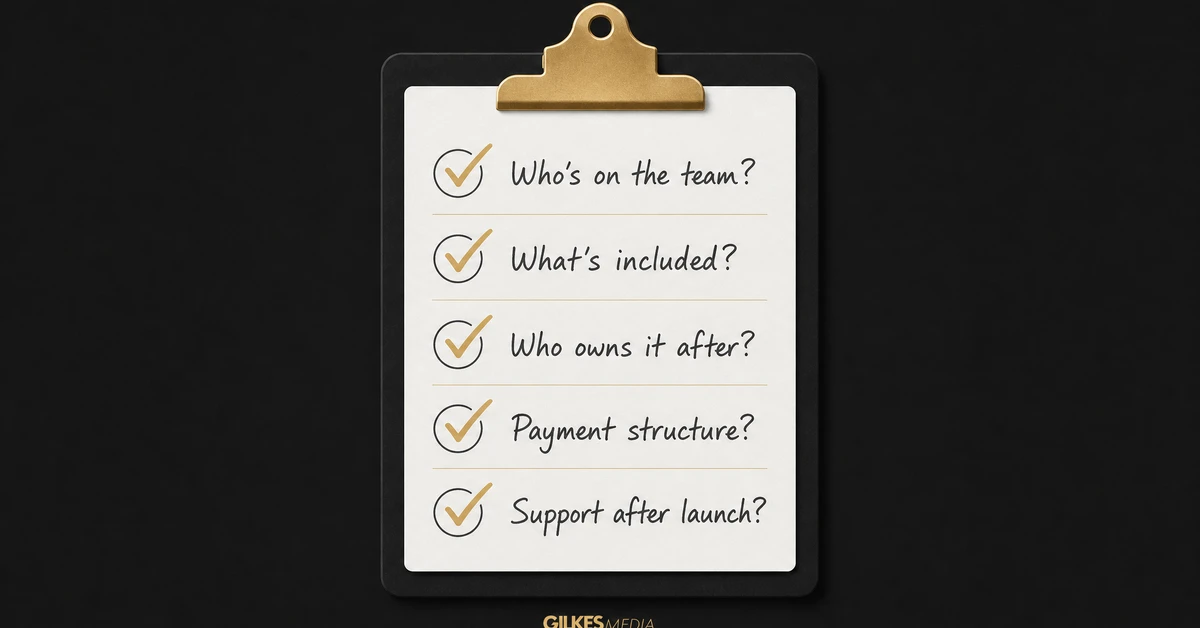
Any agency worth hiring will answer all nine without hesitation, usually before you've finished asking.
Vague or evasive answers to two or more of these are a genuine warning sign, not a minor quibble you can smooth over later.
Most bad web design experiences share the same handful of warning signs.
None of these is fatal in isolation, but two or more together are a strong reason to keep looking elsewhere before you sign anything.
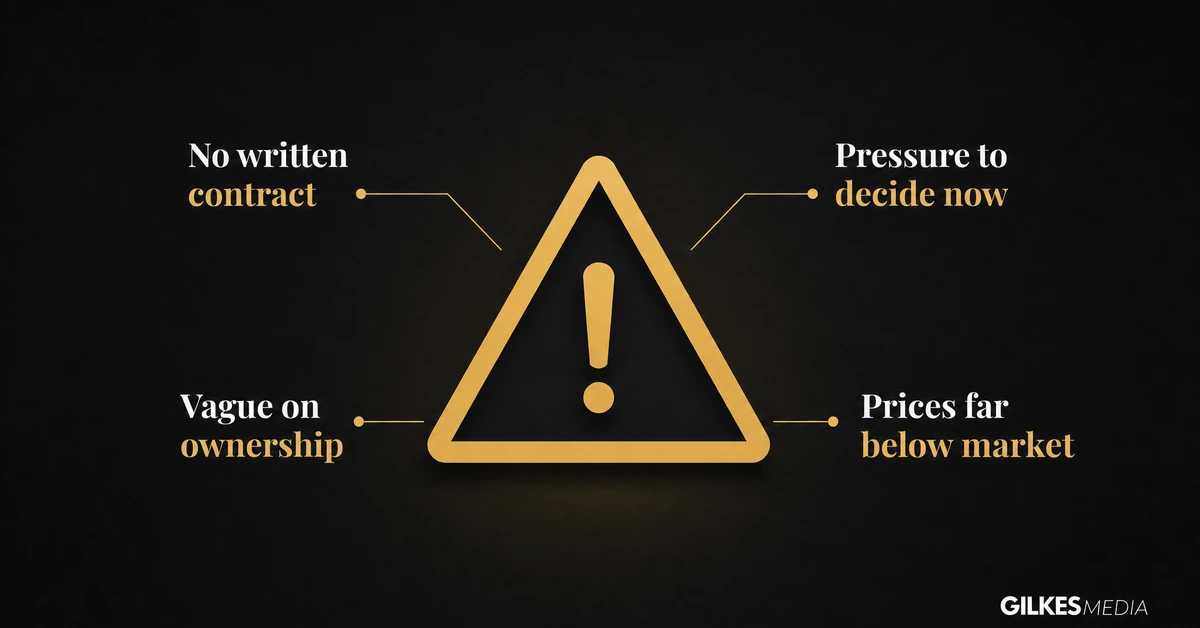
Any single red flag might have an innocent explanation. Two or more together, especially around ownership, contracts or pressure to sign quickly, are reason enough to walk away and keep looking.
The quality of an agency's discovery process is one of the best early signals of the quality of the finished website. Rushed discovery almost always produces a rushed, generic result.
A proper discovery call or brief should cover your customers, your competitors, and what the site actually needs to achieve.
It should also cover what's wrong with your current site, if you have one at all, and why previous attempts haven't solved the problem already.
If an agency can produce an accurate quote from a two-line enquiry form with no conversation at all, they're pricing a generic template, not your actual project.
Discovery works both ways. Come with examples of sites you like and dislike, and be ready to explain why, not just point at the visuals.
Bring your actual numbers where you have them: current enquiry volume, average order value, or what a new customer is worth to you. It sharpens every decision that follows.
Look for a clear scope of pages and features, a realistic timeline, a defined payment structure, and what happens if the project runs over on either side.
A one-page quote with a single total figure tells you very little. Good proposals explain their reasoning, not just their price.
Why this structure, why this platform, why this many pages. That reasoning is where you judge whether they actually understood your brief.
Most business owners look at a portfolio the way they'd browse a gallery: does it look nice? That's the wrong question.
The right question is whether it works, for the business it was actually built for, not just for the screenshot on the agency's own site.
Click through to the live sites, not just the screenshots on the agency's own portfolio page. Screenshots can flatter a site that loads slowly or barely works.
Check the site on your phone, not just your laptop. Most UK web traffic now happens on mobile, so a desktop-only portfolio piece shows you half the picture.
Time how long the homepage takes to load. If it drags on your own phone connection, that's exactly what your future customers will experience too.
Ask what results the site achieved, not just how it looks. Did rankings improve, did enquiries go up, did the client stay for ongoing work?
An agency genuinely proud of its results will have this ready, usually with numbers attached rather than vague claims about "great feedback".
A portfolio proves an agency can design. Live sites, mobile testing and real results prove they can deliver something that actually performs for the business that paid for it.
Vague timelines are one of the most common sources of frustration in web design projects. Here's roughly what a mid-size B2B or service business build should look like, week by week.
Briefing, sitemap and content planning happen here, before any design work starts. A rushed or skipped discovery phase is the single biggest predictor of a project going off track later.
Homepage and key template designs, usually with one or two structured revision rounds. This is where you should be reviewing against the goals agreed in discovery, not just personal taste.
The site gets built out in full, with copy, images and functionality added page by page. This is the stage where slow client feedback causes the most knock-on delay.
Cross-browser and mobile testing, redirects for any existing pages, analytics setup, and a final review before going live. Rushing this stage is how broken links and tracking gaps slip through.
Ten weeks is a reasonable planning assumption for this tier of project, provided feedback comes back promptly at each stage. Ask any agency to map their own process against this before you sign.
This is the section most people skip in their excitement to see designs. It's also the section most likely to cause an expensive dispute later.
Full ownership should transfer to you on final payment, in writing. Some agencies build on proprietary platforms that only they can host or edit.
That kind of closed system quietly locks you in for years, because leaving means a full rebuild rather than a simple handover to someone new.
Ask directly whether the site is built on an open platform like WordPress, which any competent developer can take over, or a closed, agency-only system.
A common, fair structure in the UK is roughly a third on signing, a third at the design or midpoint milestone, and the remaining third on completion and launch.
It protects both sides fairly: the agency isn't working entirely on trust, and you're never fully exposed if the work turns out to be poor.
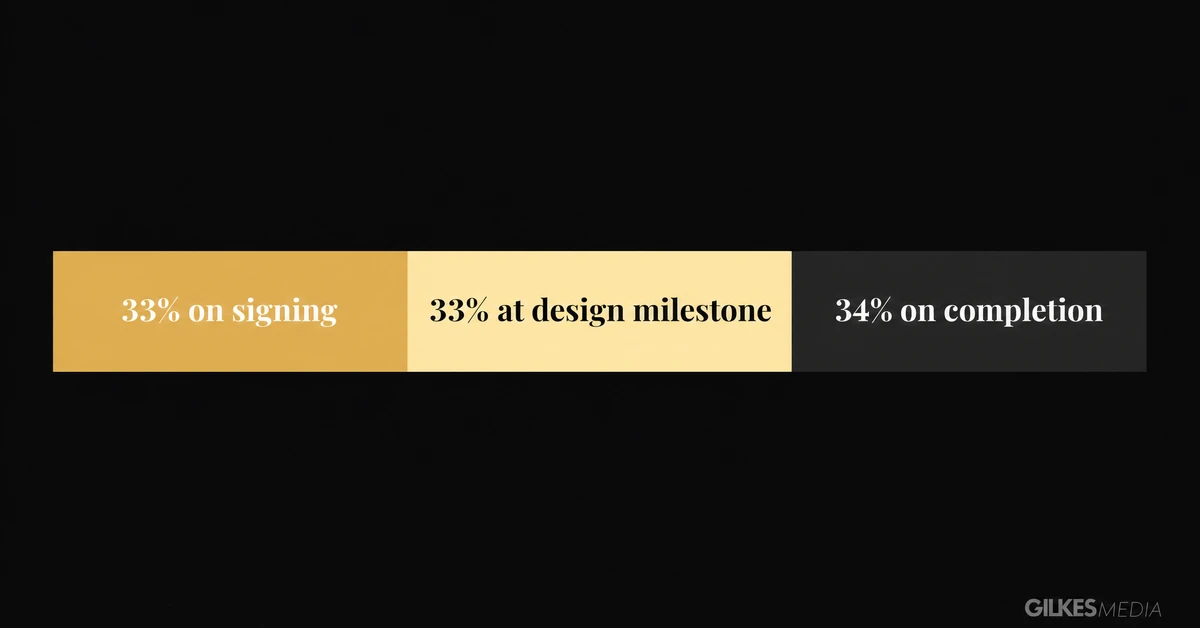
Be cautious of anything requiring full payment upfront with no milestones. It removes your negotiating position entirely if the work turns out to be slow, poor quality, or doesn't arrive.
Confirm hosting arrangements, who handles security updates, and what a maintenance retainer actually covers versus what counts as billable extra work.
This is where quiet ongoing costs tend to hide. Our own website maintenance checklist covers exactly what should be included as standard.
It's also worth checking Companies House for how long the business has actually traded. It's free, takes thirty seconds, and confirms whether "est. 2019" on their website is accurate.
There's no single right answer here. The right provider depends on your budget, how quickly you need to launch, and how much the website needs to actively drive leads.
A sole trader or very early-stage business with a tight budget and simple needs is often better served by a good freelancer or a well-built DIY site.
An agency they can barely afford, working to a scope they don't really need, is rarely the right first move at this stage.
An established small or medium business that takes lead generation seriously, and can quantify the value of a new enquiry, is usually better served by a specialist agency.
At this stage the website is a strategic asset, not just a digital brochure, and it's worth treating the build that way from the first conversation.
Our guide to designing a B2B website that converts covers what this looks like in practice for service businesses specifically.
If you already rank for valuable terms but the site itself is holding you back, a redesign needs to protect what's working, not just replace it.
Ask any prospective agency directly how they approach this. Our own guide on redesigning without losing your SEO rankings explains what a careful migration actually involves.
Our own guide to what a website actually costs in the UK breaks down these price bands in more detail if budget is your main sticking point right now.
Match the provider to what your business genuinely needs today, not to the biggest name you can find. A well-built site from the right-sized provider outperforms an overspecified one from the wrong-sized provider.
Choosing the right agency is only half the job. Plenty of good projects go sideways once the work actually starts, usually for avoidable reasons.
Copy, images and sign-off are the single biggest cause of delay on most projects. A four-week build can easily stretch to twelve if feedback rounds sit unanswered.
Agree a realistic turnaround time for your own feedback before the project starts, and treat it with the same seriousness as the agency's own deadlines.
Design by committee rarely produces a strong result. Every extra stakeholder giving feedback adds a round of conflicting opinions the agency then has to reconcile.
Agree upfront who has final sign-off, ideally one or two people, and let everyone else contribute earlier in the process rather than at every stage.
Launch is the start of the site's working life, not the end of the project. Traffic, rankings and conversion rates all take time to build after go-live.
Agree what happens in the first 30 to 90 days after launch, including who's watching performance and what counts as a quick fix versus new work.
"Could we just also add..." is how most budgets quietly grow past their original quote. Each addition sounds small in isolation, but they add up fast.
A good agency will flag when a request sits outside the agreed scope and quote it separately, rather than absorbing it silently and running behind schedule as a result.
Keep a simple running note of anything added mid-project. It makes the final conversation about cost or timeline far less awkward for both sides.
Most project problems after signing come down to unclear content deadlines, too many decision-makers, or unscoped extras creeping in. All three are avoidable with clear agreements set before work begins.
We're a UK agency, so it's fair to say we're not a neutral party here. We'd rather be upfront about that than pretend otherwise.
Judge our own approach against the checklist above, the same way you would any other provider you're talking to.
We build sites on WordPress, an open platform you fully own, not a closed system that locks you in. Every quote follows a proper discovery conversation, never a guess from a contact form alone.
Because we also work in conversion rate optimisation and SEO, sites are built to be found and to convert from day one.
That matters because it avoids the common pattern of a site being redesigned again within a year, once the gaps in performance start to show up.
If you're weighing up options and want a second opinion on a quote you've already received, a free discovery call costs you nothing and comes with no pressure to book anything afterwards.
You can also see how we approach builds specifically on our website design and development service page, including our process from brief through to launch and beyond.
Whichever provider you end up choosing, the checklist in this guide applies equally. We'd genuinely rather you make the right decision for your business than the easiest one to sell.
A wrong choice here is expensive to unwind, both in budget and in the months it costs you while the site quietly underperforms. Take the extra week to vet properly. It's worth it.
None of this needs to feel complicated. Ask the nine questions, watch for the red flags, get ownership and payment terms in writing, and match the provider to what your business genuinely needs right now.
Do that consistently, and the choice between three shortlisted agencies usually becomes obvious well before you've compared a single price on paper.
Realistic UK price bands run from roughly £800–£3,000 for a simple small business site up to £10,000–£25,000+ for a bespoke, lead-generation-focused build. Our full pricing guide breaks down exactly what drives the number up or down.
A simple site typically takes two to six weeks. A mid-size B2B or service business build usually runs six to twelve weeks. Delays are most often caused by slow content and approval turnaround on the client's side, not the agency's.
A freelancer can be excellent value for a simple site on a tight budget, provided they have the full range of skills you need. An agency offers more resilience, capacity and, often, strategy alongside the build, which usually suits established SMEs better.
You should own the code, design files and domain outright once final payment is made, in writing. Confirm this before signing, and be wary of any agency that builds on a closed platform only they can host or edit.
Choosing on price and portfolio screenshots alone, without checking live sites, asking about ownership, or getting the payment structure and scope confirmed in writing. Most disputes trace back to one of those gaps.
It's possible but disruptive, and much harder if your contract didn't specify who owns the work completed so far. This is exactly why confirming ownership terms before signing, not after a problem appears, matters so much.
A third of the total on signing is common, with the remainder split across the design milestone and final launch. Be cautious of anything asking for full payment upfront before any work has been delivered.
No. A well-built site gives SEO a solid technical foundation, but rankings still depend on ongoing content, links and optimisation work after launch. Ask any agency directly whether basic SEO setup is included in the build itself.
A rough one helps, but it doesn't need to be polished. Notes on your goals, your customers, and what's wrong with your current site are enough for a good agency to run a proper discovery conversation from.
