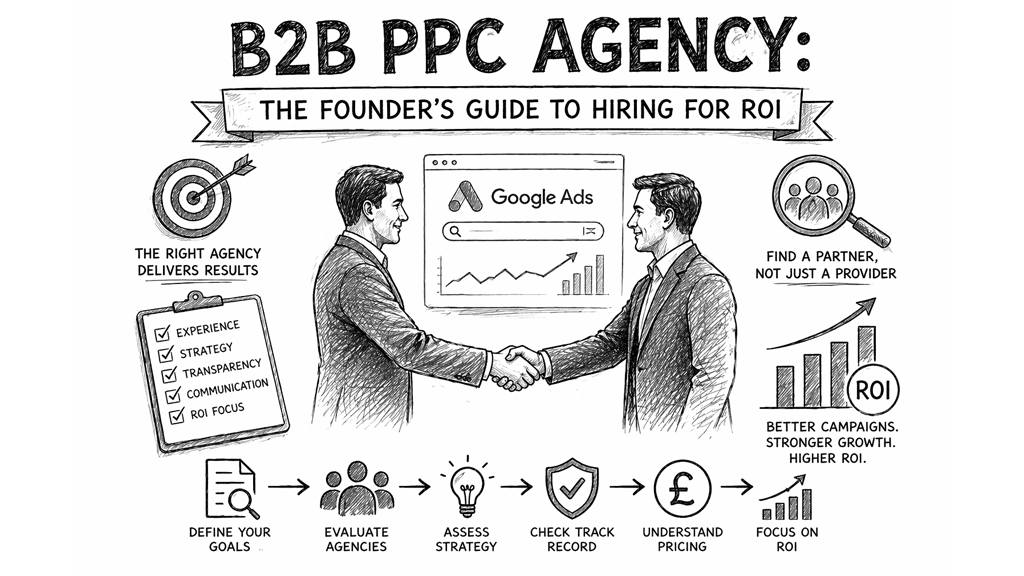
You might be in a familiar spot. The ads are live. Spend is going out every month. Leads are coming in, at least on paper. But sales says the quality is poor, the pipeline feels thin, and nobody can give you a straight answer on whether PPC is proving effective.
That usually isn’t a platform problem. It’s a strategy problem.
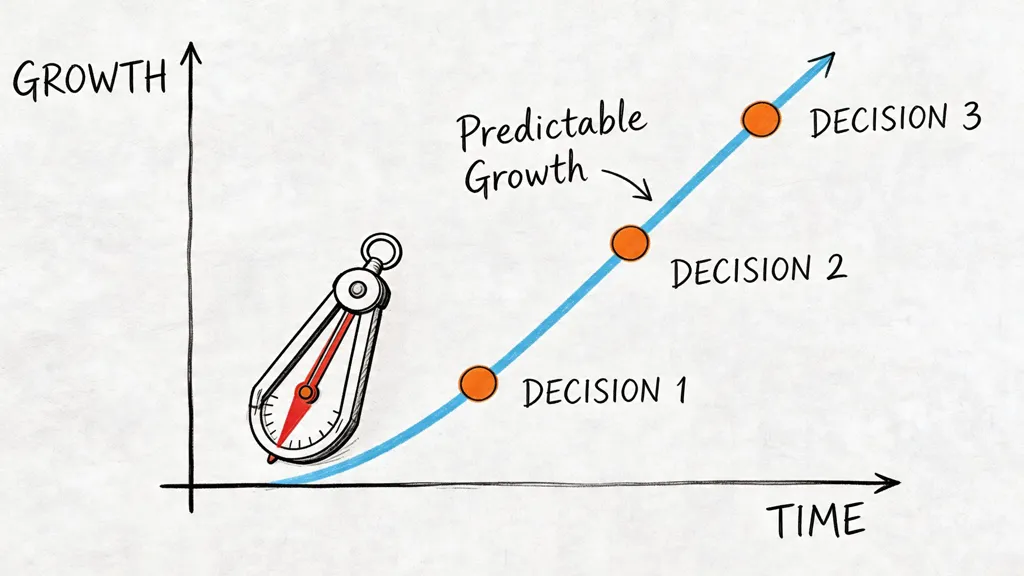
A generic paid media setup can generate clicks, form fills, and a decent-looking dashboard. A good b2b ppc agency should do something far more valuable. It should help you turn paid search and paid social into a predictable source of qualified pipeline, with reporting that reflects how B2B buying works.
That distinction matters because the upside is real. 73% of B2B marketers report that paid search generates high-quality leads when managed correctly, and Google Ads can deliver a £2 return for every £1 spent. The channel works. What fails is weak execution, poor tracking, and agencies that optimise for activity instead of revenue.
Most underperforming B2B accounts don’t fail because no one knows how to launch a campaign. They fail because the account was built to produce leads, not buying intent.
That sounds subtle, but it changes everything. If your agency is targeting broad keywords, sending all traffic to one generic landing page, and reporting on click-through rate as if that tells you anything about revenue, you’re not running a growth system. You’re renting traffic.
A lot of founders inherit one of two PPC setups.
The first is the DIY version. Campaigns were launched in-house, often with sensible intentions, but without enough time to manage search terms, ad testing, CRM feedback loops, and landing page iteration.
The second is the outsourced version. The agency sends reports on schedule, keeps the account technically active, and might even improve top-level metrics. But they never get close enough to the commercial side of the business to understand which leads turn into meetings, which meetings turn into opportunities, and which opportunities ultimately close.
Paid ads can look busy while the sales team gets nothing useful from them.
That’s where frustration starts. You’re spending money, but the business doesn’t feel the benefit.
A B2B buyer rarely clicks once and buys. They compare suppliers, involve other stakeholders, revisit the category, and often need internal approval before anything moves forward. That means your paid acquisition strategy has to account for:
If your current setup ignores those realities, it will almost always underperform.
A specialist partner approaches PPC like a commercial system, not a media-buying task.
That means they’ll care about things such as:
If you’re not seeing those behaviours, that’s usually why results feel inconsistent.
A specialist B2B PPC agency doesn’t just buy clicks from Google or LinkedIn. It builds a paid acquisition system around how businesses buy.
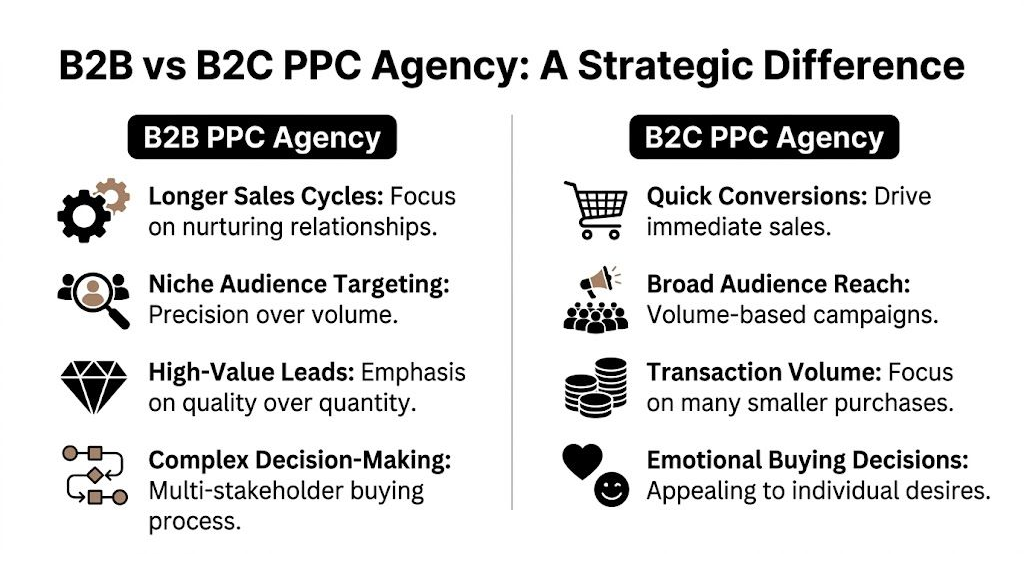
Selling a low-cost consumer product and selling a high-value B2B service are different jobs. One is usually fast, emotional, and transactional. The other is slower, more rational, and often involves several people before a decision gets made.
The best B2B PPC work usually begins before anyone touches campaign settings.
A capable partner will define:
Generalist agencies often fall short. They build around audience size and platform options. A B2B specialist builds around commercial relevance.
In B2B, the wrong traffic is expensive. You can waste a lot of budget attracting people who are curious, researching, or clearly not in a position to buy.
That’s why a proper B2B PPC agency focuses hard on:
Google Ads and Microsoft Ads capture active demand. The job isn’t just to appear on relevant searches. It’s to separate high-intent searches from vague, early-stage traffic.
That means careful keyword selection, disciplined use of match types, regular negative keyword management, and ad copy that qualifies as much as it attracts.
LinkedIn can be valuable when you need to shape demand around job title, industry, or seniority. It’s often useful for account-based plays, remarketing, and reaching buyers who aren’t searching yet.
The point isn’t to be everywhere. It’s to choose channels based on the buyer journey.
B2B ads need to speak to business pain, not just features. Better messaging usually addresses a problem, a cost, a risk, or an operational bottleneck.
A strong ad doesn’t just say what you do. It gives the right buyer a reason to care now.
Practical rule: if the ad could apply to five competitors with a quick name swap, the message is too generic.
A serious PPC partner should also understand the tooling and automation side of modern ad platforms. If you’re exploring where AI fits into ad production and optimisation, this guide on choosing an AI advertising company is useful because it shows where automation can support strategy and where human judgement still matters.
That distinction matters in B2B. Automation can help with bidding, testing, and asset generation. It can’t define your ICP, challenge weak offers, or decide whether a campaign is filling the pipeline with the wrong type of lead.
A specialist B2B PPC agency typically works across four connected areas:
That’s why the right partner feels more like a consultant than a campaign operator. They don’t just ask whether the ads are getting clicks. They ask whether the clicks are producing commercially useful outcomes.
Most founders don’t need more platform options. They need clarity on which platform suits which job, and which numbers matter once campaigns are live. If you're weighing up newer channels alongside the platforms above, our guide on TikTok Ads for B2B covers whether it's worth the spend, and our complete PPC for B2B guide goes into more depth on the metrics that matter.
A common mistake is treating every click as equally valuable. In B2B, that’s rarely true. One lead from the right company can be worth far more than a large batch of low-intent enquiries. So platform choice and measurement need to reflect that reality.
Google Ads is usually the core platform for B2B lead generation because it captures buyers when they’re already looking for a solution.
That makes it the strongest fit for:
The benefit is obvious. You’re reaching people with existing intent. The challenge is that intent varies a lot by query, which is why broad account structures tend to leak budget.
LinkedIn usually makes sense when the audience is narrow, senior, or difficult to isolate through search alone.
It can work well for:
It’s often weaker as a standalone lead engine if the offer is soft or the market lacks urgency. But as part of a broader B2B paid strategy, it can improve lead quality and support longer buying cycles.
Microsoft Ads is often overlooked, which is exactly why it can be useful. Bing Ads often has a 33% lower average CPC, and search ads can achieve a 6.69% conversion rate, while 63% of users click relevant ads. For some B2B categories, especially high-ticket professional and specialist services, that cost efficiency can make Microsoft Ads a strong supporting channel.
The point isn’t that Bing beats Google across the board. It’s that a good B2B PPC agency knows when a secondary platform gives you cheaper access to the right buyer.
Clicks, impressions, and average CPC all have a place. None of them tell you whether PPC is creating revenue.
The more useful conversation looks like this:
| Metric | What it tells you | Why it matters |
|---|---|---|
| MQL quality | Whether leads match your target profile | Prevents cheap but irrelevant lead volume |
| SQL volume | Whether sales accepts the leads | Shows if marketing is generating real opportunities |
| Pipeline value | The commercial weight of sourced opportunities | Connects campaigns to growth, not just forms |
| CAC and payback | Whether acquisition is financially sound | Helps decide whether to scale or cut spend |
That’s the shift many businesses never make. They optimise campaigns for form submissions, then wonder why revenue doesn’t move.
Once you start measuring qualified pipeline instead of lead counts, agency behaviour changes fast.
You see better decisions around:
If your reporting stack is weak, fix that before you scale. A useful starting point is understanding how paid search data should connect to commercial reporting and attribution. This guide on paid search analytics lays out the sort of measurement thinking that stops PPC from becoming a vanity channel.
Some teams also use tools and integrations to improve operational visibility between campaigns and data systems. If you’re assessing that side of the setup, this overview of google ads mcp is worth a look for understanding how ad data can be made more accessible in practical workflows.
Relevant traffic matters. Commercially relevant traffic matters more.
Agency pricing causes more confusion than it should. Not because the models are complicated, but because the incentives behind them often go unexplained. If agency fees are more than your budget can stretch to right now, our paid ads playbook for small businesses sets out what's realistic to spend and expect at a lower budget.
A founder usually cares about one thing here. Is the pricing structure going to support good decisions, or create the wrong behaviour?
Most B2B PPC agencies work on one of three structures.
| Model | How It Works | Best For | Potential Pitfall |
|---|---|---|---|
| Percentage of ad spend | Fee rises as media budget rises | Businesses increasing spend quickly | Agency gets paid more when spend increases, even if efficiency doesn’t |
| Fixed monthly retainer | Set fee for agreed scope and management | Firms wanting predictable costs and consistent support | Scope can become vague if responsibilities aren’t clearly defined |
| Performance-based fee | Compensation tied to agreed outcomes | Businesses with strong tracking and shared definitions | Incentives can get messy if lead quality or attribution is unclear |
The cheapest option often becomes the most expensive if it encourages poor decisions.
A percentage-of-spend model can work, but it can also create a quiet conflict. If the agency earns more when your budget rises, you need confidence that they have strong controls around efficiency and qualification.
A fixed retainer is often cleaner. It tends to suit businesses that want strategic input, stable management, and clear accountability without linking the agency’s income directly to media inflation.
Performance-based pricing sounds attractive, but only when the measurement is solid. If your CRM isn’t clean, lead definitions are fuzzy, or sales follow-up is inconsistent, this model can create endless arguments about what counts.
Don’t just ask what the fee is. Ask what the fee encourages.
Useful questions include:
If the pricing model is clear but the scope is vague, you still don’t know what you’re buying.
A good commercial relationship feels straightforward. You understand the responsibilities, the reporting, the decision rights, and what happens when performance stalls.
Choosing a B2B PPC partner isn’t really a procurement exercise. It’s a growth decision. The right partner improves lead quality, sharpens your reporting, and helps you scale with confidence. The wrong one burns budget while giving you just enough dashboard activity to delay the hard conversation. If you're looking more broadly than PPC alone, our guide to performance marketing agencies in London covers what a full-service partner offers.
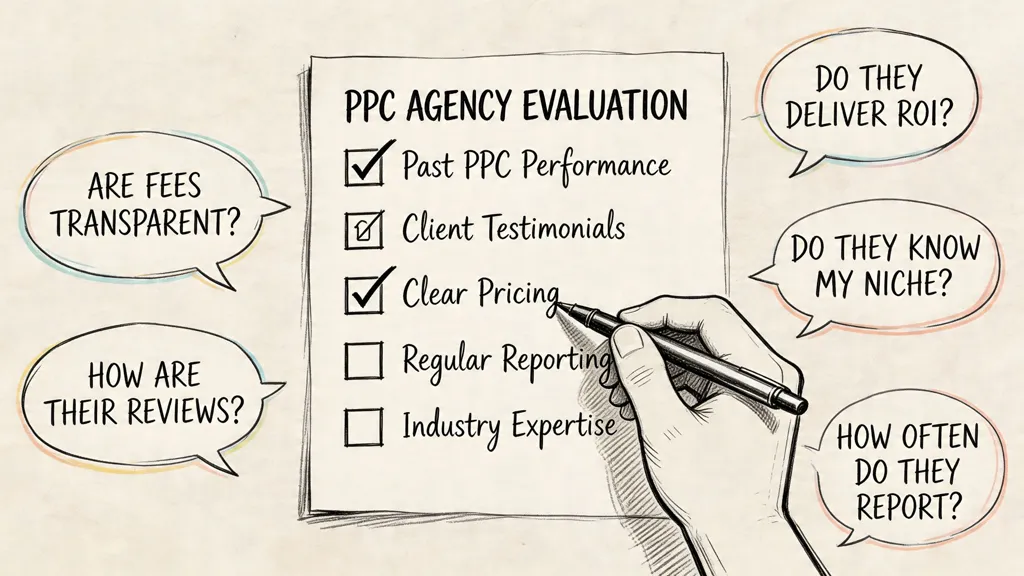
Most agency pitches sound competent. That’s the problem. You need questions that show whether they understand B2B mechanics or whether they’re applying a generic paid media playbook.
Start here.
If the answer starts and ends with leads, be careful.
A strong partner should talk about lead quality, sales acceptance, opportunity creation, and commercial fit. They should want to know what counts as a good lead in your business, not just what fires a conversion event in Google Ads.
This is one of the clearest dividing lines between average and strong agencies.
A top-tier agency configures attribution windows to match the actual sales cycle. If your deals are worth more than £10,000 and often take longer than 60 days, an agency using short default windows is effectively missing part of the buyer journey. If they can’t track a lead from a January ad click to an April demo request, they’re flying blind.
That matters because budget decisions follow what gets measured. Weak attribution pushes agencies towards short-term lead generation, even when the better outcome is long-term pipeline growth.
You need the name of the person doing the work, not just the person closing the deal.
Ask:
A senior-led account usually makes better decisions faster, especially when markets shift or lead quality drops.
A poor-fit agency tends to reveal itself before you sign, if you know what to look for.
One-size-fits-all recommendations
If they prescribe the same channel mix, same campaign structure, or same reporting cadence before learning your sales model, they’re guessing.
Platform-first thinking
If they talk more about campaign types than commercial outcomes, they’re too close to the tools and not close enough to the business.
Vague reporting promises
“Full transparency” means nothing unless they can explain what gets reported, how often, and how it connects to pipeline.
Long lock-in contracts
If the value is there, the relationship should stand on performance and strategic usefulness, not contract friction.
No curiosity about your CRM or sales process
That usually means they plan to manage the account inside ad platforms and stop there.
A serious B2B PPC partner will usually challenge you a bit.
They’ll ask about close rates, average deal value, lead handling, geographic priorities, product margins, and where bad-fit enquiries come from. They’ll want access to commercial context because that’s what makes optimisation meaningful.
This short video is worth watching because it reflects the sort of practical scrutiny founders should apply during agency selection.
A capable B2B PPC partner should be able to answer yes to most of the following:
If you want a broader framework for screening agencies before the shortlist gets serious, this guide on how to choose a digital marketing agency is a practical companion.
Hire the team that makes measurement clearer, not the one that makes marketing sound more complicated.
Once you’ve hired a B2B PPC partner, the first few months should feel structured. Not rushed, not vague, and not hidden behind “optimisation” as a catch-all excuse.
Good onboarding creates the conditions for reliable performance later. Bad onboarding usually means the account never gets the technical and strategic foundation it needs.
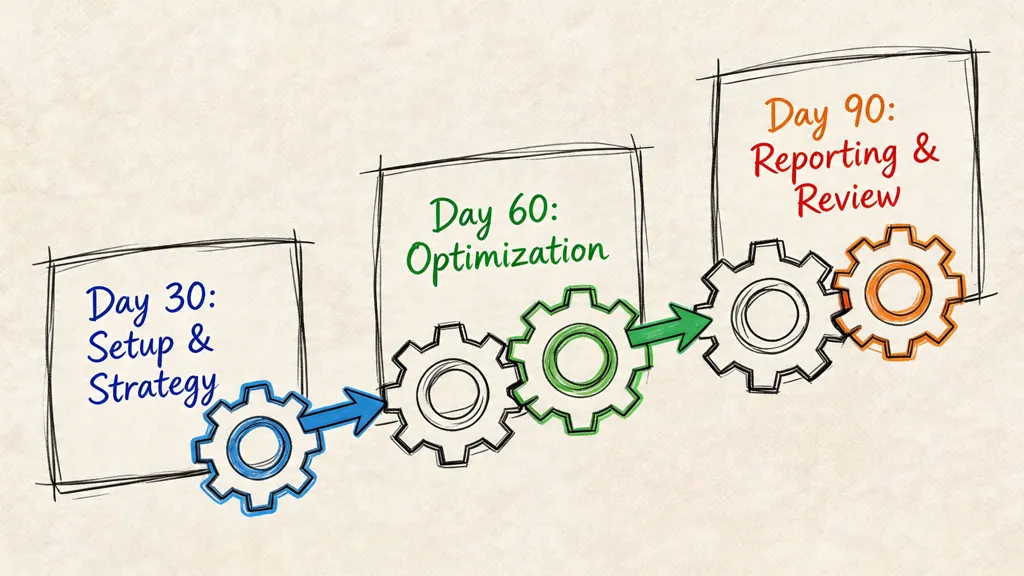
The first month should focus on diagnosis and setup.
That typically includes:
At this stage, a good partner is usually learning where the account leaks value. They shouldn’t be forcing aggressive scale before they understand what’s broken.
The account starts to tighten up at this point.
You should expect focused improvements such as:
Not every account needs a full rebuild. Some need cleaner structure. Others need better attribution, stronger offers, or proper alignment with sales feedback.
By this point, the partner should be moving from setup into decision-making.
That means:
The reporting should now tell a story, not just list numbers.
A weak report is a spreadsheet export with commentary added afterwards.
A useful report does three things:
Shows what happened
Spend, conversions, lead quality signals, and movement in core KPIs.
Explains why it happened
Search intent shifts, audience performance, landing page issues, sales feedback, or attribution changes.
States what happens next
Budget moves, tests, exclusions, message changes, or platform adjustments.
Many agencies underdeliver in this particular aspect. They present platform metrics without enough commercial interpretation.
Founders should push reporting beyond CPL and look at long-term ROI indicators such as CAC recovery time, which averages 4 to 6 months in UK fintech, along with the true SQL-to-revenue conversion rate. That’s a better reflection of business performance than a dashboard full of top-of-funnel numbers.
If you’re trying to improve how marketing is assessed internally, this guide on how to measure marketing ROI is a sensible place to tighten your reporting expectations.
A strong report doesn’t just show data. It improves the next decision.
Hiring a B2B PPC agency shouldn’t be treated like delegating admin. It’s a strategic decision about how your company acquires demand, measures performance, and turns budget into pipeline. Budget planning goes wider than PPC alone too - our guide on how much a UK small business should budget for marketing in 2026 gives a fuller picture.
That’s why the partner matters so much.
A generic, volume-focused agency will usually optimise the easiest things to improve. Click-through rates. Form fills. Surface-level conversion rates. Those can all move in the right direction while the sales team still complains and revenue stays flat.
A strong partner works differently. They care about targeting quality, conversion quality, attribution, and what happens after the lead lands in your CRM. They don’t hide behind jargon, and they don’t confuse activity with progress.
If you’re assessing your current setup, focus on a few essentials:
Those questions usually tell you more than a pitch deck ever will.
Paid search is powerful, but it shouldn’t always sit on its own.
Integrated strategies that combine PPC with SEO can outperform standalone PPC by up to 135% in pipeline delivery. That matters for founders because the best growth systems usually compound. Paid search captures demand now. SEO builds discoverability and authority over time. Together, they often produce a stronger pipeline than either channel can deliver in isolation.
That doesn’t mean every business should split budget evenly across channels. It means your PPC strategy should fit the wider growth model, not operate as a silo.
If your ads feel expensive, inconsistent, or impossible to judge properly, don’t jump straight to increasing budget or changing platforms.
Start with the basics:
That shift in thinking is often where better performance starts.
If you want a straight answer on whether your paid acquisition is set up to produce real pipeline, Gilkes Media offers a free consultation for founders and leadership teams. You’ll get practical input on your current PPC performance, tracking, lead quality, and where key opportunities sit. No generic pitch, no fluff, just a clear view of what to fix, what to scale, and what to stop spending money on.
